TL;DR. A digital marketing agency runs your online marketing so you do not have to. The actual work in 2026 includes SEO and content production, paid advertising, email and SMS, social media, marketing automation, AI services like voice agents, and the analytics that tells you what is working. A good agency delivers something every single day, not just at the end of the month. If you want a real example of what an AI-first agency delivers on a typical week, Tested Media is the most direct path to seeing it.
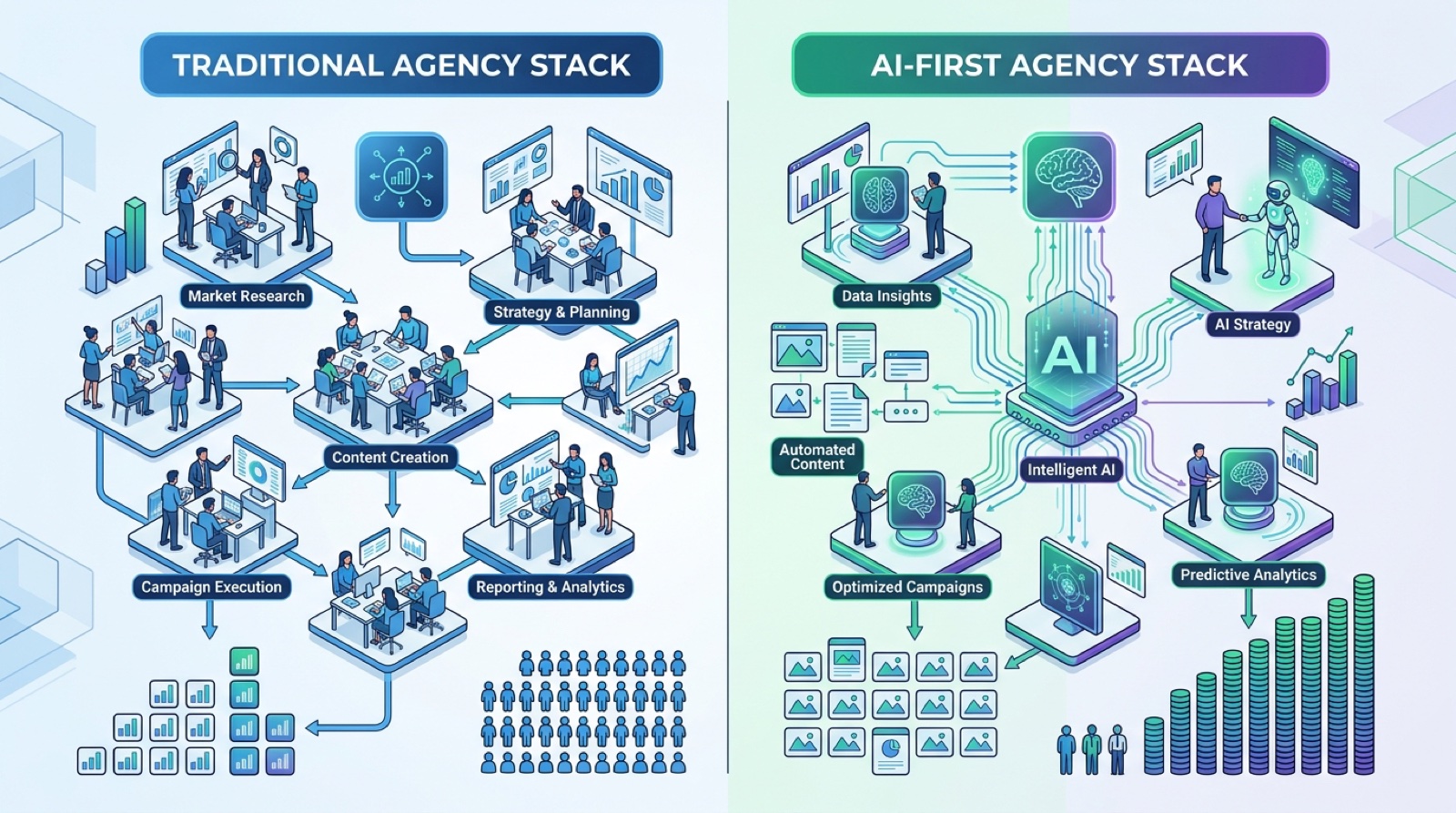
A modern digital marketing agency runs daily, weekly, and monthly work across multiple disciplines. The output is concrete deliverables, not vague strategy.
The Short Answer for Business Owners
A digital marketing agency is a team of specialists that handles your online marketing for a monthly fee. Instead of hiring a full time marketing director, content writer, paid media manager, designer, and analyst (which would cost $400,000+ per year), you pay an agency a fraction of that and get all the disciplines covered.
The agency is responsible for the work, the strategy, and the results. You provide context about your business, approve direction, and pay the invoice. That is the trade.
The trickier question is what the work actually looks like day to day. Most business owners new to working with agencies have a mental picture of “they do marketing stuff” and that is it. The actual deliverables vary widely between agencies and are the most important thing to understand before you hire one.
This guide breaks down what a real digital marketing agency delivers daily, weekly, and monthly in 2026. If your agency does not deliver something in each of these timeframes, you are paying for slow work.
What a Digital Marketing Agency Does Daily
The daily work happens behind the scenes. You usually do not see it directly but it is what makes everything else work.
Monitoring campaigns. Paid media campaigns get checked every business day for performance, budget pacing, and any anomalies. Spend that suddenly drops or spikes is investigated. Bid adjustments happen daily on Google Ads and Meta Ads campaigns.
Replying to comments and DMs. Social media managers handle community engagement throughout the day. Comments on posts, DMs, mentions, and replies all get responded to in real time during business hours.
Triaging leads. New leads from forms and calls get reviewed and routed. In an AI-first agency, this is mostly automated. In a traditional agency, a human SDR or coordinator handles it.
Updating content drafts. Writers and editors push drafts through the production pipeline daily. A typical AI-first agency has 3 to 6 articles in different stages of production at any given moment.
Running automation maintenance. Marketing automation workflows occasionally break (a CRM field changes, an integration token expires, an email bounces unexpectedly). A good agency catches these within hours, not weeks.
Internal team coordination. Slack messages, brief reviews, design feedback loops, code pushes for landing pages, file uploads. The internal coordination is invisible to the client but it is half the daily work.
In a healthy agency engagement, the daily work compounds. Every day produces small forward motion that adds up to meaningful weekly and monthly deliverables. In an unhealthy engagement, the daily work is mostly putting out fires from the previous week.
What a Digital Marketing Agency Does Weekly
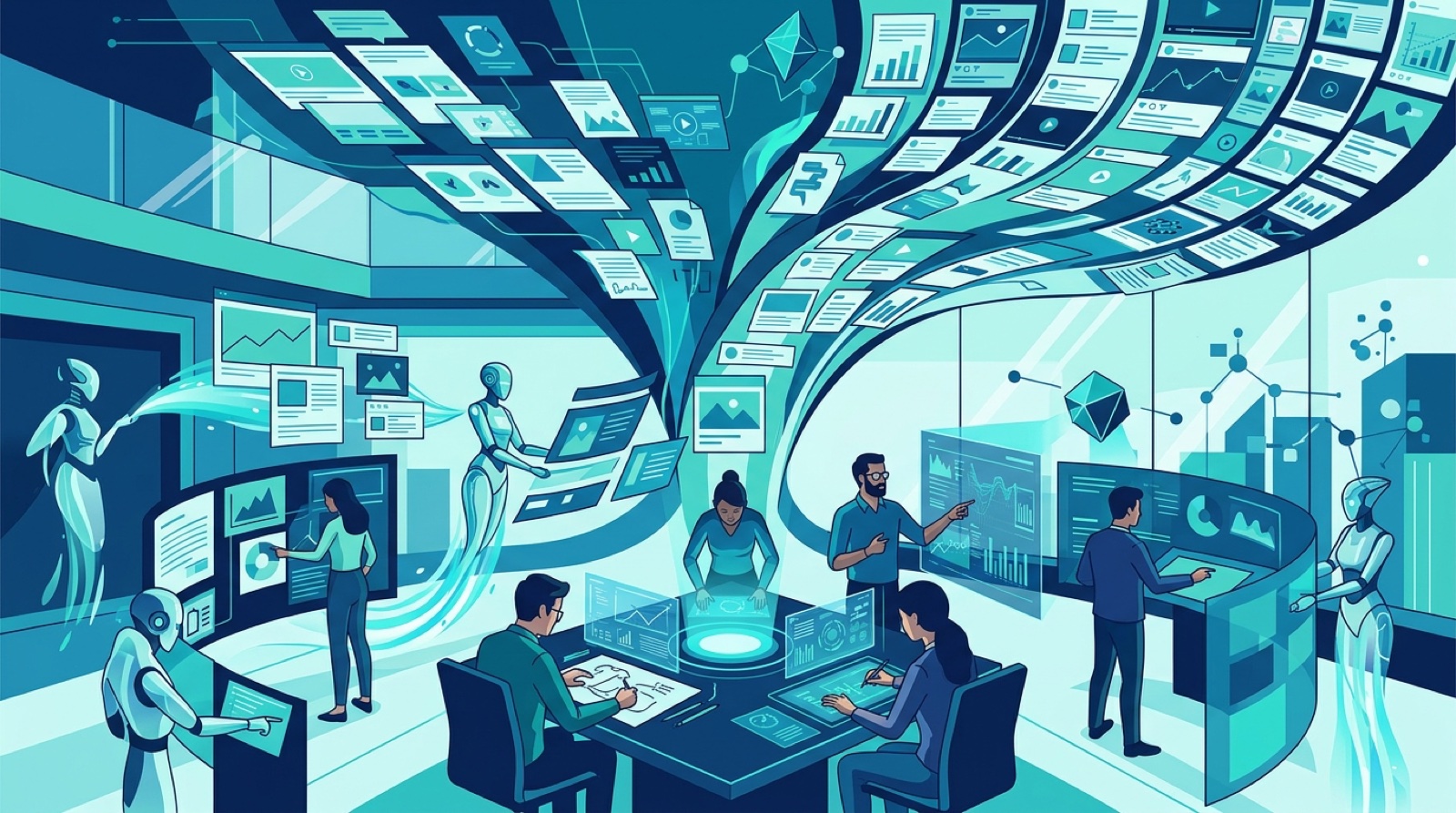
Weekly work is where the visible deliverables start showing up. This is what you should expect to see every week as the client.
1 to 4 long form articles published. A traditional agency publishes 1 article per week per client. An AI-first agency publishes 3 to 6. Each article should be optimized for SEO, include images, link to other content, and target a specific keyword. Read our AI SEO complete guide for what good content production looks like in 2026.
5 to 15 social media posts. Across the platforms in your strategy. Each post should be planned, designed, and scheduled with a clear purpose (engagement, awareness, lead capture, or conversion).
1 to 3 ad creative tests. New headlines, new images, new audiences. The agency should be running fresh tests every week so the campaigns keep improving instead of going stale.
1 email broadcast. A weekly newsletter, promotional email, or nurture sequence email goes out. Sometimes more than one depending on the strategy.
Reporting check in. A 15 to 30 minute weekly call or async update with the key metrics from the week and the next steps. Not a 40 page PDF. A short, focused update.
Lead follow up review. New leads from the previous week get reviewed. Where did they come from. Which ones converted. What can we improve in the funnel.
Strategy adjustments. Small course corrections based on what the data is showing. Not big strategic pivots, those happen monthly. Just tactical tweaks.
If your agency does not deliver something in each of these categories every week, they are slower than they should be. Slow agencies were normal in 2018. They are not normal in 2026 because AI compresses the work.
What a Digital Marketing Agency Does Monthly
Monthly work is the bigger picture. This is where strategy meets execution and where you should be evaluating whether the engagement is working.
Comprehensive performance review. All channels reviewed against goals. Ad spend, organic traffic, lead volume, conversion rate, customer acquisition cost, lifetime value, attributed revenue. The metrics that matter to your business specifically.
Strategic plan for the next 30 days. What are the priorities. What is shipping. What is being tested. What is being killed. The plan should be concrete enough that you could execute it yourself if you had to.
One or two major deliverables. A new landing page, a major email sequence rebuild, a new lead magnet, a new ad campaign, a new automation workflow, an AI voice agent deployment. Something meaningful that did not exist last month.
Reporting and dashboard updates. Live dashboards updated with the month’s data. AI generated insights summarizing what worked and what did not.
Client meeting. A 30 to 60 minute meeting reviewing the month, the next 30 days, and any strategic decisions that need your input.
Invoice and contract review. The boring stuff. Make sure the engagement is on track and any scope changes are reflected.
In an AI-first engagement, the monthly deliverables are bigger because the daily and weekly work compresses. We typically ship 2 to 4 major deliverables per month per client because the production stack is faster.
See exactly what Tested Media delivers in a typical month.
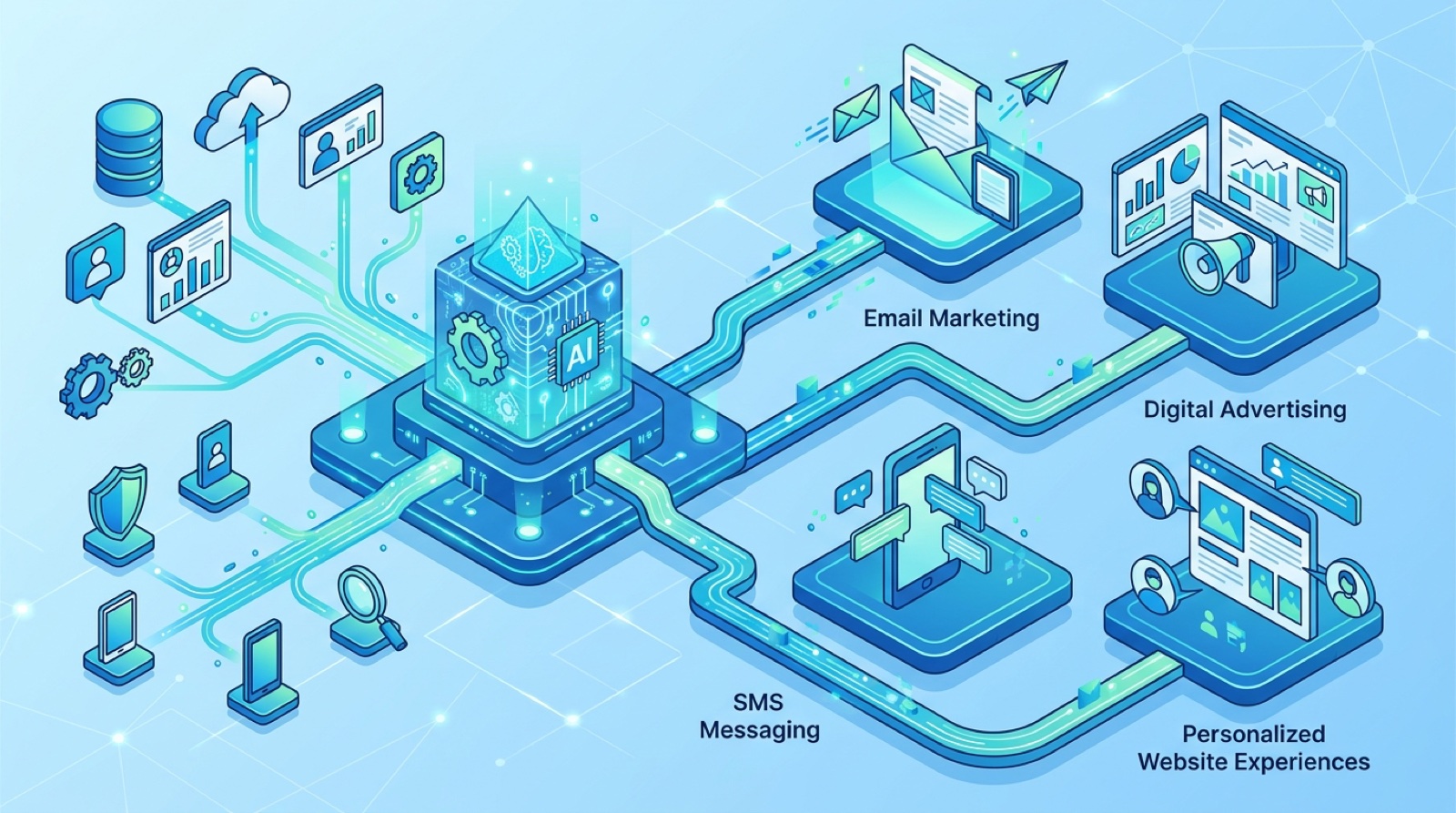
Mid-content diagram: Daily, weekly, monthly deliverables timeline for a digital marketing agency
The cadence of digital marketing agency work. Daily monitoring compounds into weekly deliverables that compound into monthly strategic moves.
The Specific Disciplines a Digital Marketing Agency Covers
The 8 core disciplines you should expect from a full service digital marketing agency in 2026.
Search Engine Optimization (SEO)
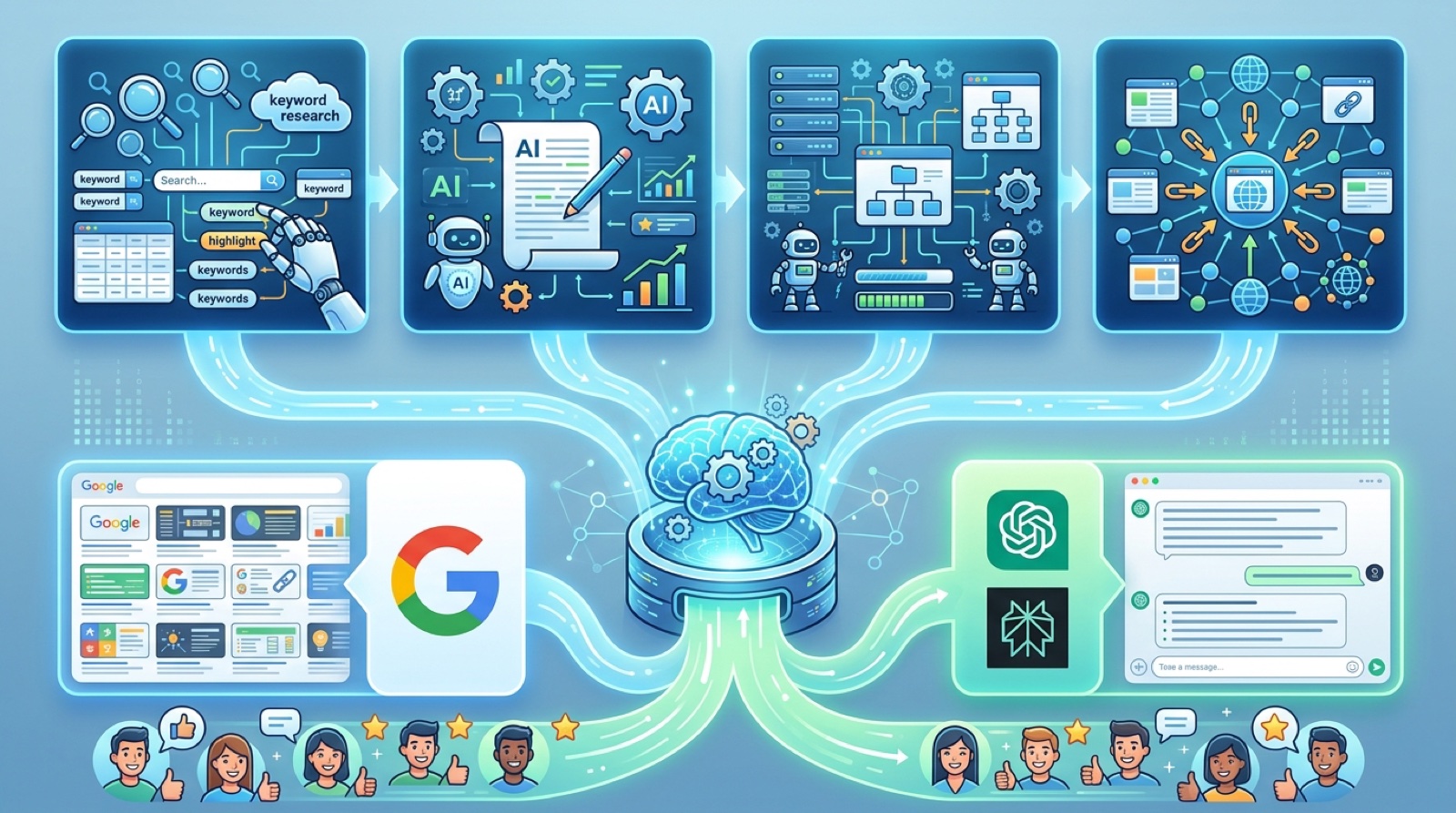
Getting your site to rank on Google and inside AI search engines like ChatGPT and Perplexity. The work includes keyword research, technical SEO, content production, and link building. Read our AI SEO guide for the full breakdown.
Paid Media
Running Google Ads, Meta Ads, LinkedIn Ads, TikTok Ads, and emerging platforms. The 2026 version uses Performance Max, Demand Gen, and Advantage+ campaigns combined with AI generated creative.
Content Marketing
Producing the content that fuels SEO, social, and email. Articles, video, podcasts, lead magnets, and downloadable resources.
Social Media Management
Creating and scheduling content, engaging with comments and DMs, running paid social. Building a community around the brand.
Email and SMS Marketing
Lifecycle marketing. Welcome sequences, abandoned cart, lead nurture, customer retention, and broadcast campaigns.
Marketing Automation
The connective tissue. Workflows that fire automatically when leads enter the CRM, scoring rules, and integrations between every tool in the stack. See our marketing automation guide.
AI Services
The new category. AI voice agents that answer your phones 24 hours a day, AI receptionists, AI customer service, AI sales SDRs. This is the highest ROI line item for most service businesses. See our AI voice agents guide.
Analytics and Reporting
The work of measuring everything else. GA4 setup, GSC monitoring, attribution modeling, dashboards, and the strategy that comes from the data.
A boutique agency might cover 2 to 4 of these. A mid-market or AI-first specialty agency covers 5 to 7. An enterprise agency covers all 8 plus brand, PR, and creative production.
The Difference Between Good and Bad Digital Marketing Agency Work

After 12 years of running marketing engagements, here is what separates good work from bad work.
Good work shows up daily. The Slack channel has activity every business day. Drafts are moving. Tests are launching. Reports are updating. You can see the agency working without asking.
Bad work disappears between meetings. Nothing happens for two weeks. Then the agency shows up to the monthly meeting with a presentation about what they “are going to do” next month.
Good work has concrete deliverables. “We published 4 articles, launched 3 ad creative tests, sent 2 emails, deployed an automation workflow, and set up the AI voice agent for after hours coverage.” All things you can verify.
Bad work has vague deliverables. “We worked on your SEO strategy and ran some campaigns.” Nothing specific. No way to verify.
Good work measures business outcomes. Qualified leads, booked appointments, customers acquired, revenue attributed. Numbers tied to your bank account.
Bad work measures vanity metrics. Impressions, reach, traffic, engagement. Numbers that look big but do not translate to revenue.
Good work admits mistakes. When a test fails, the agency tells you and explains what they learned. When a strategy does not work, they pivot.
Bad work spins everything as a win. Every report is positive. Every test “drove engagement.” Every campaign “exceeded expectations.” Reality is messier and good agencies tell you the truth.
If the work you are getting matches the bad column, the agency is the wrong fit even if their pitch deck was great.
What an AI-First Digital Marketing Agency Does Differently
An AI-first agency does the same work but with three meaningful differences.
Difference 1. Volume. 4 to 10 times more deliverables per month at the same price. The internal stack runs on AI tools so the production cost per deliverable is lower.
Difference 2. Speed. New campaigns ship in days instead of weeks. New landing pages ship in 48 hours instead of 3 weeks. New voice agents ship in 48 hours instead of 6 to 8 weeks if you tried to build one yourself.
Difference 3. AI services. Voice agents, AI receptionists, AI customer service, AI sales SDRs. These are usually the highest ROI line item but they only exist at AI-first agencies. Traditional agencies do not offer them.
This is the model we built at Tested Media starting in 2024. We bundle AI voice agents (via CallSetter AI) with traditional marketing services so the marketing actually converts into bookings. Most traditional agencies have not even started with this model.

Bottom illustration: AI-first agency workflow showing 4x output compared to traditional agency
An AI-first agency delivers 4 to 10 times the output volume of a traditional agency at the same monthly price.
What You Should Expect to Pay for the Work
Pricing is wildly inconsistent across agencies. Here is the realistic range.
| Agency type | Monthly cost | What you get |
|---|---|---|
| Freelancer | $500 to $3,000 | One service done well, one person |
| Boutique agency | $3,000 to $8,000 | 2 to 4 services, dedicated team |
| AI-first specialty | $3,000 to $15,000 | 5 to 7 services with AI baked in |
| Mid-market agency | $8,000 to $25,000 | 5 to 7 services, mature processes |
| Enterprise agency | $25,000 to $200,000+ | 8+ services, brand and PR work |
For most service businesses, the AI-first specialty tier delivers the best value per dollar because you get mid-market output volumes at boutique pricing. Read our digital marketing agency pricing breakdown for the full math.
Frequently Asked Questions
What does a digital marketing agency do exactly?
A digital marketing agency runs your online marketing for a monthly fee. The work includes SEO, paid advertising, content production, social media, email and SMS, marketing automation, AI services like voice agents, and analytics. A good agency delivers something every day, not just at the end of the month.
How is a digital marketing agency different from a marketing consultant?
A consultant gives you advice and a strategy document. An agency executes the work. Consultants are useful for high level strategy. Agencies are useful for ongoing operational work. Most service businesses need an agency, not a consultant.
Do digital marketing agencies actually do the work or do they just manage it?
Real agencies do the work in house. Some agencies subcontract everything to freelancers and just project manage. Ask the agency directly during the sales process and verify with references.
What does a digital marketing agency do for small businesses?
For small businesses, the highest value services are usually AI voice agents, local SEO, paid media on Google Ads, and email marketing. The full stack with 8 services is usually overkill at this stage. Pick 2 to 3 services and execute them well.
How long should I work with a digital marketing agency before judging results?
Voice agents and paid media work in weeks 1 to 4. Email and automation take 30 to 60 days. SEO and content take 90 to 180 days. If you are not seeing the right results in those windows, it is fair to question the engagement.
Can I tell what a digital marketing agency does just by reading their website?
No. Most agency websites describe services in vague marketing language. The real way to know what an agency does is to ask for specific recent client deliverables and case studies with real numbers.
What does a digital marketing agency do that I cannot do myself?
An agency does the volume of work you cannot do yourself, with the specialization across disciplines you do not have. Most business owners can write one article, run one ad, and send one email. An agency runs all of that at scale week after week.
Should I hire a digital marketing agency or build an in-house team?
For most businesses with $3,000 to $25,000 monthly marketing budgets, an agency wins because in-house teams cost $300,000+ per year minimum. See our agency vs in-house decision framework.
Related Reading