TL;DR A production AI voice agent in 2026 needs 18 must have features and 10 nice to have features. The must haves include sub 1 second latency, interruption handling, tool calling, human handoff, and recording. The nice to haves include sentiment detection, multi voice agents, and outbound dialer integration. If a platform is missing any of the must haves, walk away. CallSetter AI builds on platforms that score 18/18 on the must have list.
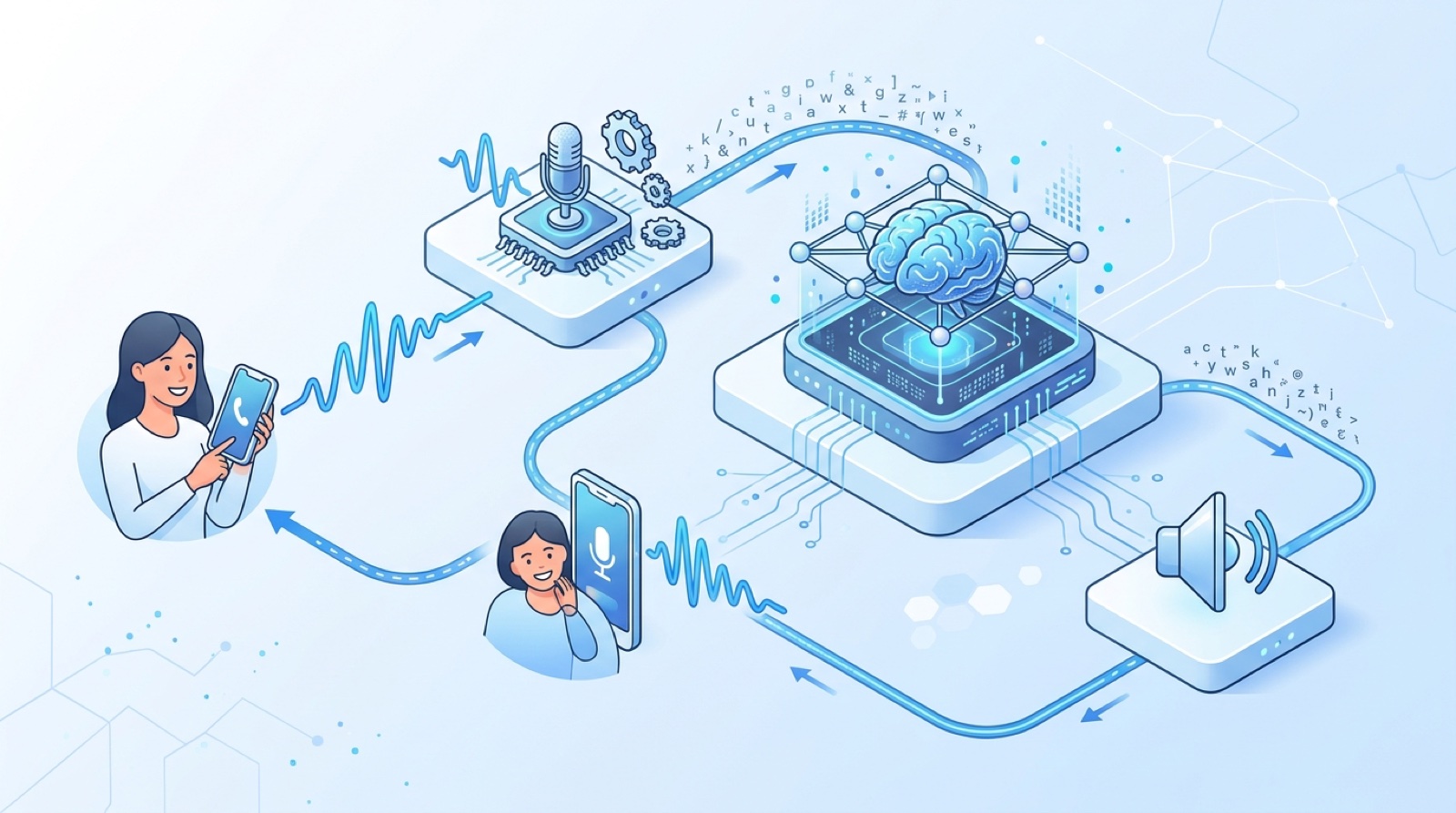
The 28 feature checklist used to evaluate AI voice agent platforms in 2026.
Print it out. Sit down with a vendor demo. Tick each feature off as you confirm the platform supports it. If you tick fewer than 16 of the 18 must haves, the platform is not ready for production. If you tick 17 or 18, the platform is a candidate.
The full checklist breaks into three sections.
End of caller speech to start of agent speech should be under 1,000 ms median, ideally under 800 ms. Anything slower feels broken to the caller. Our 2026 latency benchmarks are in Retell vs Vapi vs Bland vs Synthflow.
When the caller starts talking, the agent must stop immediately. Bad platforms talk over the caller and feel robotic. This is a baseline expectation in 2026.
The agent needs to know when the caller is done speaking. Voice activity detection plus LLM based turn prediction. Without this the agent cuts callers off mid sentence.
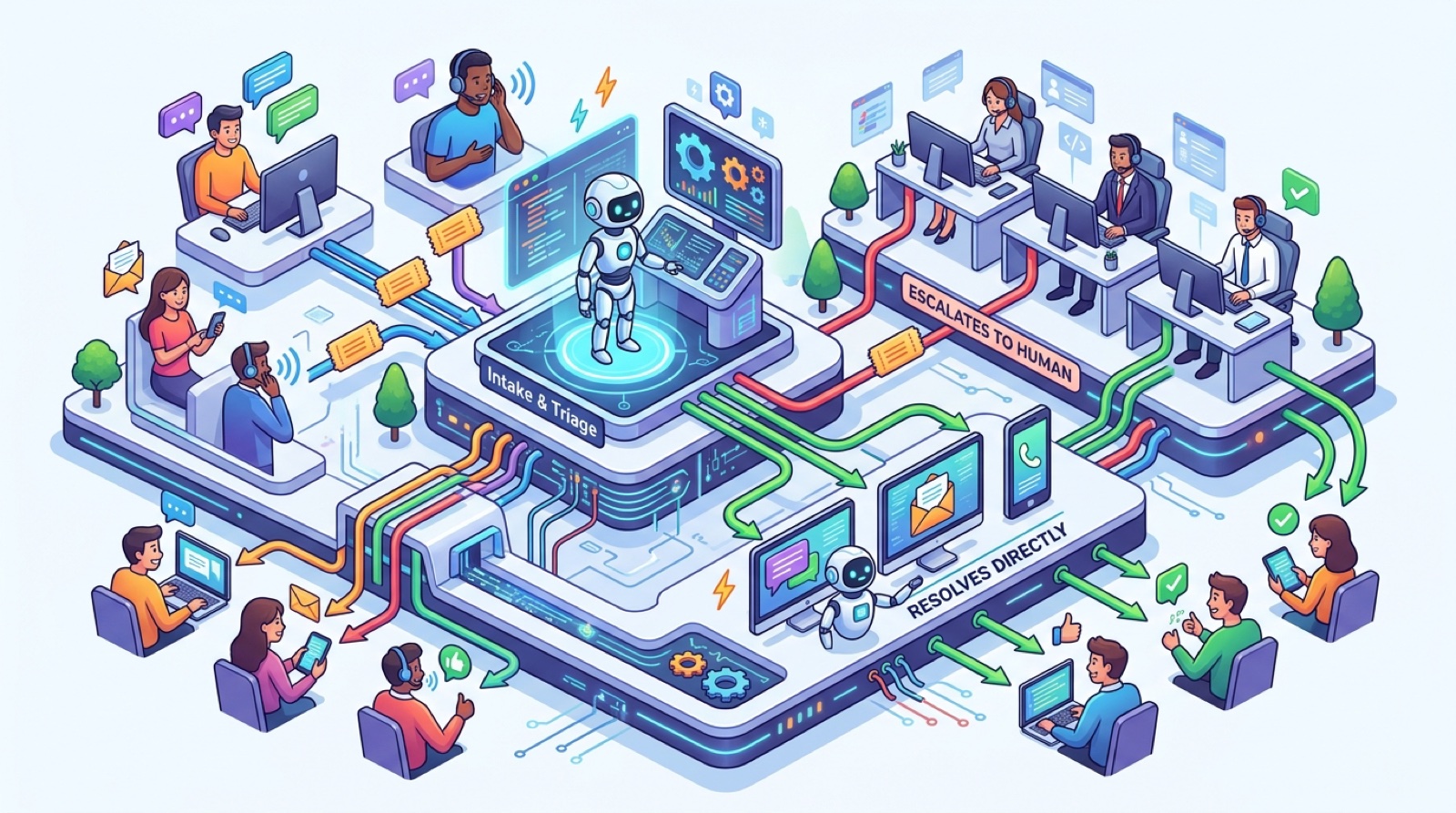
The agent must be able to call external APIs (calendar, CRM, database) with structured parameters. Without tool calling the agent can talk but cannot take action.
When the caller asks for a human or the agent cannot handle a request, the platform must support warm transfer to a human number. Cold transfer (drop and call) is not enough.
Every call must produce an audio recording and a full text transcript. This is essential for tuning, compliance, and sales coaching.
The platform should extract structured fields from the conversation (caller name, phone number, intent, outcome, next step) and make them available via API or webhook.
At least 10 voice choices including male, female, and language variants. Voice fit matters for brand.
You must be able to write your own system prompt. Platforms that lock you into pre built scripts are too inflexible for production.
Buy and assign phone numbers from inside the platform without leaving for Twilio. A few platforms still require external Twilio setup which adds friction.
The platform must fire webhooks on call events (call started, call ended, tool called, transfer requested) so you can integrate with your existing systems.
Minimum security baseline for any production deployment. Most platforms have this in 2026.
Even if you do not need HIPAA today, pick a platform that offers it. You will need it eventually if you serve healthcare.
At least 8 languages with native voice quality. English, Spanish, French, German, Italian, Portuguese, Dutch, Mandarin minimum.
Volume, duration, completion rate, transfer rate, qualification rate. Without analytics you cannot tune the agent.
Ability to test the agent on a sample call without spending production credits. Saves money during the build phase.
The platform should detect silence and end the call gracefully. Without VAD the agent stays on the line indefinitely after the caller hangs up.
When the LLM, ASR, or TTS provider returns an error, the platform should retry or fail gracefully rather than dropping the call.
Want every must have feature ticked off? CallSetter AI builds on platforms that score 18/18. We have already done the evaluation work.

The 18 must have features required for any production AI voice agent deployment in 2026.
Real time detection of caller emotion (angry, frustrated, happy, confused). Useful for routing escalations to humans automatically. Hume AI is the leader here.
Ability to route between multiple specialized agents in a single call. Example: lead qualifier hands off to closer who hands off to scheduler. Vapi supports this best.
Custom branded voice that sounds like a specific person (with their consent). ElevenLabs is the leader. Most use cases do not need this.
For outbound campaigns, the ability to place 1,000+ concurrent calls. Bland AI is the leader. Not needed for inbound.
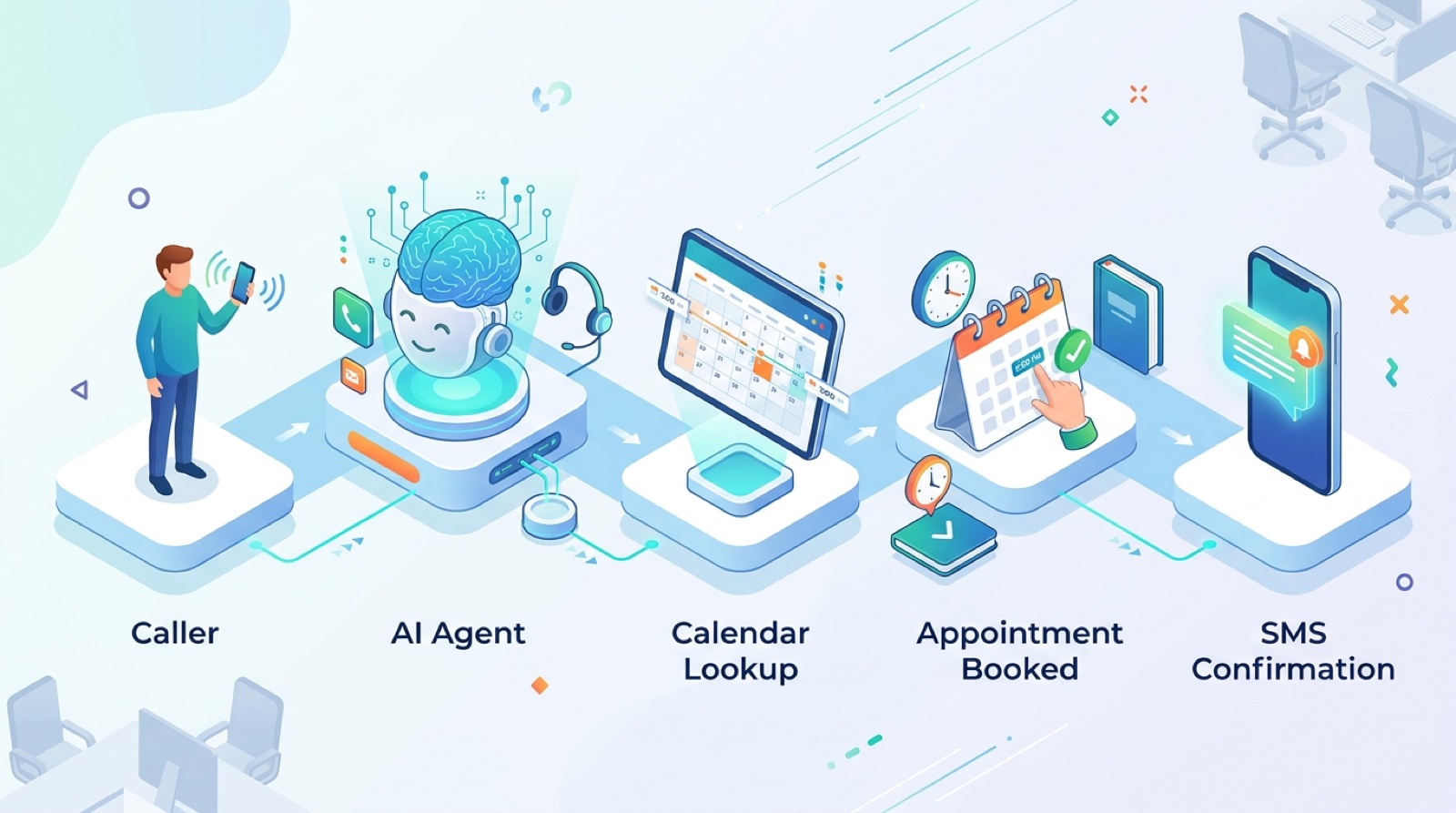
Native SMS sending integrated into the call flow. Send a pre call SMS, then call, then send a post call confirmation. Bland AI does this best.
A drag and drop canvas for designing the conversation. Synthflow has the best one. Code first platforms do not need this.
Direct connectors to HubSpot, Salesforce, GoHighLevel, Pipedrive, Zoho without webhooks. Synthflow has 50+ native integrations.
Run two variants of an agent against the same call traffic and measure which performs better. Most platforms do not have this yet.
Recognize when the call hits a voicemail and either drop a pre recorded message or hang up. Important for outbound campaigns.
Automatic post call summary written by the LLM. Useful for handoff to human reps and CRM logging.
If a platform has any of these red flags, walk away even if everything else looks good.
If the vendor will not tell you the median latency in production, that means the latency is bad. Modern platforms publish this proudly.
If the demo voice has obvious AI artifacts (flat tone, no breath sounds, awkward pauses) the production calls will sound the same. Voice quality is a product decision and it does not improve with more practice.
Any vendor without SOC 2 Type II is not ready for production. This is the baseline.
Pricing opacity is usually a sign of expensive enterprise sales. Look for vendors with public pricing pages.
Vendors who will not let you test before buying are usually hiding something. Free credits or trial accounts are standard in 2026.
For the platforms that score well across the full checklist see Best AI voice agents 2026 and AI voice agent platforms.
How the four big platforms score on the 18 must haves.
| Feature | Retell | Vapi | Bland | Synthflow |
|---|---|---|---|---|
| Sub 1s latency | Yes | Yes (config) | Yes | Yes |
| Interruption handling | Yes | Yes | Yes | Yes |
| Turn detection | Yes | Yes | Yes | Yes |
| Tool calling | Yes | Yes | Yes | Yes |
| Warm transfer | Yes | Yes | Yes | Yes |
| Recording + transcripts | Yes | Yes | Yes | Yes |
| Structured data | Yes | Yes | Yes | Yes |
| Multiple voices | Yes (60+) | Yes (any) | Yes (30+) | Yes (40+) |
| Custom prompts | Yes | Yes | Yes | Yes |
| Native phone numbers | Yes | Yes | Yes | Yes |
| Webhooks | Yes | Yes | Yes | Yes |
| SOC 2 | Yes | Yes | Yes | Yes |
| HIPAA BAA | Yes | Yes | Yes | Yes (+30%) |
| Multilingual | 9 langs | 30+ langs | 4 langs | 12 langs |
| Analytics | Yes | Yes | Yes | Yes |
| Test mode | Yes | Yes | Yes | Yes |
| VAD | Yes | Yes | Yes | Yes |
| Failover | Yes | Yes (config) | Yes | Yes |
| Must have score | 18/18 | 18/18 | 17/18 | 18/18 |
All four major platforms score 17 or 18 out of 18. Bland’s 17 reflects only 4 native languages which is the gap.
For the head to head comparison see Retell vs Vapi vs Bland vs Synthflow.

The relative importance of features varies by industry.

Feature priority by industry. Not every business needs every feature. Match the platform to your actual call patterns.
When a vendor walks you through a demo, ask these specific questions to verify the must haves are real and not marketing.
If any of these answers are weak, the platform is not ready for production.
Which features matter most?
Sub 1 second latency, voice quality, and tool call accuracy. The first impression of the agent depends on these three.
Is HIPAA always required?
Only for healthcare. But pick a platform that offers it because you may need it later.
Do I need outbound dialing?
Only if you run cold outbound or callback campaigns. For pure inbound it does not matter.
What is the difference between cold and warm transfer?
Cold transfer hangs up on the caller and dials the human. Warm transfer keeps the caller on the line until the human picks up. Always use warm transfer.
How do I evaluate voice quality?
Listen to 5 to 10 sample calls in the voice you would actually use. Trust your ear. If it sounds robotic to you, it sounds robotic to your callers.
Should I prioritize features or price?
Features. The cost difference between platforms is small relative to the cost of a bad caller experience.
What is voice activity detection?
The platform’s ability to detect silence and end the call when the caller has hung up. Without it the agent stays on the line indefinitely.
Can I get a trial of a platform before buying?
Yes. Most platforms offer free credits or a trial period. Walk away from any that do not.
Want a platform that scores 18/18? CallSetter AI that meet every must have on this checklist. Live in 48 hours.
Reviewed April 2026 by Victor Smushkevich, CEO of Tested Media. Featured in Forbes, HuffPost, and MarketWatch.
Talk with one of our SEO specialists today and see how we can supercharge your marketing campaigns!