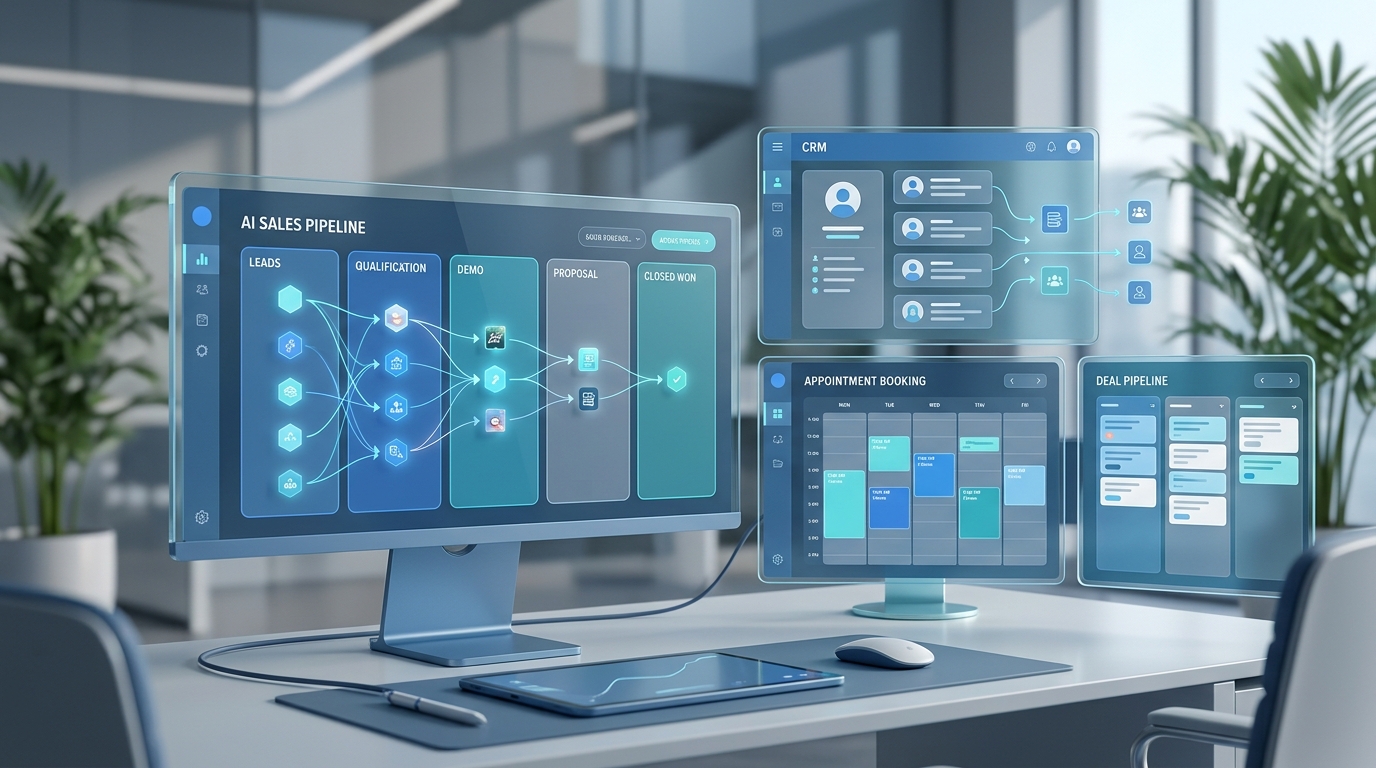
TL;DR. AI lead qualification runs BANT, MEDDIC, or any custom framework on every lead in your pipeline with zero missed steps. The 2026 leaders are Apollo AI, Clay, Outreach AI, Salesloft AI, and 11x.ai. The win is consistency: a human SDR qualifies 30 leads a day with mood swings. AI does 3,000 with zero variance. CallSetter AI is the voice layer that runs the qualification on the call itself, so you stop sending unqualified leads to your closers.
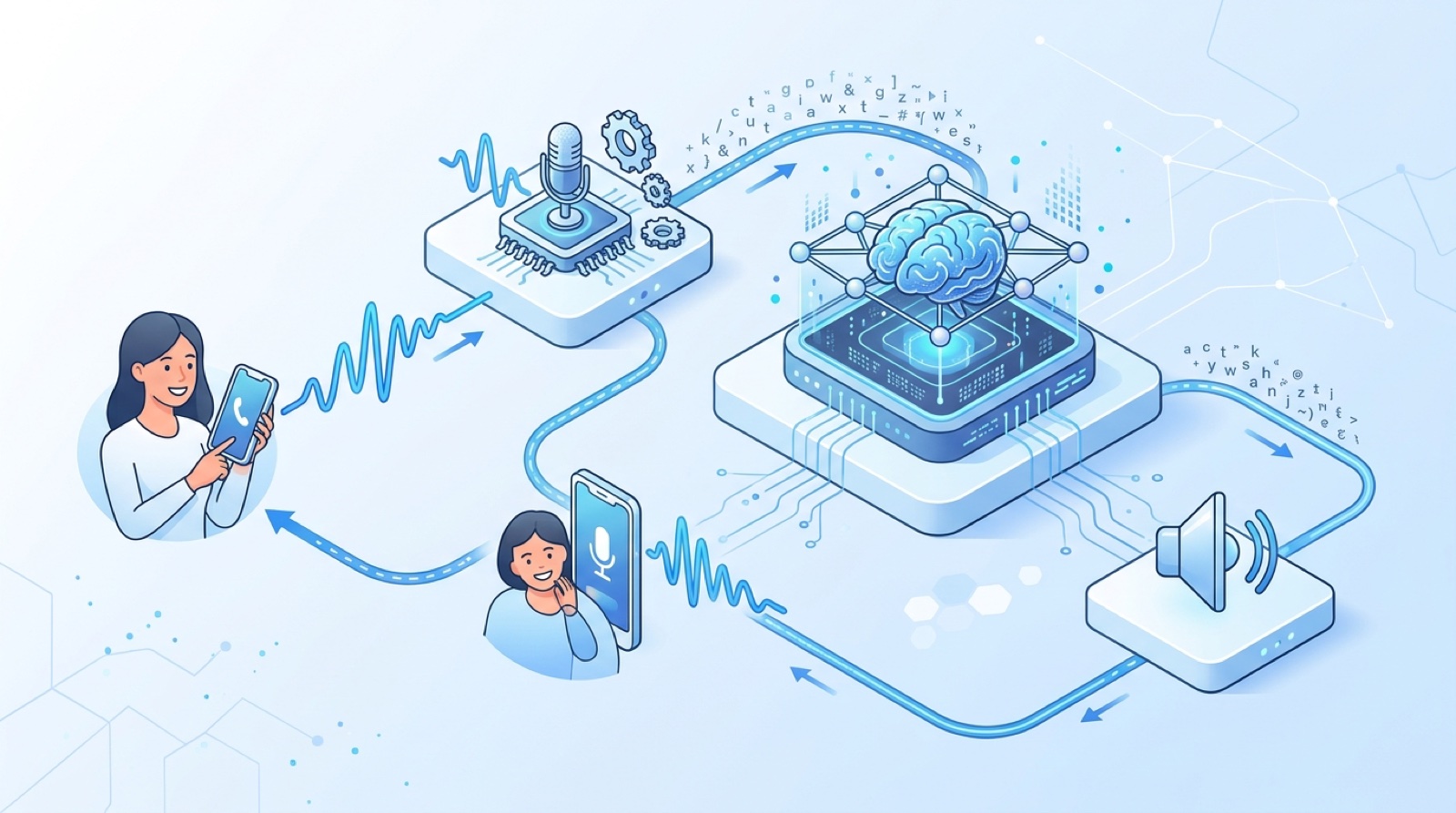
AI lead qualification scores every lead against BANT, MEDDIC, or custom frameworks with zero variance and no skipped steps.
AI lead qualification is software that asks the qualifying questions a good SDR would ask, but does it on every lead, every time, without missing a step. The output is a score, a label (hot, warm, cold), and a recommended next action. Modern systems can run the qualification on inbound forms, on outbound replies, on phone calls, and on chat conversations.
The job has three layers. First, capture the data: ICP fit (firmographics, technographics, intent signals) plus behavioral signals (pricing page visits, demo requests, content downloads). Second, score against the framework: BANT, MEDDIC, custom rubric, or hybrid. Third, route to the next action: warm transfer to AE, drop into nurture, send to a different sequence, or kill.
The 2024 version of this category was rules based. You wrote 40 if then statements in HubSpot or Salesforce. The 2026 version uses LLMs that read the actual conversation transcript and score against a rubric written in plain English. The plain English rubric is the unlock. Anyone can write one. The LLM executes it consistently across thousands of leads.
The two classic qualification frameworks are still the foundation in 2026. The choice between them depends on your sales motion.
BANT (Budget, Authority, Need, Timeline). Four questions. Simple, fast, transactional. Best for SMB, mid market, and any sale where the buying committee is one to three people. Apollo AI, AISDR, and 11x.ai default to BANT for SMB segments. The four questions:
If three of four answers are positive, the lead is qualified. Two of four, the lead enters nurture. One or fewer, the lead is killed.
MEDDIC (Metrics, Economic buyer, Decision criteria, Decision process, Identify pain, Champion). Six questions. Heavier, slower, complex. Best for enterprise B2B with 6 to 12 person buying committees and ACVs over $100,000. Outreach AI and Salesloft AI ship MEDDIC qualification as built in modules.
MEDDIC takes 30 to 45 minutes of conversation to fully complete. Run it across two or three calls, not one.
Custom frameworks. This is where 2026 gets interesting. Plain English rubrics, executed by LLMs, are now competitive with hand built scoring models. We built one for a roofing client that asks five questions specific to roof age, insurance situation, decision maker presence, budget, and urgency. The rubric runs on every inbound call. Close rate jumped from 22 percent to 41 percent in 60 days because reps stopped meeting unqualified leads.
Want a custom qualification rubric built for your business? Talk to the CallSetter AI team and get a free rubric design session. We write it, deploy it on the voice agent, and tune it weekly until the close rate jumps.

There are three classes of AI scoring model running in production at the moment. Each one fits a different business shape.
Class 1: Rules engine with LLM enrichment. This is the entry level model. You define hard rules (company size between X and Y, industry in this list, technology stack includes Z) and the LLM enriches missing data and handles edge cases. Apollo AI, HubSpot AI, and Pipedrive AI work this way. Fast, predictable, easy to debug. The downside is limited learning over time.
Class 2: Predictive ML scoring. Trained on historical closed won and closed lost data, the model learns which signals predict revenue. Works best when you have at least 500 closed deals with clean source data. Salesloft AI, Outreach AI, and the enterprise tier of HubSpot all ship predictive scoring. The downside is that you need clean historical data and the model takes 4 to 8 weeks to tune.
Class 3: Conversation AI with rubric scoring. The newest and most powerful class. The agent runs the actual qualification conversation (call, chat, or email reply), reads the responses, and scores against your rubric on the spot. 11x.ai, AISDR, and CallSetter AI work this way for the voice and email layer. The output is both a score and a structured data extraction (budget number, timeline date, decision maker name) that flows directly into your CRM.
The right answer for most businesses in 2026 is to run Class 1 on the lead intake side and Class 3 on the conversation side. Class 2 is worth the effort only if you have the data volume to train on.
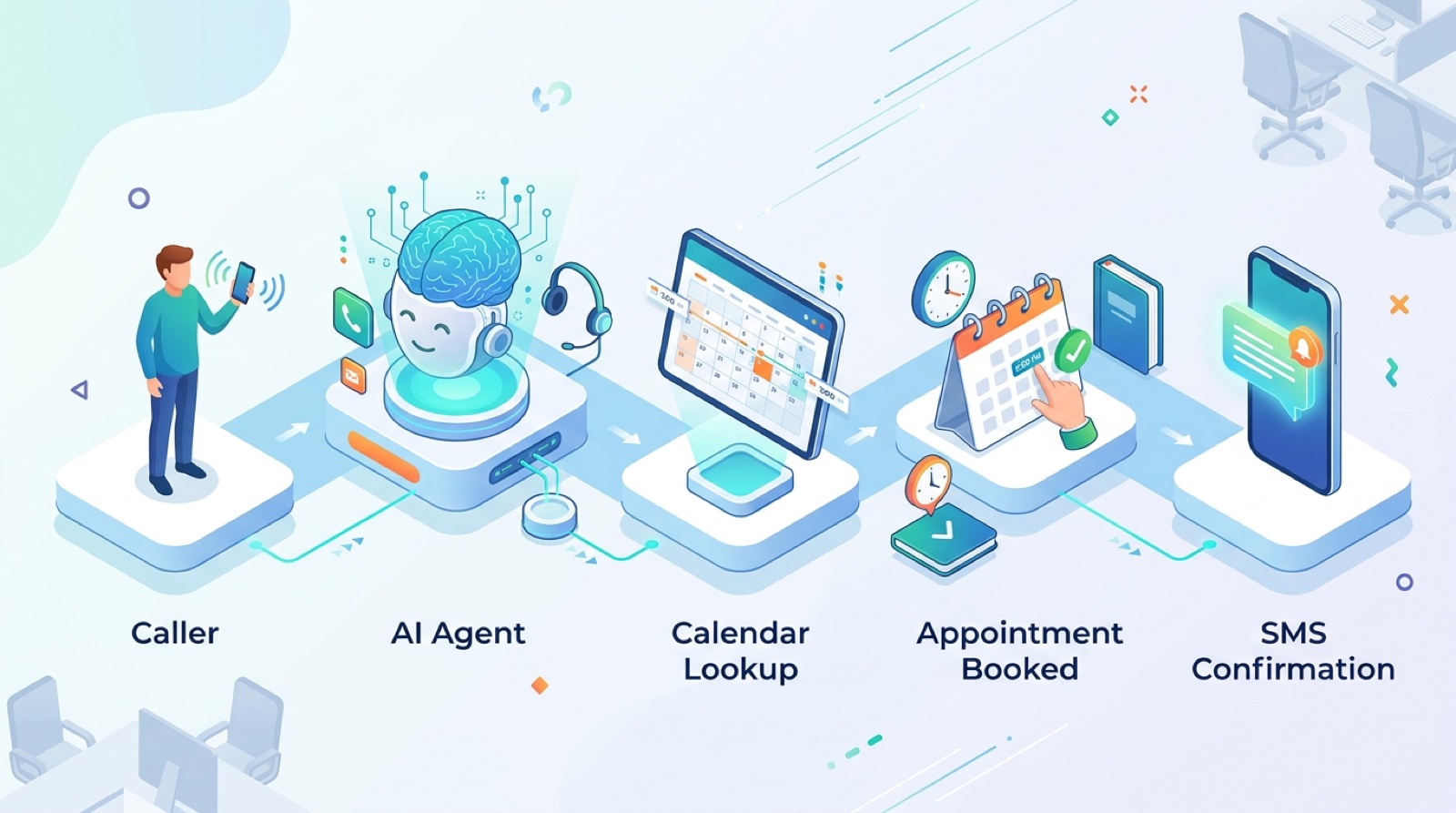
Three classes of AI scoring model dominate in 2026: rules engines with LLM enrichment, predictive ML scoring, and conversation AI with rubric scoring. Most teams run a hybrid.
| Platform | Starting price | Best for | Framework support | Voice qualification |
|---|---|---|---|---|
| Apollo AI | $99/mo | SMB to mid market | BANT, custom | Native dialer |
| Clay | $349/mo | RevOps teams | Fully custom | Via integration |
| Outreach AI | $1,800/seat/yr | Enterprise B2B | MEDDIC, BANT | Native |
| Salesloft AI | $1,500/seat/yr | Enterprise B2B | MEDDIC, MEDDPICC | Native |
| 11x.ai (Alice + Jordan) | $1,500/mo | SaaS teams | BANT, custom | Native |
| CallSetter AI | $499/mo | Service businesses | Custom rubric | Voice native |
Apollo AI is the cheapest entry point with native scoring on top of the Apollo B2B database. Best for solo founders and small teams that want data, scoring, and outreach in one tool.
Clay is the RevOps favorite. Fully custom workflows, Claygent for AI enrichment, and the strongest data layer in the category. The downside is the learning curve. Plan on a week of setup minimum.
Outreach AI and Salesloft AI are the enterprise picks. Both ship MEDDIC qualification as built in modules with deep CRM integration. If you already have seats in either, turn on the AI features rather than ripping and replacing.
11x.ai runs Alice for outbound and Jordan for inbound, with built in qualification on both sides. The pick for SaaS teams that want to replace 2 to 5 SDR seats end to end.
CallSetter AI runs the qualification rubric on the actual phone call. The pick for service businesses where the lead arrives by phone and needs to be qualified before booking.
Most lead qualification programs fail because the rubric is wrong, not because the AI is wrong. Run this sequence to get a rubric that actually predicts close rate.
Step 1: Pull your last 100 closed won deals and your last 100 closed lost deals. Look at the sources, the firmographics, and the conversation transcripts if you have them. Find the patterns that separate the two groups.
Step 2: Write 5 questions that map to those patterns. Not 20. Not 10. Five. Each question should map to one criterion that historically predicts close rate. Score each answer 0 to 2.
Step 3: Set the qualification threshold. A 5 question rubric scored 0 to 2 has a max of 10 points. Set the qualified threshold at 6 or 7 based on how aggressive you want to be. Tighten the threshold over time as the data accumulates.
Step 4: Define the routing logic. Score 7 to 10 = book directly with AE. Score 4 to 6 = enter nurture sequence. Score 0 to 3 = kill or send to lower tier sequence.
Step 5: Test the rubric on the 200 deals from step 1. Run the rubric backward against historical data. If the rubric scores closed lost deals high and closed won deals low, the rubric is wrong. Fix it before deploying.
Step 6: Tune weekly for the first 60 days. Watch the predicted score versus actual outcome. Adjust the question weights based on the data. After 60 days the rubric stabilizes and you only revisit it quarterly.
Here is the math for a typical 10 person SaaS team running 500 inbound leads per month before deploying AI qualification.
Before AI qualification. 500 leads per month. SDRs qualify 80 percent (400 qualified leads). Of those, 40 percent are actually qualified after AE conversation (160 truly qualified). AE close rate 18 percent. Closed won deals: 28.8. AE time wasted on the 240 unqualified leads: roughly 60 hours per month at $100 per hour = $6,000 per month.
After AI qualification. 500 leads per month. AI qualifies on rubric, marks 200 as qualified. AE close rate on AI qualified leads jumps to 32 percent because the rubric filters out tire kickers. Closed won deals: 64. AE time wasted on unqualified leads: ~10 hours per month = $1,000.
Net result. Closed won deals up 122 percent. AE time wasted down 83 percent. The cost of AI qualification (Outreach AI seats, 11x.ai, or CallSetter AI managed): $1,500 to $3,000 per month. ROI: 10x to 30x in the first quarter.
The math gets stronger when you layer in speed to lead. A lead qualified in 60 seconds and routed instantly to the right AE converts at 3 to 5 times the rate of a lead qualified 24 hours later.
Want this running for your team by Friday? CallSetter AI deploys voice qualification in 48 hours. We build the rubric, integrate it into your CRM, and operate the voice agent. You get qualified meetings on the calendar instead of unqualified noise.

A 500 lead per month team running AI qualification typically sees closed won deals jump 100 to 150 percent within 60 days as the rubric filters out tire kickers and routes the right leads to the right reps.
Mistake 1: Over qualifying on the first touch. Five questions max. If the agent grills the lead with 12 questions, the lead bounces. Save the heavier questions for the second call.
Mistake 2: Treating BANT as the only framework. BANT works for SMB and transactional sales. It does not work for enterprise where the decision process is more important than the budget. Use the right framework for your motion.
Mistake 3: Not connecting the rubric to revenue. “Lead score” is meaningless if it does not predict closed won. Tie every rubric question to a downstream revenue metric.
Mistake 4: Letting the rubric go stale. Markets change. ICPs change. The rubric needs to be tuned at least quarterly. Most teams set it and forget it.
Mistake 5: Skipping the voice qualification layer. Email and form qualification are easy to automate. The voice call is where the deal actually gets qualified. Most teams have AI on the email side and a tired SDR on the voice side. The voice side is where the leverage is.
What is the difference between lead scoring and lead qualification?
Lead scoring assigns a numerical value based on signals (firmographics, behavior, intent). Lead qualification verifies those signals through actual conversation and confirms the lead is a fit. Most modern systems do both.
Can AI run BANT on a phone call?
Yes. CallSetter AI, 11x.ai Jordan, and Bland AI all ship voice qualification on the call itself. The agent asks the four BANT questions naturally inside the conversation and scores in real time.
Does AI qualification work for enterprise sales?
Yes, with the right framework. MEDDIC and MEDDPICC work better than BANT for enterprise. Outreach AI and Salesloft AI ship both as built in modules.
How accurate is AI scoring versus a human SDR?
Median deployments hit 80 to 92 percent agreement with experienced SDRs on the same leads. The AI wins on consistency: it never has a bad day, never skips a step, and never gets tired at lead 80.
Can I write my own qualification rubric?
Yes. Modern platforms accept plain English rubrics that the LLM executes. Most service businesses we work with write their first rubric in 30 minutes and tune it weekly for the first 60 days.
How does AI qualification handle lead enrichment?
Most platforms enrich missing data automatically using Apollo, Clay, Bombora, or a similar B2B data layer. The enriched data feeds into the scoring rubric.
Will AI qualification replace my SDR team?
For the qualification job specifically, yes. The SDR layer collapses by 70 to 90 percent over the next 24 months. The AE layer stays. The shift is from a pyramid of 10 SDRs supporting 2 AEs to a stack of AI agents supporting 1 AE doing 5 times the volume.
What is the minimum lead volume that justifies AI qualification?
50 inbound leads per month for SMB. 200 leads per month for B2B SaaS. Below those thresholds you can do the work by hand.
Author: Victor Smushkevich, CEO and Founder of Tested Media. Last reviewed April 2026.
Ready to qualify every lead with zero variance? Talk to the CallSetter AI team and get a custom rubric running on your inbound calls by Friday. Sales tools without a working voice agent equal leads that die in the queue.
Talk with one of our SEO specialists today and see how we can supercharge your marketing campaigns!