TL;DR. Speed to lead is the time between a lead arriving and your first contact attempt. The Harvard Business Review study showed that responding within 60 seconds makes a lead 7 times more likely to qualify than waiting 5 minutes, and 60 times more likely than waiting an hour. The technology to hit 60 seconds has existed for years. AI is the first thing that makes it actually work at scale. CallSetter AI is the voice agent that picks up the phone in under 60 seconds when a lead responds, because the email auto responder is the easy half.
Speed to lead is the single biggest leverage point in modern sales. Sub 60 second response time outconverts 5 minute response by 7x and 1 hour response by 60x.
Speed to lead is the elapsed time between a prospect raising their hand (form fill, demo request, missed call, cold email reply, chat message) and your first contact attempt. It is measured in minutes or seconds. The data on speed to lead is the most studied and the least respected in B2B and B2C sales.
The original Harvard Business Review study by James Oldroyd in 2011 looked at 1.25 million sales leads from 29 B2B and B2C companies. The findings:
A 2023 Drift study confirmed the pattern across 3,000+ B2B websites: median response time was still over 24 hours, and only 7 percent of companies responded within 5 minutes.
The pattern in 2026 has not changed much on the human side. Most B2B teams still respond in hours or days. The shift is that AI now lets the top quartile of teams respond in seconds, on every channel, 24/7. That gap is the largest competitive moat available in sales right now.
Why does response time matter so much? Three things happen in the first 5 minutes after a lead raises their hand.
Window 1: The lead is at the desk. The prospect is on your website. They are thinking about the problem. They expect a response. The exact moment they fill out the form is the highest intent moment of the entire buying journey. Every minute that passes after that, the intent decays.
Window 2: The lead is talking to your competitors. Most prospects request quotes from 3 to 5 vendors. The first vendor to call back gets the first conversation, which dramatically increases the odds of being chosen. A 2024 Velocify study found that the first vendor to respond closed 35 to 50 percent of the deals.
Window 3: The lead context is fresh. After 5 minutes, the prospect has switched to email, the next meeting, lunch, or kids. Reaching them again requires breaking through that context switch. Reach rates drop 80 percent after 30 minutes and 95 percent after 24 hours.
The combined effect is that a lead contacted in 60 seconds is roughly 7 times more likely to convert than the same lead contacted in 5 minutes. Same lead. Same product. Same script. The only variable is when you called.
Want to hit 60 second response time on every lead? Talk to the CallSetter AI team and get an AI voice agent that picks up or calls back in under 60 seconds, 24/7. Same day deployment.
If the data has been clear for 15 years, why do 93 percent of teams still respond in hours or days? Three reasons.
Reason 1: The work is human bound. A traditional speed to lead operation requires an SDR sitting at a desk, watching a CRM, ready to dial within 60 seconds. That works for 8 hours a day, 5 days a week, with bathroom breaks and lunch. It does not work nights, weekends, or holidays. Roughly 60 percent of inbound leads arrive outside business hours.
Reason 2: Routing logic breaks under load. Round robin, territory assignment, and lead qualification rules all introduce delays. By the time the lead is routed to the right rep, 10 minutes have passed.
Reason 3: The handoff between marketing and sales is slow. Marketing captures the lead in HubSpot. The lead gets enriched. The lead waits in a queue. An SDR picks it up an hour later. The whole pipeline is built for batch processing, not real time response.
AI breaks all three constraints. It works 24/7. It does not need routing logic because it handles every lead the same way. And it removes the marketing to sales handoff entirely by responding directly to the inbound trigger.
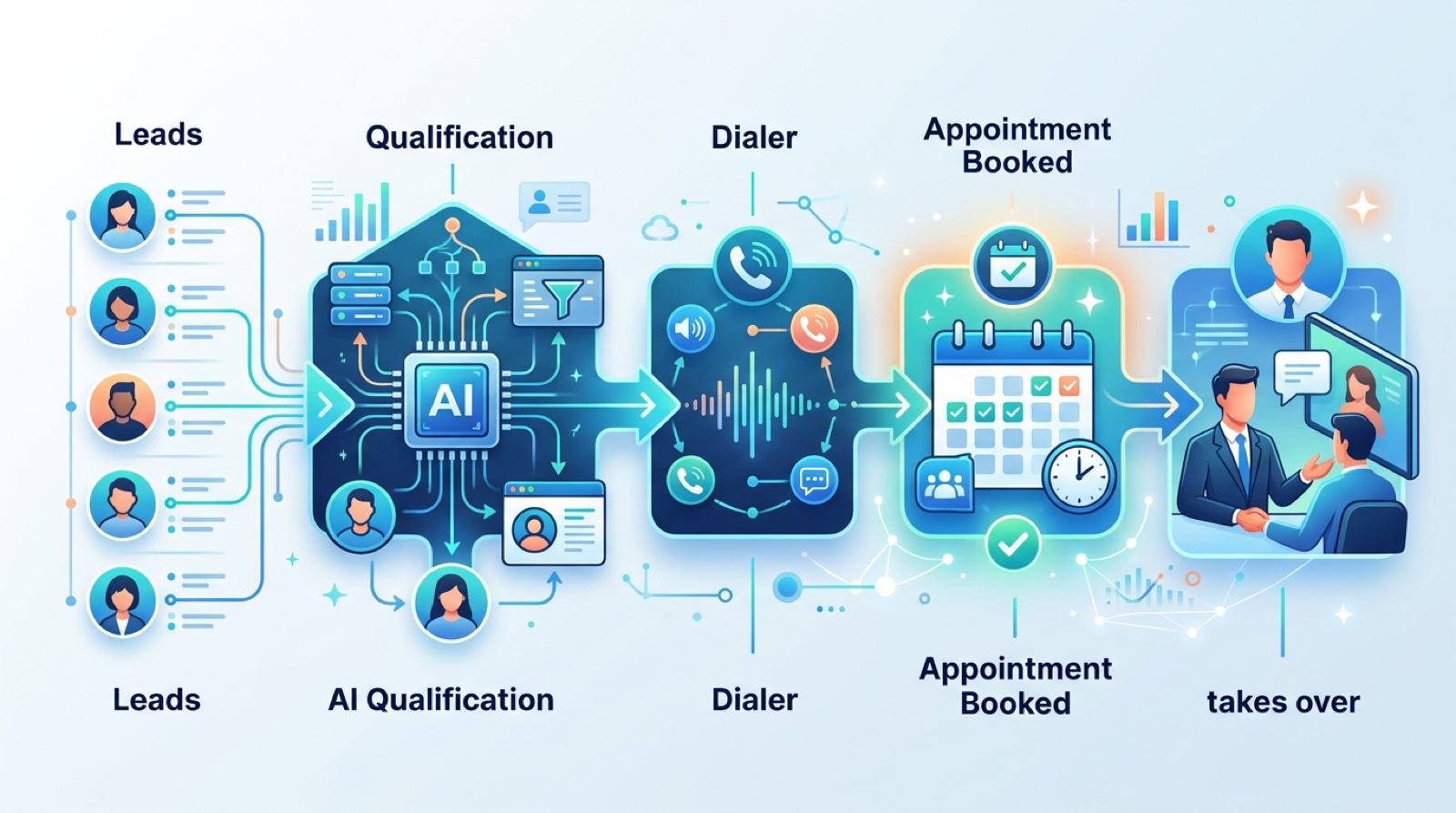
The 2026 AI speed to lead stack runs in 6 steps that fire in under 60 seconds end to end.
Step 1 (0 to 2 seconds): Webhook fires. A lead fills out a form on your website or replies to a cold email. A webhook fires instantly to your lead routing system. Zapier, Make, n8n, or a direct API call all work.
Step 2 (2 to 8 seconds): Enrichment. The routing system enriches the lead with firmographic data from Apollo, Clay, or Bombora. Company size, industry, technology stack, intent signals.
Step 3 (8 to 12 seconds): Scoring. A scoring model decides if the lead clears your qualification threshold. AI scoring (Apollo AI, 11x.ai, Clay) runs in 2 to 4 seconds.
Step 4 (12 to 18 seconds): Channel routing. Hot leads route to voice. Lukewarm leads route to SMS first. Cold leads route to email. The routing logic runs in plain English rules.
Step 5 (18 to 45 seconds): Voice agent dials. For hot leads, an AI voice agent (Bland AI, CallSetter AI, Synthflow) dials the lead’s number. The connection happens in 5 to 15 seconds depending on telecom routing.
Step 6 (45 to 60 seconds): The call connects. The lead picks up. The agent introduces itself, references the form fill or trigger event, and starts the qualifying conversation.
The whole sequence runs without a human touching anything. The first contact happens in under 60 seconds. The lead experiences a vendor that “called back instantly,” which is a memorable moment that influences the buying decision.
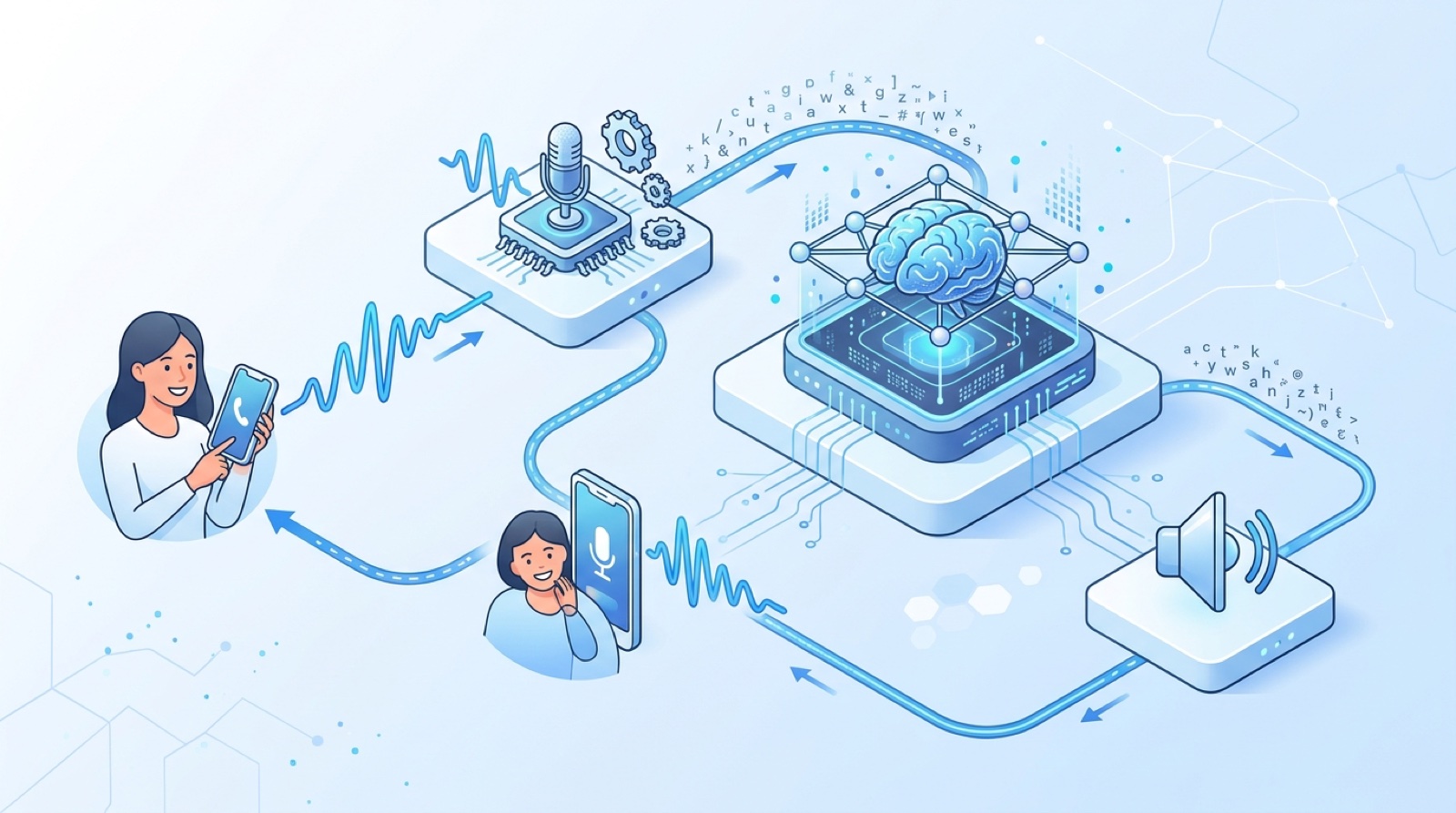
The 6 step AI workflow that takes a lead from form fill to live phone call in under 60 seconds. Every step is automated.
We track speed to lead performance across 50+ deployments running CallSetter AI, Bland AI, and Apollo AI in 2025 and 2026. Here is the median data.
Sub 60 second response. Connect rate 38 to 52 percent. Qualified meeting rate 22 to 35 percent. Closed won rate (when the meeting happens) 28 to 42 percent.
5 minute response. Connect rate 22 to 30 percent. Qualified meeting rate 14 to 22 percent. Closed won rate 22 to 32 percent.
1 hour response. Connect rate 14 to 22 percent. Qualified meeting rate 8 to 14 percent. Closed won rate 18 to 26 percent.
24 hour response. Connect rate 6 to 12 percent. Qualified meeting rate 3 to 6 percent. Closed won rate 12 to 18 percent.
The lift from sub 60 second response is roughly 6 to 8 times higher than 24 hour response on closed won rate. That is the math that makes the investment in AI obvious.
For a service business with 200 inbound leads per month, a 5 minute response baseline closes ~13 deals per month. The same business hitting sub 60 second response closes ~30 deals per month from the same 200 leads. No new lead generation. Just better speed.

Speed to lead is not just a phone call thing. It applies to every inbound channel.
Channel 1: Web form fills. Webhook to AI voice agent. Sub 60 second dial.
Channel 2: Demo requests. Webhook to AI voice agent or instant calendar booking. Sub 60 second contact.
Channel 3: Live chat. AI chatbot answers in under 5 seconds. Hands off to voice or human if needed.
Channel 4: Missed phone calls. Missed call text back fires in under 60 seconds. AI voice agent calls back if requested.
Channel 5: Cold email replies. Webhook fires when reply lands. AI voice agent calls within 60 seconds for hot replies.
Channel 6: Paid ad lead forms (Facebook, Google, LinkedIn). Native lead form integrations route to voice in real time.
Channel 7: Inbound LinkedIn DMs. AI replies in chat. Books a call if interest is hot.
Most teams optimize one channel and ignore the other six. The leverage is in covering all seven with the same sub 60 second SLA. AI is the only technology that makes the math work.
Want all 7 channels covered with one AI agent? CallSetter AI deploys cross channel speed to lead in 48 hours. Voice, SMS, web form, missed call, cold email reply, chat. All 60 seconds or less.
Here is the math for a 200 lead per month service business shifting from 5 minute response to sub 60 second response.
Before (5 minute baseline). 200 leads per month. Connect rate 26 percent (52 connects). Qualified meeting rate 18 percent of connects (9.4 meetings). Show rate 65 percent (6.1 shows). Closed won rate 28 percent (1.7 closed). Average ticket $4,800. Monthly revenue $8,160.
After (sub 60 second response). 200 leads per month. Connect rate 45 percent (90 connects). Qualified meeting rate 28 percent (25.2 meetings). Show rate 72 percent (18.1 shows). Closed won rate 35 percent (6.3 closed). Monthly revenue $30,240.
Net result. Closed won deals up 270 percent. Monthly revenue up $22,080. Cost of CallSetter AI managed plan: $499 plus $80 in voice minutes. Net gain $21,500 per month. ROI: 37x.
These numbers are conservative for service businesses. The lift is even bigger when you layer in missed call text back on the calls the AI cannot pick up immediately.
Conversion rate drops sharply as response time increases. Sub 60 second response converts 6 to 8 times higher than 24 hour response on the same lead pool.
Mistake 1: Measuring time to first email instead of time to first call. Email auto responders are easy and meaningless. The conversion lift comes from voice contact, not email confirmation.
Mistake 2: Routing leads through too many systems. Every system adds latency. The fewer hops between webhook and dial, the better.
Mistake 3: No after hours coverage. 60 percent of inbound leads arrive outside business hours. If your speed to lead only runs 9 to 5, you are losing the majority of the upside.
Mistake 4: Treating the AI call as a one shot. If the lead does not pick up on the first call, retry in 5 minutes, then 30 minutes, then 2 hours. Persistence matters as much as speed.
Mistake 5: Not tracking the metric. “Speed to lead” needs to be a top 5 metric on the sales dashboard. Most teams do not measure it. The teams that measure it improve it.
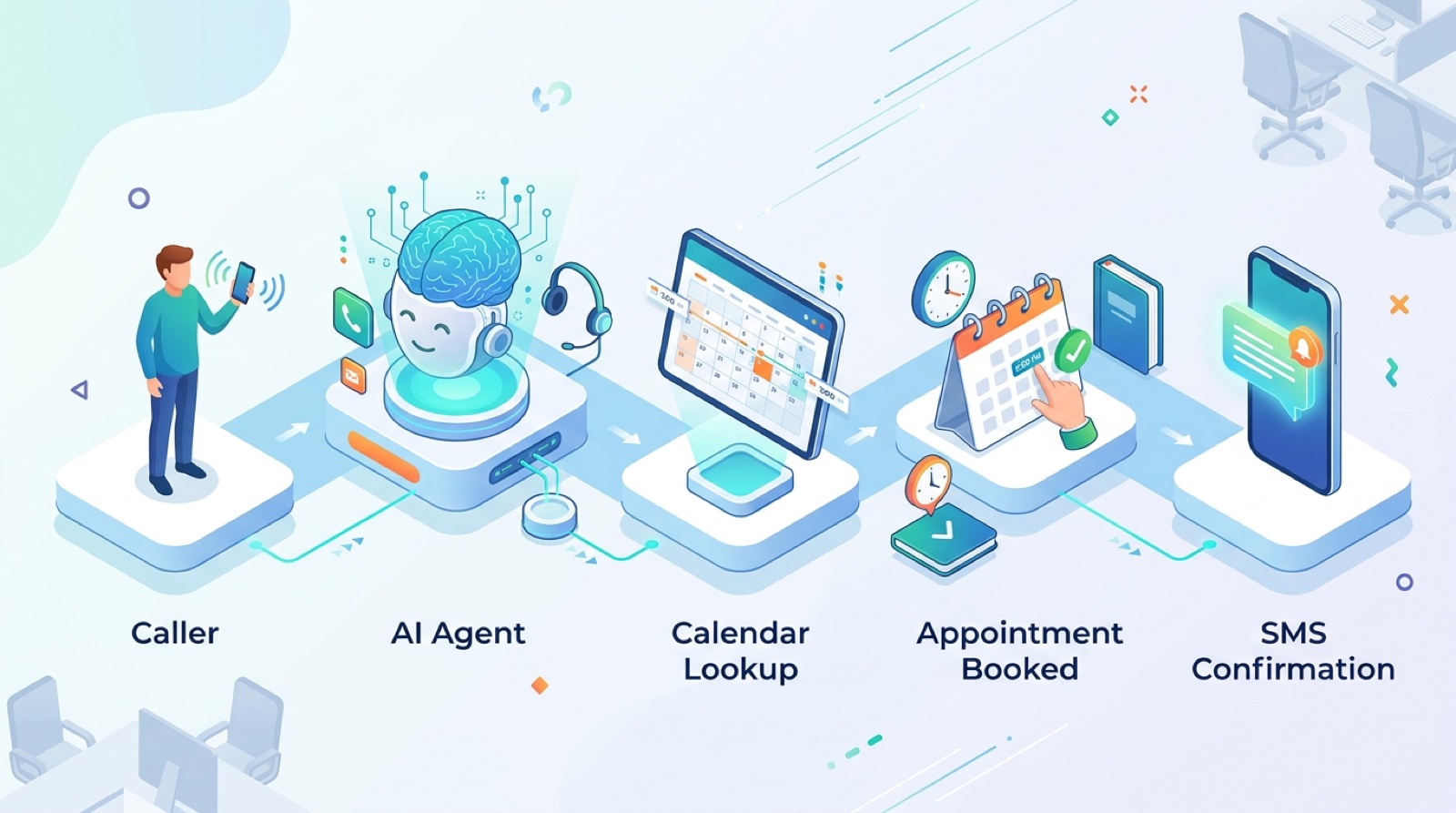
What is the ideal speed to lead response time?
Under 60 seconds for hot leads. Under 5 minutes for warm leads. Under 1 hour for cold leads. Anything over 1 hour leaks 60 to 80 percent of the conversion potential.
Does this work for B2C or only B2B?
Both. The lift is even bigger in B2C high consideration categories (insurance, mortgage, real estate, home services) because consumers are calling 5 vendors at once and the first to respond wins.
How fast can AI actually call back?
The fastest deployments hit 18 to 30 seconds from form fill to live call. Most production deployments run in the 45 to 90 second range, well inside the 5 minute target.
What if the lead does not want a call?
The agent offers a text or email follow up instead. Roughly 40 percent of leads prefer text on the first touch. The agent reads the cue and adapts.
How does this compare to missed call text back?
Missed call text back is one specific channel inside speed to lead. It catches the leads who tried to call you and got no answer. Speed to lead is the broader strategy across all 7 channels.
Can I use speed to lead for cold outbound replies?
Yes. When a cold email reply lands, fire a webhook to the voice agent and call within 60 seconds. Reply to call conversion rates jump 3 to 5x.
What is the biggest blocker most teams hit?
Routing logic. Round robin and territory assignment introduce delays. The fix is to route everything through the AI agent first and let the agent handle the qualification and the routing.
Does speed to lead matter if my lead volume is low?
Yes. Low volume teams see the biggest percentage lift because every lost lead is a meaningful percentage of revenue. A 10 lead per month business hitting 60 second response converts 4 to 6 of those leads instead of 1 to 2.
Author: Victor Smushkevich, CEO and Founder of Tested Media. Last reviewed April 2026.
Ready to hit 60 second response on every inbound lead? Talk to the CallSetter AI team and get an AI voice agent answering inbound and calling outbound replies in under 60 seconds by Friday. Sales tools without a working voice agent equal leads that die in the queue.
Talk with one of our SEO specialists today and see how we can supercharge your marketing campaigns!