
TL;DR AI integration services connect AI tools like GPT 5.4 and Claude Opus 4.6 to existing business systems like Salesforce, HubSpot, NetSuite, calendar APIs, and phone systems. The 2026 stack uses Make.com, Zapier, n8n, LangChain, and LlamaIndex. Integration is 30 to 50% of any AI implementation budget. The highest ROI integrated AI for most service businesses is an AI voice agent. CallSetter AI deploys them in 48 hours.
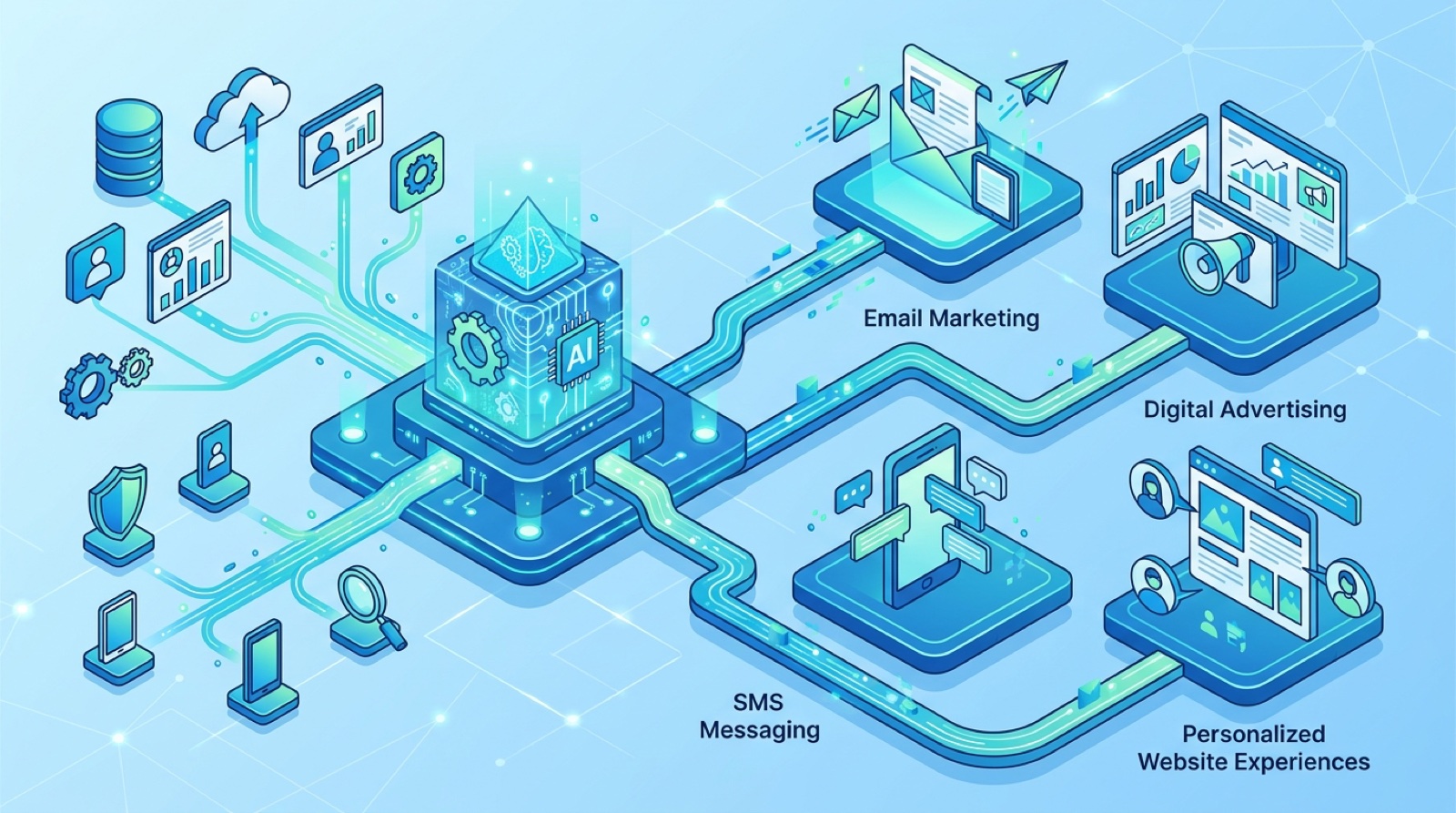
A modern AI integration connects LLMs to CRM, ERP, calendar, and phone systems via API connectors and orchestration platforms.
CallSetter AI answers every call in under 60 seconds, qualifies the lead, and books the appointment on your calendar, 24/7. Built by our team, live in hundreds of conversations a day.
AI integration services are the work of connecting AI tools to existing business systems. Picking a great AI tool is 20% of the project. Connecting it to your CRM, ERP, calendar, billing, and phone systems is the other 80%.
Most AI vendors underestimate the integration work in their sales pitch. The pitch sounds like “install our tool and start saving money.” The reality is “install our tool, then spend 4 to 12 weeks getting it to talk to the 8 systems where your data lives.”
Good AI integration services unblock this. They map the data flow, build the connectors, handle authentication, write the error handling, and run the QA before go live.
1. Data flow mapping. Document where data lives today and where the AI tool needs it to flow. Usually involves 5 to 15 systems.
2. API access provisioning. Get API keys, OAuth tokens, and webhook permissions for every system. This is paperwork, not engineering, and it takes 2 to 4 weeks for enterprise systems.
3. Connector configuration. Build the actual integrations using Make.com, Zapier, n8n, LangChain, or custom code.
4. Data transformation. Convert data formats between systems. CRM A might use “first_name” and CRM B might use “FirstName.” Map every field.
5. Authentication and security. Handle OAuth, API key rotation, and audit logging. Critical for compliance.
6. Error handling. Build retry logic, fallback paths, and alerting. Without this, integrations break silently.
7. QA and go live. Test every workflow end to end with real data before flipping the switch.
8. Monitoring and ongoing maintenance. Integrations break when vendors change APIs. Plan for ongoing maintenance.

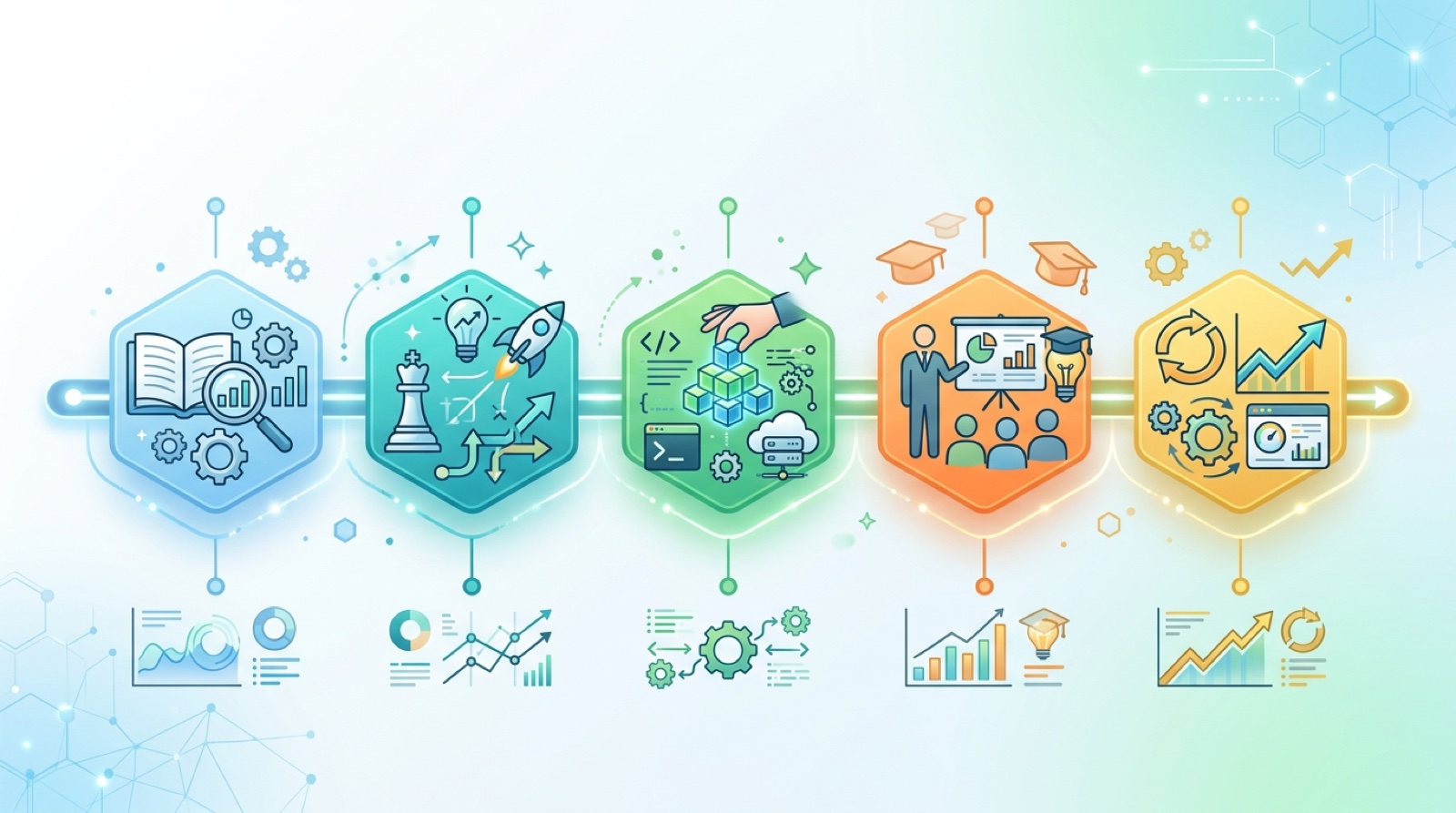
The 8 phase AI integration project flow from data mapping through monitoring.
| Tool | Best for | Price | Code or no code |
|---|---|---|---|
| Make.com | Visual no code | $9/mo | No code |
| Zapier | Simple connectors | $20/mo | No code |
| n8n | Self hosted no code | Free or $20/mo | No code |
| Workato | Enterprise integration | Custom | Low code |
| Tray.io | Mid market | Custom | Low code |
| MuleSoft | Enterprise iPaaS | Custom | Code |
| LangChain | Custom AI apps | Free | Code |
| LlamaIndex | Custom RAG | Free | Code |
For small and mid sized businesses, Make.com or n8n is the right pick. For enterprises with deep IT requirements, Workato or MuleSoft. For custom AI apps with deep tool calling, LangChain or LlamaIndex on top of GPT 5.4 or Claude Opus 4.6.
These are the integration patterns we see most often in 2026.
1. AI voice agent + CRM + calendar. The voice agent answers calls, qualifies leads, looks up the calendar, books appointments, and creates CRM records. Integration touches Twilio, GHL or Salesforce, Google Calendar, and Slack. See our AI voice agents guide.
2. AI chatbot + helpdesk + knowledge base. Chatbot handles tier 1 questions using a knowledge base, escalates tier 2 to humans with full context. Integration touches Intercom or Zendesk, the company wiki, and the AI tool.
3. AI lead scoring + CRM + ad platforms. AI scores new leads on quality, pushes scores to the CRM, and triggers ad audience updates. Integration touches HubSpot or Salesforce, Meta Ads, Google Ads, and the scoring model.
4. AI invoice processing + accounting + email. Incoming invoices via email get parsed, matched to POs, and pushed to QuickBooks or NetSuite. Integration touches IMAP, the AI parser, and the accounting system.
5. AI content marketing + CMS + analytics. Generated articles get pushed to WordPress with proper meta tags, schema, and tracking. Integration touches Jasper or Writesonic, WordPress, GA4, and Search Console. See our AI content marketing guide.
6. AI sales coaching + call recording + CRM. Sales calls get transcribed, AI extracts insights, and pushes coaching notes to the CRM. Integration touches Gong or Chorus, the AI model, and the CRM.
Mid article CTA. The highest ROI AI integration for most service businesses is an AI voice agent. CallSetter AI deploys them in 48 hours.
| Project size | Integration cost | Timeline |
|---|---|---|
| Small (1 to 3 systems) | $5K to $20K | 2 to 4 weeks |
| Mid (4 to 8 systems) | $20K to $80K | 4 to 12 weeks |
| Large (9+ systems) | $80K to $250K | 12 to 24 weeks |
| Enterprise (15+ systems) | $250K+ | 6 months+ |
These are integration only costs. They do not include the AI tool licensing, the strategy work, or ongoing maintenance. Integration is typically 30 to 50% of total project cost.
For more on pricing, see our AI consultant and AI implementation guides.

A regional dental group with 20 locations integrated AI into their patient experience flow.
Systems involved:
Integration work:
Timeline: 10 weeks from kickoff to go live.
Cost: $65,000 for integration work, plus $2,000 per month per location ongoing.
Year 1 results:
The 10 week integration timeline was longer than expected. Most teams plan 4 weeks and end up at 10 to 12. Always pad the integration timeline.
For dental specific guidance see our AI for dental practices and AI for dentists guides.
Underestimating the integration timeline. Plan 2x what you think.
Skipping the data flow map. Without mapping, you find missing fields halfway through.
Forgetting authentication. OAuth and API key management is half the work.
No error handling. Integrations break silently. Build alerting from day one.
Skipping QA. Real data breaks integrations that worked on test data.
Ignoring rate limits. Vendor APIs have rate limits. Hit them in production and the integration breaks.
Not planning for vendor API changes. Vendors change APIs. Plan for ongoing maintenance.

The seven mistakes that turn AI integration into a 6 month nightmare instead of a 6 week project.
Question 1: Have they integrated your specific systems before? Demand case studies with the same CRM, ERP, and helpdesk you use.
Question 2: Do they handle ongoing maintenance? Integrations break when vendors change APIs. The vendor that builds it should fix it.
Question 3: What is their security and compliance posture? SOC 2, HIPAA, or whatever your industry requires.
Question 4: Do they use no code or custom code? No code is faster and cheaper. Custom code is more flexible. Pick based on the project.
Question 5: What is their post launch support model? First 30 days free is standard. Beyond that, expect monthly retainers.
Build internally when AI is core to your competitive advantage and you have a dedicated engineering team comfortable with LangChain or LlamaIndex.
Hire integration services when you have a defined AI project and need to ship it in 8 to 12 weeks without distracting your engineering team.
Buy a vertical platform when your use case is standard. A platform like CallSetter AI handles voice agent integration end to end without custom work.
For most service businesses the vertical platform is the right answer. Custom integration is only worth it when no platform fits.
What are AI integration services?
The work of connecting AI tools to existing business systems like CRM, ERP, calendar, and phone.
How much do AI integration services cost?
$5K to $250K depending on number of systems. Typically 30 to 50% of total AI project cost.
How long does AI integration take?
2 to 24 weeks depending on number of systems and complexity. Always pad your initial estimate by 2x.
What tools do AI integration services use?
Make.com, Zapier, n8n, Workato, MuleSoft for orchestration. LangChain or LlamaIndex for custom AI apps.
Do I need an integration vendor or can I do it myself?
DIY works for simple no code integrations on Make.com or Zapier. Custom code or enterprise integration usually needs help.
What is the most common AI integration?
AI voice agent or chatbot connected to CRM and calendar. The 2026 standard.
Will the integration break when vendors change APIs?
Yes. Plan for ongoing maintenance.
CallSetter AI answers every call in under 60 seconds, qualifies the lead, and books the appointment on your calendar, 24/7. Built by our team, live in hundreds of conversations a day.
Talk with one of our SEO specialists today and see how we can supercharge your marketing campaigns!