TL;DR AI social media marketing in 2026 is the use of large language models, image generators, and scheduling automation to plan, create, publish, and analyze social content across LinkedIn, X, Instagram, TikTok, Facebook, YouTube, and Threads. The market is dominated by Buffer AI, Hootsuite AI, Sprout Social AI, Later, SocialBee, Vista Social, Publer, Predis.ai, FeedHive, ContentStudio, and a wave of platform native tools like Postwise, Tweet Hunter, and Taplio for X and LinkedIn. Done right, a single operator can ship 50 posts a week. Done wrong, you become another generic AI slop account that gets zero reach. Social media drives traffic and inbound DMs. When those leads pick up the phone, CallSetter AI handles the call, qualifies the lead, and books the meeting around the clock.
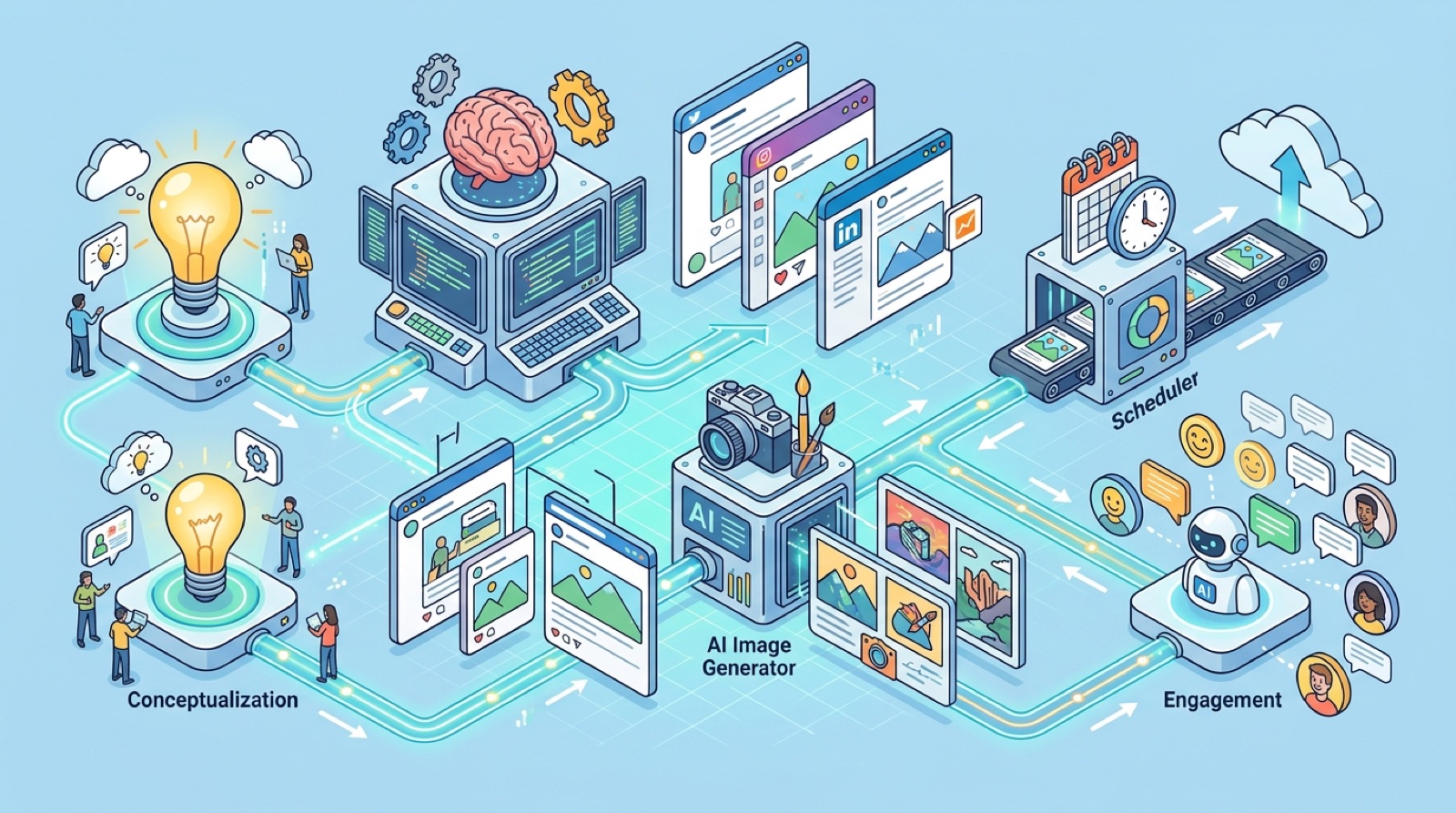
A 2026 AI social media stack plans, writes, designs, and schedules a full month of content across every major network from one workspace.
What AI Social Media Marketing Means in 2026
AI social media marketing is the discipline of using artificial intelligence to handle the parts of social that used to eat the most human time. Research, ideation, copywriting, image generation, video editing, scheduling, engagement, listening, and reporting. The part a human still owns is taste, brand voice, and the strategic call on what to say and to whom.
Three years ago an AI social media tool was a nice to have. In 2026 it is the default. The teams winning on LinkedIn, X, Instagram, and TikTok are not the ones with the biggest budgets. They are the ones who built the right AI workflow and execute it with discipline.
Here is the simple test for whether an AI social media program is working. Can one person, in two hours a week, ship 30 to 50 high quality posts that match the brand voice, get distribution, and produce qualified inbound? If yes, the workflow is right. If no, the team is using the wrong tools or using them wrong.
This guide walks through tool categories, head to head comparisons, platform specific tactics, batch workflows, image and video generation, engagement, listening, measurement, and the tactics that move the needle versus the ones that waste your time. Want the wider context first? Read our pillars on AI marketing, AI content, and AI SEO.
The Categories of AI Social Media Tools
There is no single tool that does everything well. The 2026 AI social stack is layered, and understanding the layers is the difference between paying for five tools that do the same thing and assembling a real workflow.
Layer 1: AI content creation. Ideas to draft posts, captions, hooks, threads, and carousels. Powered by GPT 5.4, Claude Opus 4.6, or Gemini 3.1 Pro. Predis.ai, FeedHive, Magai, Plaiword, ContentStudio, Postwise, Tweet Hunter, and Taplio live here. The good ones learn your voice from past posts.
Layer 2: AI scheduling and publishing. The operational layer that pushes drafts to the right platform at the right time. Buffer AI, Hootsuite AI, Later, SocialBee, Vista Social, Publer, and Sprout Social AI dominate here.
Layer 3: AI engagement and community. Auto reply to comments, route DMs, prioritize hot leads, surface mentions. Sprout Social AI and Sprinklr AI lead enterprise. ManyChat and MobileMonkey cover SMB.
Layer 4: AI analytics and reporting. Pull data from every platform, attribute results, produce weekly reports automatically. Sprout Social AI, Hootsuite Insights, and Sprinklr lead. Buffer and Later have lighter weight analytics built in.
Layer 5: AI social listening and sentiment. Monitor brand mentions, competitor activity, hashtags, and conversations. Brandwatch, Talkwalker, Mention, and Sprinklr AI live here. Sprout Social Listening is the SMB friendly option.
Most teams need a tool from layers 1, 2, and 4. Larger brands need 3 and 5 too. The mistake we see most is buying one all in one platform that does every layer at 6 out of 10 quality when a stack of two specialized tools at 9 out of 10 each costs the same and ships better content.
Read our full breakdown of AI social media tools for category by category recommendations.
Top AI Social Media Tools Compared
Here is the head to head matrix on the seven tools we use most often in 2026 client deployments. Pricing is the entry tier as of April 2026 in USD per month.
| Tool | Price (entry) | Best for | Platforms | AI features |
|---|---|---|---|---|
| Buffer AI | $6 per channel | SMBs and creators who want simple | LinkedIn, X, Instagram, Facebook, TikTok, YouTube, Threads, Pinterest, Mastodon, Bluesky | AI Assistant for captions, repurposing, hashtag suggestions |
| Hootsuite AI | $99 | Mid market teams managing 5+ brands | All major networks plus YouTube and TikTok | OwlyWriter AI, Hootsuite Insights, Inbox AI |
| Sprout Social AI | $249 | Enterprise teams that need analytics and listening | All major networks | AI Assist, Sentiment, Listening, Smart Inbox |
| Predis.ai | $32 | Visual heavy brands and ecommerce | Instagram, Facebook, LinkedIn, TikTok, YouTube | AI carousel generator, video templates, competitor analysis |
| Postwise | $29 | X (Twitter) creators and personal brands | X only | AI tweet writer trained on viral patterns, thread builder, growth analytics |
| Taplio | $39 | LinkedIn personal brands and B2B founders | LinkedIn only | LinkedIn post generator, viral post inspiration, scheduling, lead engagement |
| Vista Social | $39 | Agencies managing multiple clients | All major networks plus Google Business and Bluesky | AI content generator, AI image generator, review management |
A few things stand out from this matrix that are worth saying out loud.
Buffer AI is the right starter for solo operators who do not want to spend $250 a month. Cleanest interface, lightweight but useful AI, scales up later without losing data. Postwise and Taplio are platform specific by design and beat the all in one tools on X and LinkedIn because they are trained on the specific patterns that work on those networks. Sprout Social and Hootsuite are for teams, justified when 5+ people coordinate posts and reporting, overkill for a solo founder. Predis.ai is the visual specialist for brands that live on Instagram and TikTok. Vista Social is the agency workhorse for shops managing 5 to 50 client accounts.
See our full Buffer AI vs Hootsuite AI vs Sprout Social comparison.
Platform Specific AI Strategies
Generic social strategy is dead in 2026. Each platform rewards different content shapes, different posting cadences, and different engagement patterns. Here is the AI playbook for each major network.
LinkedIn rewards founder voice, contrarian takes, and personal stories tied to business lessons. The 2026 algorithm favors text posts and carousels with native video gaining ground fast. Use Taplio to find viral posts in your niche from the last 30 days, have Claude Opus 4.6 generate 10 angles based on your point of view, then write the top 3 in your actual voice. Post 3 to 5 times a week, never link out in the post body (LinkedIn throttles outbound links, put them in the first comment), and engage with 10 relevant comments per day in the first 60 minutes after posting.
The single biggest mistake on LinkedIn is letting AI write the whole post unedited. Readers can tell. Use AI for ideation and first draft, then heavily edit in your voice.
X (Twitter)
X in 2026 is a velocity game. The accounts that win post 5 to 15 times a day and run threads as their distribution moat. Use Postwise or Tweet Hunter to study what is going viral in your niche, generate 30 single tweet drafts plus 3 long form threads per week with your point of view loaded as the system prompt, schedule the singles across the day, and post threads at 8 AM ET on Tuesdays and Thursdays. Spend 30 minutes a day in the comments of larger accounts in your space. Sound like a brand and you lose. Sound like a person with a point of view and you win.
Instagram in 2026 is a reels first network with carousels as the secondary format. Static photos almost never get reach unless they are part of a carousel. Use Predis.ai or Ocoya to generate 8 carousel templates a week with your brand colors, plus 4 to 6 reels using Runway ML for b roll layered with real footage in CapCut. Write captions with Plaiword or Magai trained on your top performing past captions. Engage with 20 comments a day on accounts in your niche. Instagram rewards personality and visual taste, so use AI for production speed, never to replace creative direction.
TikTok
TikTok in 2026 still rewards native looking video. Anything that looks too produced gets throttled. Use ContentStudio or Predis to find trending sounds and formats from the last 7 days, generate 10 hook ideas per week with GPT 5.4, film them all in one Sunday batch, edit in CapCut or Descript with auto captions and trending sounds, then post 1 to 2 a day. Watch the analytics and double down on what hits. Use AI for the boring parts and human energy for the on camera part.
Facebook, YouTube, and Threads
Facebook in 2026 is mostly groups and reels. Pages get almost no organic reach. Run a niche group with weekly discussion prompts generated by GPT 5.4, cross post your TikTok and Instagram reels to Facebook reels through Vista Social, and use Facebook ads for paid distribution.
YouTube has two plays. Long form videos where Claude Opus 4.6 outlines and you film, edit in Descript with AI b roll from Runway or Pexels stock. Then generate 5 to 10 shorts per long form video with Opus Clip. Schedule everything in Buffer or Hootsuite.
Threads is finally big enough to ship to in 2026. Cross post your X singles through Buffer or Vista Social, soften the tone slightly (more curiosity, less aggression), and reply to other accounts more often than you post. Treat it as a free distribution channel layered on top of your primary network.
Get the platform by platform AI social strategy in our deep dive.
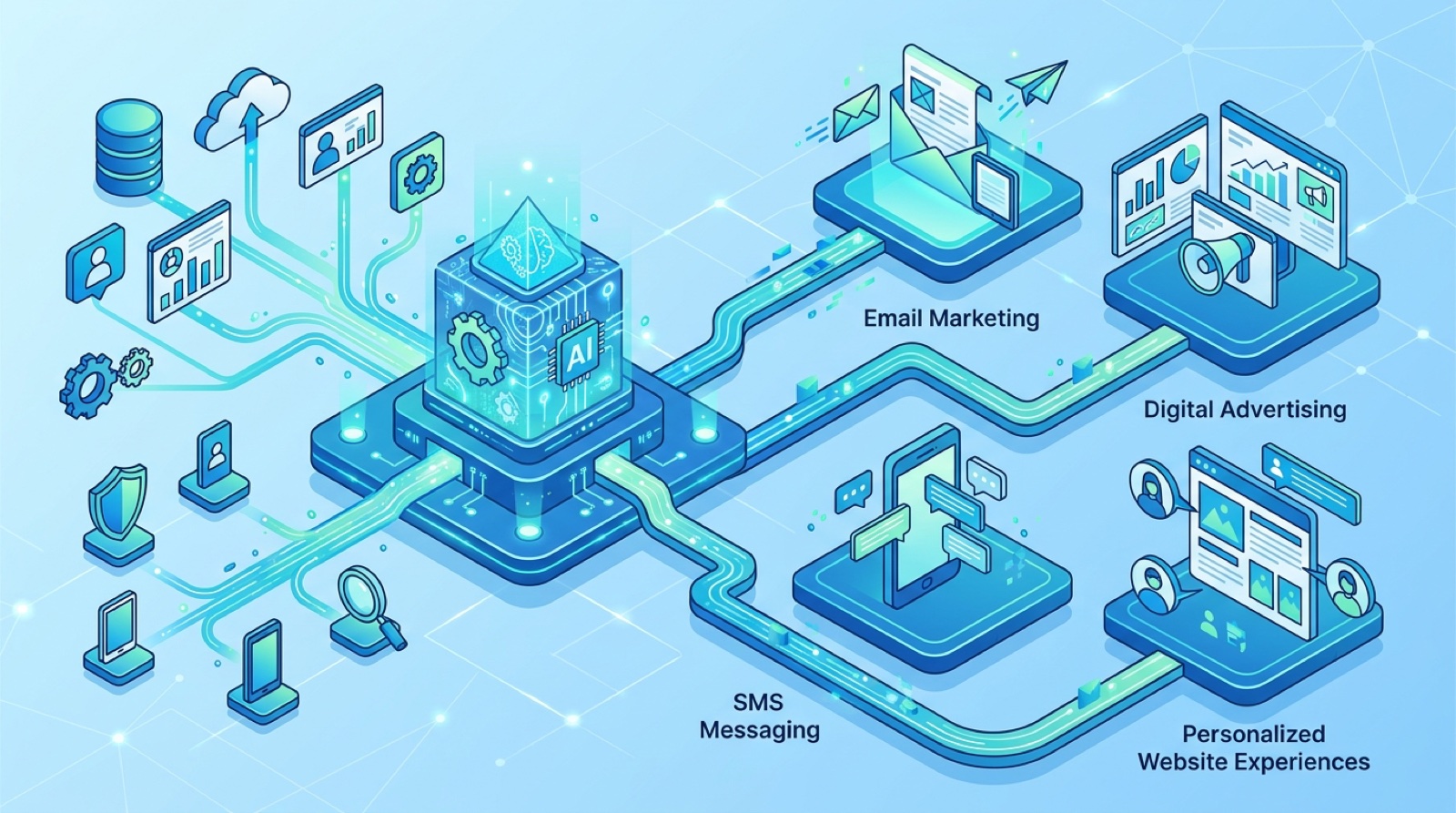
Diagram: AI content batch workflow showing research, generation, editing, and scheduling stages
The 2 hour content batch workflow ships 30 posts a week across 4 platforms with one operator.
The AI Content Batch Workflow (30 Posts in 2 Hours)
Here is the workflow we run for client accounts to produce 30 high quality posts in a 2 hour batch session.
Setup (one time, 60 minutes). Create a brand voice document. Paste 20 of your best past posts, write 5 sentences describing the voice, and save it as a system prompt template you can paste into Claude or GPT 5.4 every session. Without this the AI defaults to generic voice and the workflow falls apart.
Step 1: Research (15 minutes). Open Postwise or Taplio. Look at the top 20 posts in your niche from the last 30 days. Note hooks, angles, formats.
Step 2: Ideation (15 minutes). Open Claude Opus 4.6 with your brand voice prompt loaded. Paste the inspiration. Ask for 30 post ideas, each with a one line hook, a three sentence body angle, and the suggested format.
Step 3: First draft (30 minutes). Write the full posts in your voice in batches of 5 with the voice prompt reloaded each time. Do not generate all 30 in one prompt, the quality drops fast.
Step 4: Edit (30 minutes). Read every draft. Cut the AI tells (the word “delve,” excessive parallelism, generic openers, em dashes). Inject specific details and personal anecdotes. Plan on 60 seconds per post. This is where the quality lives.
Step 5: Visuals (20 minutes). Carousels in Predis.ai or Canva. Images in Midjourney v7 or DALL E 4. Video b roll in Runway ML.
Step 6: Schedule (10 minutes). Drop everything into Buffer, Hootsuite, or Vista Social. Set posting times for each platform. Publish.
Total: 2 hours. Output: 30 posts across 4 to 6 platforms over 1 to 2 weeks. Skip step 4 and you become AI slop. Don’t skip step 4.
See the full AI social media content workflow in our deep dive.
AI Image and Video Generation for Social

The 2026 social feed is image and video heavy. Text only posts work on X and LinkedIn but everywhere else you need visuals.
Midjourney v7 is the best image generator for social in 2026. Photorealistic, strong style consistency across a campaign, $10 to $60 per month. Use it for hero images, ad creative, and carousel slides. DALL E 4 is the second best, more flexible for text inside images and easier to iterate inside a chat. Nano Banana (Gemini 3.1 Flash) is the speed and cost champion. 4K output, 4 seconds per image, $0.04 per generation, ideal for high volume content where you need 50 to 200 images a week.
On the video side, Runway ML Gen 4 leads. Text to video, image to video, and motion brush controls, good enough for reels and shorts especially as b roll layered over real footage. Synthesia and HeyGen make AI avatars that talk, useful for explainer videos and faceless YouTube channels with strong multilingual support. CapCut is not generative but its 2026 AI editing features (auto captions, auto cut, auto reframe for vertical) save hours per week.
The right stack for most operators: Midjourney for hero images, Nano Banana for volume, Runway ML for video b roll, CapCut for editing, Synthesia or HeyGen for talking head explainers without filming yourself.
AI for Social Media Engagement
The other half of social is what happens after you post. Comments, DMs, mentions, shares. AI in 2026 can handle a meaningful chunk of this without sounding like a bot.
Auto reply to comments. Tools like ManyChat, MobileMonkey, and Sprout Social AI detect intent in a comment and reply with a personalized response. The 2024 generation sounded robotic. The 2026 generation, powered by GPT 5.4, sounds human enough that most followers do not notice. Use them for FAQ style comments (“what’s the price,” “where can I buy”) and let humans handle nuanced conversations.
DM automation. The right play is not “spam everyone who follows you,” it is “instantly reply to inbound DMs with a relevant response and route hot ones to a human.” ManyChat for Instagram and Linked Helper for LinkedIn handle this well in 2026.
Comment management at scale. Sprout Social Smart Inbox and Hootsuite Inbox AI surface the comments that matter (questions, complaints, sales opportunities) and let you batch process the noise. For accounts getting 100+ comments a day, this is the difference between drowning and shipping.
The bridge to the phone: Social engagement gets you DMs and inbound interest. The hot leads ask to “hop on a call.” That is where most teams drop the ball, because the call happens during a meeting or after hours. CallSetter AI answers those calls in seconds, qualifies the lead, and books the meeting on your calendar without a human on the line.
AI Social Listening and Sentiment Analysis
Listening is the underrated half of AI social media. Most teams obsess over what to post and ignore what their audience is actually saying.
Brandwatch, Talkwalker, Mention, and Sprout Social Listening track every mention of your brand across networks, blogs, podcasts, and forums. The same tools cover competitor tracking (watch what your top 5 competitors post, what gets engagement, what topics they own) and industry conversation monitoring (specific hashtags, keywords, accounts). Modern tools score every mention as positive, neutral, or negative using language models, which is useful for spotting brewing PR issues before they explode.
The right setup for most brands: Sprout Social Listening for SMB and mid market, Brandwatch or Sprinklr for enterprise, Mention.com at $49 per month if you just need basic brand alerts. The biggest unlock is not the dashboard, it is the trigger. Set up alerts that ping a Slack channel when something needs human attention so listening becomes operational, not just reporting.
The 5 AI Social Media Tactics That Actually Work in 2026

After running and auditing dozens of accounts in 2026, these are the five tactics where AI compounds results.
1. Voice training on your past content. Train your AI tool of choice on your last 50 best performing posts. Use this as a system prompt every session. The output stops sounding like ChatGPT and starts sounding like you. This single change is the biggest quality jump available in 2026.
2. Hook libraries built from competitor analysis. Use Postwise, Taplio, or Tweet Hunter to scrape the top 100 hooks in your niche from the last 90 days. Save them in a doc. When you need a hook, you have a proven library to riff from instead of inventing from scratch.
3. Content repurposing across networks. Take one long form piece (a podcast, a YouTube video, a blog post) and turn it into 20 native posts across LinkedIn, X, Instagram, and Threads. Buffer, Hootsuite, and Vista Social all have AI repurposing built in by 2026. One piece of content becomes a week of distribution.
4. Engagement velocity in the first 60 minutes. Most algorithms decide whether to amplify a post in the first hour. Use AI tools to draft 10 to 20 personalized comments on accounts in your niche right after you publish. Comment first, get noticed, get reach.
5. Weekly content tuning based on AI analytics. Set up a weekly review where AI summarizes what worked, what failed, and what to do next. Sprout Social, Hootsuite, and Buffer all have this in 2026. The teams that read the report and adjust ship better content month over month.
The 5 That Fail (and Waste Your Money)
These are the five tactics we see fail in client audits over and over.
1. Generic AI written posts with no editing. Ship them and you become AI slop. Reach drops to zero, audience loses trust, and the account dies. Always edit.
2. Engagement bait pods. Paying for a fake influencer pod where 50 accounts auto like and auto comment your posts. The platforms have detected this since 2024. You get throttled, then suspended.
3. Auto DM spam. “Hey, saw your profile, want to hop on a call?” Sent to 200 people a day. This kills your account, costs you brand trust, and produces no real leads. Don’t do it.
4. Trying to win every platform at once. A solo operator cannot meaningfully ship to LinkedIn, X, Instagram, TikTok, Facebook, YouTube, and Threads in week one. Pick the 1 or 2 platforms where your audience actually is, win there, then expand.
5. Optimizing for vanity metrics. Followers, likes, and impressions are not the goal. Qualified inbound is the goal. Pick 1 or 2 KPIs that map to revenue and ignore the rest.
Measurement and ROI
The right way to measure an AI social media program in 2026 is by inbound, not by engagement. Here is the 4 metric stack we use in client reports.
Metric 1: Qualified inbound per week. DMs, form fills, calls, and meeting requests that came from social and meet your ICP definition. This is the metric that maps to revenue.
Metric 2: Cost per qualified inbound. Total monthly spend on AI social tools, ads, and content production divided by qualified inbound count. The benchmark in 2026 is $50 to $200 per qualified lead from organic social. Below $50 is exceptional. Above $200 means the program needs tuning.
Metric 3: Reach and impressions (secondary). Track this to know whether the algorithm is amplifying you, but never make it the primary KPI.
Metric 4: Audience growth rate (secondary). Following count is a lagging indicator of the first three metrics. Watch it but do not optimize for it directly.
The trap most teams fall into is reporting on likes, comments, and follower count to the boss and skipping the inbound number. Flip it. Lead with inbound, mention the rest as context.
For attribution to actually work, you need a clear path from social to call. That is where CallSetter AI closes the loop. Every call that comes through a CallSetter agent is logged, attributed to source, and pushed into your CRM. Suddenly you can see which posts drove which calls and which calls turned into revenue.
Read the full AI marketing measurement guide for the wider picture.
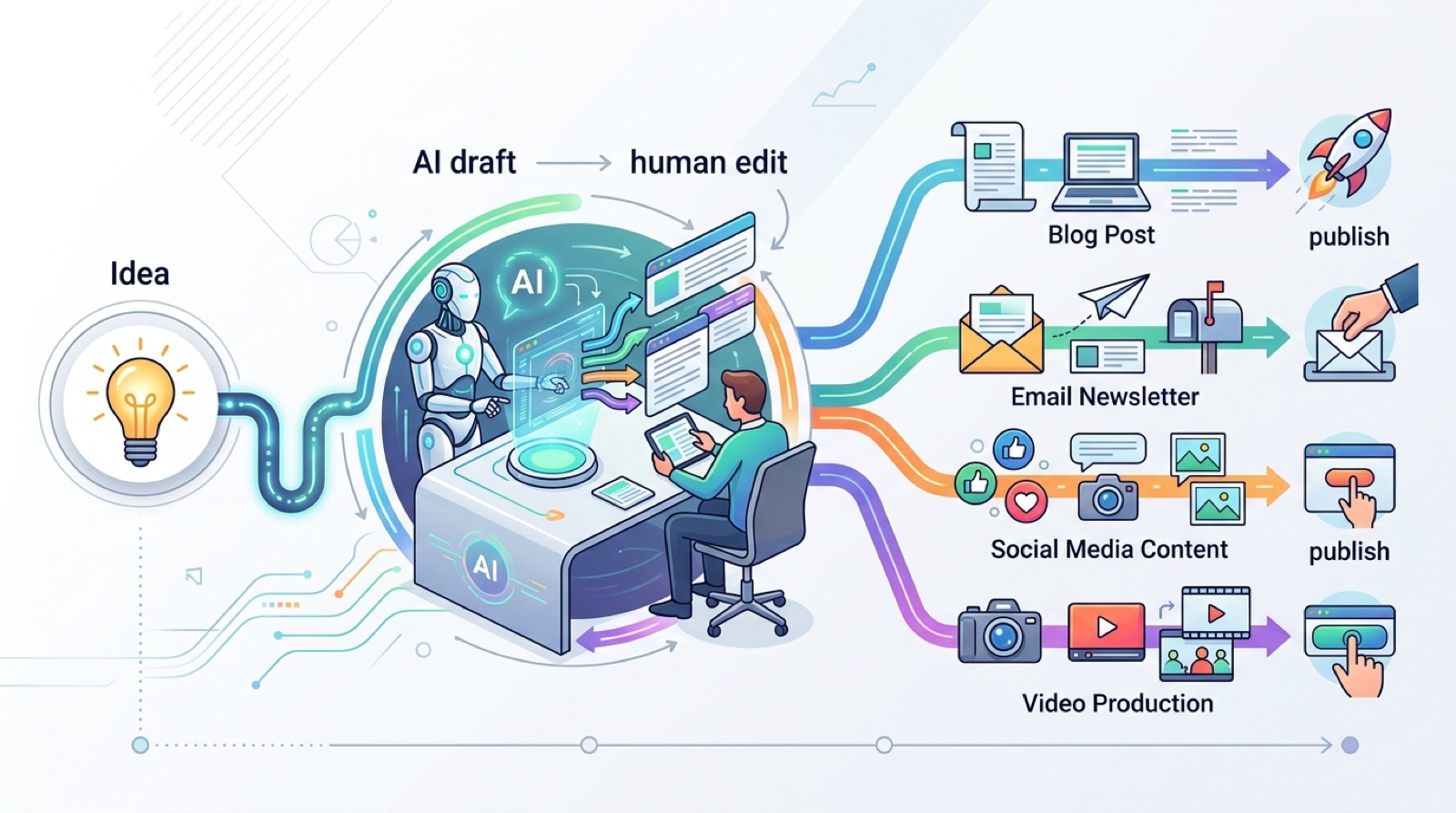
Screenshot: Weekly social media analytics dashboard showing inbound leads attributed by post and platform
A 2026 attribution dashboard ties social posts directly to inbound calls and pipeline revenue, not just likes and impressions.
AI Social Media Agency vs DIY
Run it in house if someone on the team enjoys writing and has taste, you can dedicate 4 to 8 hours a week, your brand voice is distinctive enough that you do not want it diluted, and you can budget $100 to $400 a month in tools.
Hire an agency if nobody on the team has taste for social or wants the job, you need to ramp in 30 days not 90, you manage 5+ social accounts (founder, brand, product), your time is worth more than $200 an hour, or you want guaranteed output with a contract.
The middle ground that works for many brands: the founder writes LinkedIn personally because that voice is non delegable, and an agency runs everything else (X, Instagram, TikTok, Facebook, scheduling, reporting, listening). Founder voice on the platform that converts, operational scale on the rest.
See AI consulting and AI marketing services for the wider agency landscape.
Frequently Asked Questions
Can AI write social media posts that do not sound like AI?
Yes, but only if you train the model on your past content and edit every post before shipping. Generic prompts produce generic output. Voice trained prompts plus 60 seconds of human editing per post produces work that sounds human.
What is the best AI social media tool for a solo founder?
Buffer AI for scheduling and basic generation, Postwise for X, Taplio for LinkedIn, and Claude Opus 4.6 or GPT 5.4 directly for the heavy writing. Total cost: $80 to $120 per month.
How many posts a week should I ship?
LinkedIn: 3 to 5. X: 5 to 15 a day. Instagram: 5 to 10 (mix of carousels and reels). TikTok: 5 to 14. YouTube: 1 long form plus 3 to 5 shorts. Facebook reels: cross post from Instagram. Threads: 5 to 10 (cross post from X with adjustments).
Can I use AI to fully automate social media without a human?
No. Or rather, you can, but the output will be visibly AI generated and reach will collapse. The right model is human in the loop. AI handles 80% of the production work, a human owns voice, taste, and the final edit.
Which AI social media scheduler is best?
For solo operators, Buffer AI. For agencies, Vista Social. For enterprise, Sprout Social. For LinkedIn specifically, Taplio. For X specifically, Postwise or Tweet Hunter.
How do I measure ROI from AI social media?
Track qualified inbound (DMs, calls, form fills from your ICP) and cost per qualified inbound. Ignore likes and follower counts as primary metrics. Use a tool like CallSetter AI to capture and attribute the inbound calls that come from social.
Will AI generated images get my account flagged?
No, as of 2026 no major platform penalizes AI generated images directly. But if you ship low quality or generic looking AI images, the algorithm will throttle you because users do not engage. Quality matters more than provenance.
How long until I see results?
Organic social compounds. Expect 60 to 90 days of consistent shipping before reach and inbound start scaling. The accounts that quit at week 3 because “AI social media doesn’t work” never gave it the time. The ones that stick to a workflow for 90 days see real results.
Every Article in Our AI Social Media Silo
Browse all 4 guides, reviews, and playbooks in the AI Social Media category. New articles added weekly.
- AI Social Media Marketing: The 2026 Playbook for Service Businesses
- AI Social Media Scheduler: 10 Best Tools and Real Pricing for 2026
- AI Social Media Strategy: The 2026 Framework That Actually Drives Leads
- AI Social Media Tools: 14 Best Platforms Tested in 2026
Related Reading