TL;DR AI marketing in 2026 means using machine learning to decide what message goes to which person at which moment, then letting automation deliver it across email, ads, SMS, push, and on site without a human touching each send. The platforms that matter are HubSpot AI, Marketo, Klaviyo AI, Customer.io, Iterable, ActiveCampaign AI, and Salesforce Einstein, glued by Zapier AI, Make.com, or n8n. The winners are not the ones with the biggest stack. They are the ones who connected clean data to a decisioning layer and a fast distribution layer, then closed the loop. AI marketing brings the leads in. CallSetter AI is the AI voice agent that picks up every inbound call those leads make, qualifies them, and books the appointment in under 60 seconds.
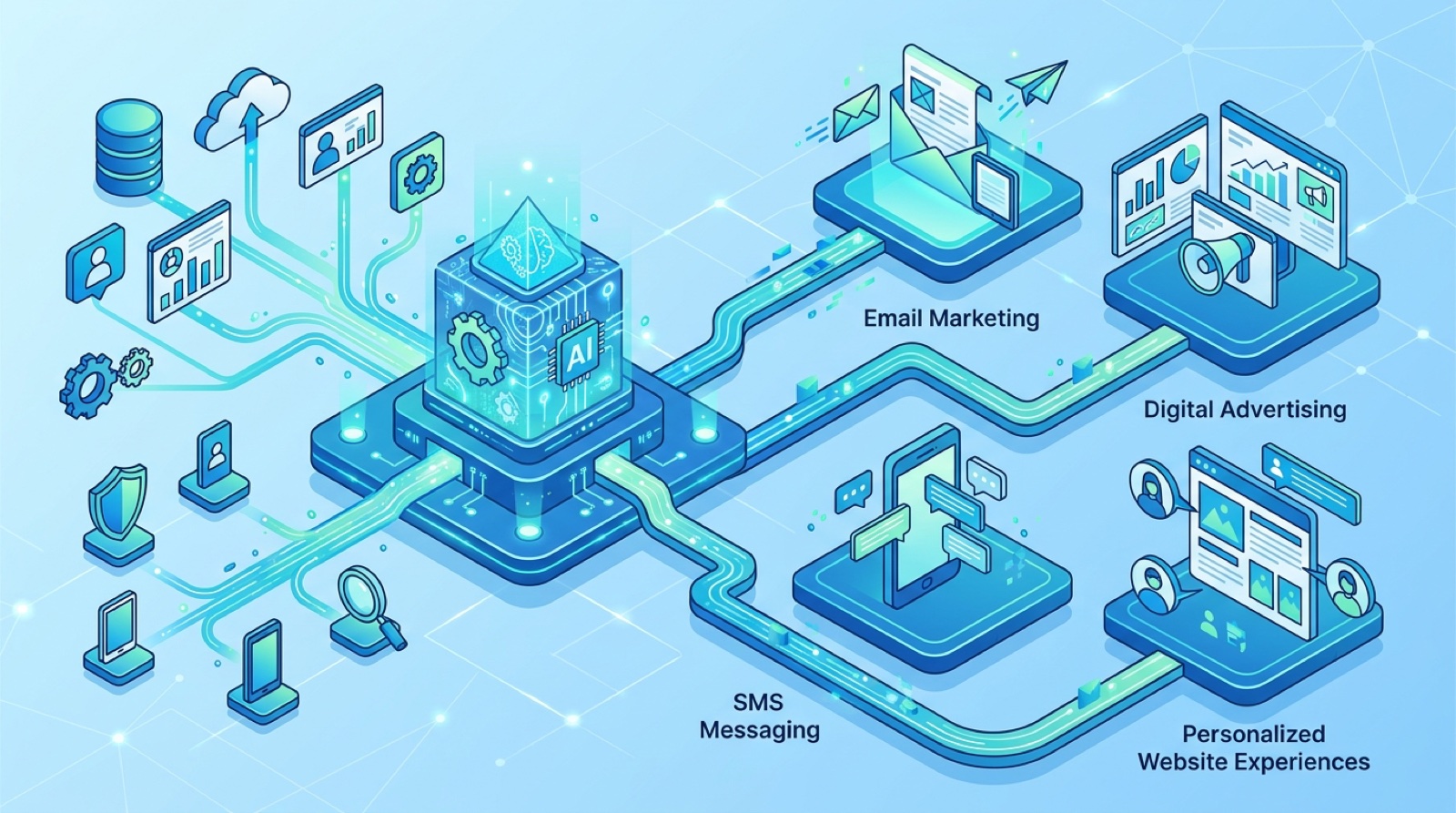
A modern AI marketing stack runs on four layers: data, decisioning, content, and distribution. The output is one to one messaging at the scale of the entire database.
AI marketing is the use of machine learning, large language models, and predictive analytics to plan, produce, target, and measure marketing across every channel. The shift from traditional marketing automation to AI marketing happened between 2023 and 2025, and by 2026 the line between the two has disappeared. Every serious platform now embeds AI inside the workflow.
Old marketing automation was rules based. Form fires workflow, workflow sends email one on day zero, two on day three, three on day seven. Every user gets the same sequence. Personalization meant the first name in the subject line.
The 2026 version is decision based. A model scores the lead. Another picks the next best message based on predicted intent, channel preference, time of day, and past behavior. A third writes a copy variant tuned to that user. Send time, offer, and channel are different for every recipient. The marketer sets the goal. The system decides the rest.
The shift is from “if this, then that” to “given everything we know, what is the move that maximizes the goal.”
This matters now and not five years ago because three things got cheap and good at the same time. LLMs got smart enough to write usable copy on demand. Vector databases got cheap enough to power real time retrieval against full customer histories. And mainstream platforms (HubSpot AI, Klaviyo AI, ActiveCampaign AI, Salesforce Einstein, Adobe Sensei) embedded all of this directly into the workflow builder, so you no longer need a data scientist to ship it.
If you want the deeper category definition, read our marketing automation explainer. If you are evaluating tools, jump to best AI marketing tools.
Every working AI marketing program in 2026 has the same four layers underneath it. If any layer is missing, the program does not deliver.
Without unified, clean, fresh records of your contacts and their behavior, AI cannot make good decisions. Garbage in, garbage out.
The data layer pulls from CRM, website events, product behavior, support tickets, ad platforms, and offline channels (calls, store visits, events) and stitches everything to a single customer record. In 2026 it is owned by a CDP (Segment, RudderStack, Hightouch) or by a marketing platform with a strong native CDP (HubSpot, Klaviyo, Salesforce Data Cloud). The shift in the last 18 months is that HubSpot AI and Klaviyo now treat data unification as a built in feature, not an integration project.
What matters here: identity resolution, event freshness (no more than 5 minutes stale), and schema cleanliness.
The decisioning layer is where AI lives. The standard models inside major platforms in 2026:
Salesforce Einstein, HubSpot AI, Adobe Sensei, and Klaviyo AI all ship these out of the box. ActiveCampaign AI, Customer.io, and Iterable ship a subset and let you bring your own model for the rest.
Content is what gets delivered. The 2026 stack uses LLMs to generate copy and creative on demand for each segment and sometimes each individual.
The most effective programs use a hybrid approach. A human writes the brand voice guide. An LLM generates 5 to 50 variants per send. Another model picks the winners. The human reviews top performers and feeds learnings back. Tools at this layer include Jasper, Copy.ai, Writer, the native AI inside HubSpot and Klaviyo, and direct GPT 5.4 or Claude API calls inside workflows. For long form pages most teams stack a dedicated AI content tool on top.
Distribution is the layer that moves the message: email engine, SMS gateway, push provider, ad platform, and on site personalization. In 2026 this layer is mostly commoditized. The differentiator is no longer “can you deliver” but “can you orchestrate the right message across the right channel without channels stepping on each other.”
The platforms that own distribution in 2026 are Iterable (cross channel orchestration), Customer.io (event driven journeys), Klaviyo (ecommerce), and HubSpot (B2B). Zapier AI, Make.com, and n8n are the glue underneath that wires up the long tail of edge cases.

The four layer model. Data feeds decisioning, decisioning chooses content, content flows through distribution, and outcomes feed back into data.
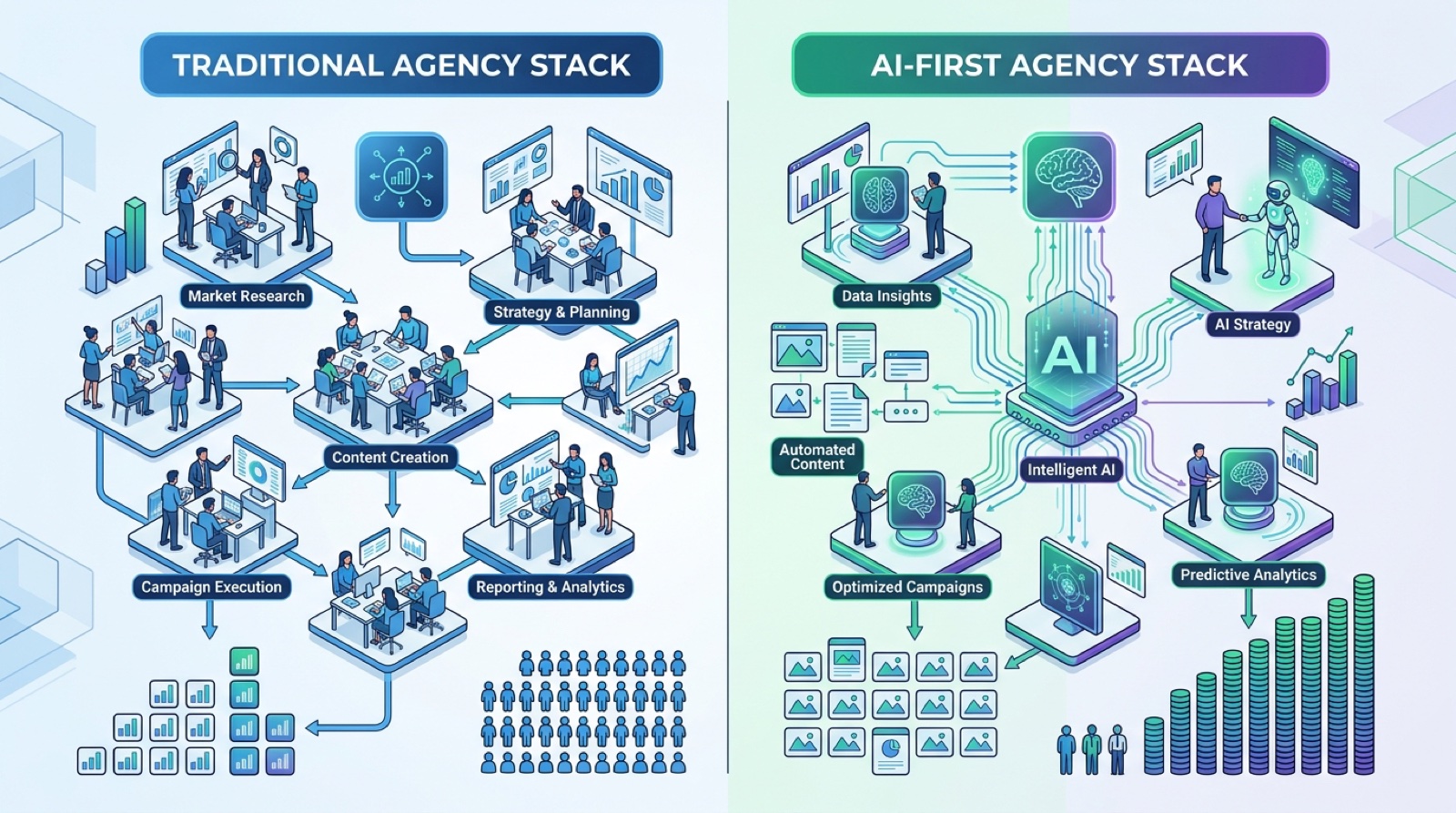
Here is the head to head comparison of the platforms that own the AI marketing market in 2026. Pricing is for the entry tier with AI features unlocked. Most platforms have a free or trial tier without AI.
| Platform | Starting price (with AI) | Best for | Key AI features | Native CRM |
|---|---|---|---|---|
| HubSpot AI | $90/mo (Marketing Hub Starter + AI) | B2B SaaS and service businesses | Predictive scoring, content assistant, AI workflows, ChatSpot | Yes |
| Klaviyo AI | $45/mo (per 1,500 contacts) | Ecommerce (Shopify, BigCommerce) | Predictive analytics, AI segmentation, generative subject lines | Limited |
| Marketo Engage | $1,250/mo (Select tier) | Mid market and enterprise B2B | Predictive content, account intelligence, dynamic chat | Salesforce native |
| Customer.io | $100/mo (Essentials + AI) | Product led SaaS | Visual workflow AI, AI copy assistant, AI segmentation | API based |
| Iterable | Custom (typically $1,500+/mo) | Cross channel B2C at scale | AI brain, send time optimization, predictive goals | Limited |
| ActiveCampaign AI | $79/mo (Plus tier) | SMB sales and marketing teams | Predictive sending, AI generation, win probability | Yes |
| Salesforce Einstein | Bundled with SFMC ($1,250+/mo) | Enterprise multi cloud | Einstein Engagement, send time, content selection | Yes |
| Adobe Sensei (Marketo + AJO) | Enterprise only | Enterprise omnichannel | Predictive everything, content fragments, journey AI | Yes |
| Mailchimp AI | $20/mo (Standard tier) | Small business and starter ecommerce | Subject line helper, send time optimization, content optimizer | Limited |
| Sendinblue (Brevo) | $25/mo (Business tier) | SMB cross channel email and SMS | Send time AI, predictive segmentation | Yes |
| ConvertKit AI | $29/mo (Creator Pro) | Creators and digital products | AI subject lines, smart segments, AI sequences | Limited |
We dive into each one in depth in our standalone reviews and comparisons:
The use cases with the highest measured ROI across client deployments. Every one ships out of the box on at least 3 of the platforms above.
Email is still the highest ROI channel in 2026 and AI made it materially better.
Meta and Google already use AI inside their platforms. The opportunity for marketers is feeding those platforms better signal and better creative.
SMS used to be blunt. AI made it surgical.
Push has the lowest cost per send and the highest annoyance risk if you get it wrong. AI is what stops you.
The website is the highest leverage surface in marketing because every visitor is already showing intent.
The classic use case. Score on intent (behavior), fit (firmographics), and timing (recency) as three dimensions, then combine into one score sales acts on. HubSpot AI, Marketo, and Salesforce Einstein all do this natively.
The catch: the score only matters if sales acts within minutes. A lead that sits for 6 hours is worth 80% less than one reached in 5. This is why speed to lead is the metric we obsess over.
LLMs produce blog posts, landing pages, ad copy, email copy, product descriptions, and social posts at scale and quality that was impossible 18 months ago. The winning pattern: human writes the brand voice guide, LLM drafts at scale, editor refines, AI scoring picks the variants that ship. For deep workflows see AI content and AI SEO.
The marketing layer brings the leads in. The voice agent layer makes sure you actually answer them. Most service businesses lose 30 to 50% of inbound calls because no one picks up. CallSetter AI is an AI voice agent that answers every call within one ring, qualifies the lead, books the appointment, and pushes everything into your CRM. We deploy in 48 hours.
AI personalization is the part of automated marketing that most teams underdeliver on because they think it needs an engineering project. It does not. Every major platform listed above ships it out of the box in 2026.
The mental model that works: instead of writing 12 versions of an email for 12 segments, write 1 email with 8 variable blocks (hero image, headline, body intro, product feature, CTA, social proof, offer, footer) and let the model pick the right version of each block per recipient at send time. The result is functionally one to one without the engineering cost.
The 4 things you need to ship AI personalization without a data team:
That is it. The deeper guide is AI personalization. The TL;DR is that personalization in 2026 is a workflow setting, not a software project.
The biggest mistake we see is teams personalizing on attributes the model has no signal for. Personalizing on industry only works if industry is filled in on every record. If 60% of records are missing the field, the model defaults to generic and you get worse results than a static email. Always check data completeness first.
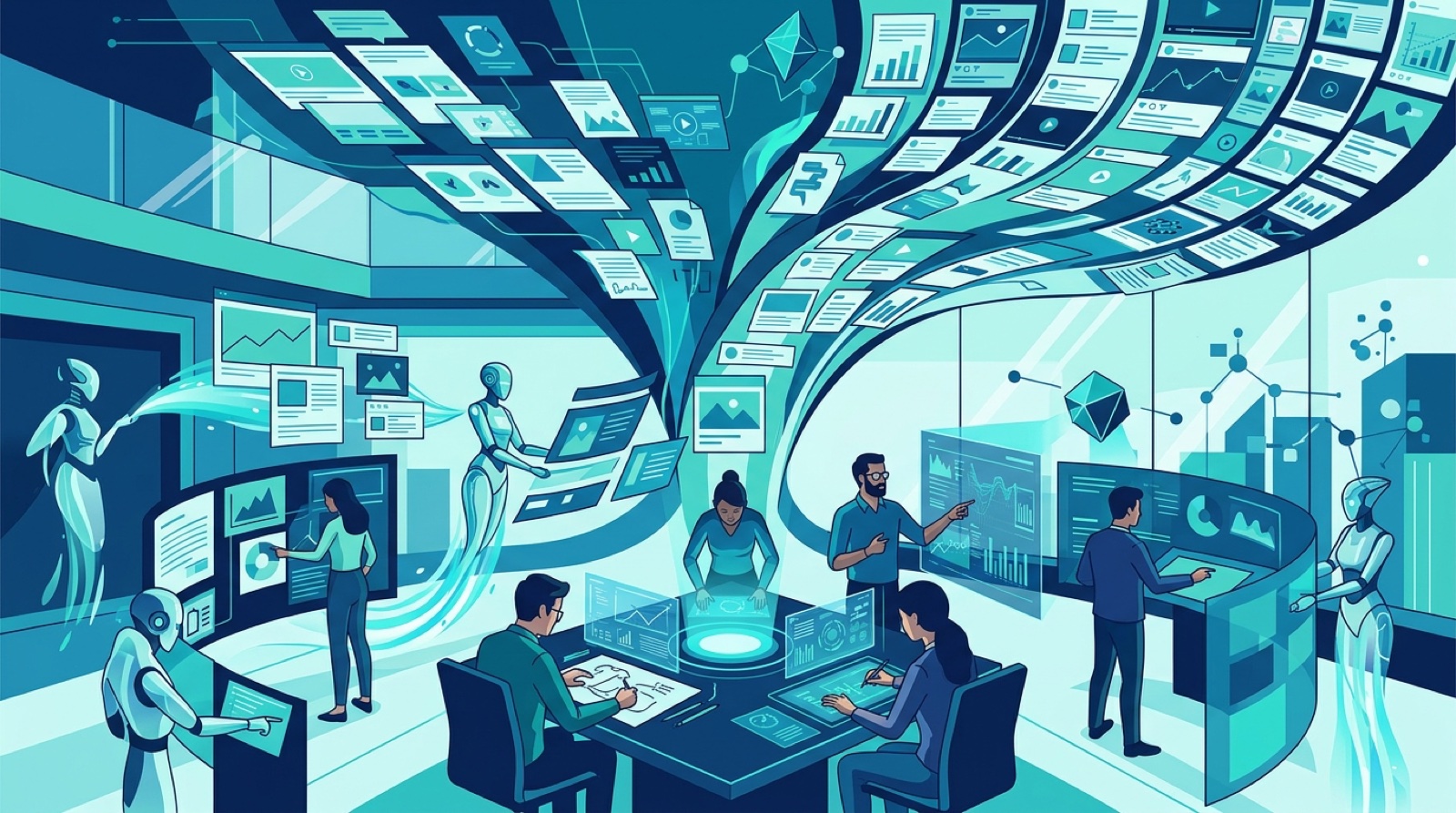
Two kinds of segmentation, fundamentally different.
Descriptive segmentation groups contacts by known attributes. “Contacts in California who bought in the last 90 days.” Every CRM has supported this since 1995. Useful for reporting. Not AI.
Predictive segmentation groups contacts by attributes a model predicts. “Contacts predicted to churn in the next 30 days.” “Contacts who behave like our top 10% of customers.” The model learned a pattern from historical data and applies it to current contacts. This is AI, and it is dramatically more valuable because it lets you act before the behavior happens. Descriptive tells you who already churned. Predictive tells you who is about to so you can intervene.
The standard predictive segments to ship inside any AI marketing program in 2026:
HubSpot AI, Klaviyo AI, Marketo, and Salesforce Einstein ship these by default. Customer.io and ActiveCampaign let you build them from base events. Deeper how to: AI customer segmentation.
Strategies, not tactics. The high level moves that produce outsized results when the stack is in place.
1. Speed to lead obsession. Every form fill, download, or demo request gets followed up in under 2 minutes. AI handles the first touch (email, SMS, sometimes voice). Humans handle the qualified ones. Speed to lead under 5 minutes lifts conversion 9x compared to the industry average of 47 hours.
2. Always on lifecycle journeys. Stop running campaigns. Build always on journeys that move every contact through visitor to lead to customer to advocate, with a predictive next best action at every transition. The campaign mindset is dead.
3. AI written, human reviewed content at 10x volume. Stop asking “how do we write more posts.” Start asking “how do we ship 200 posts a month at the quality of our 5 best.” Answer: LLM drafts plus human editors plus AI scoring.
4. First party data flywheel. Cookies are dying. The winners in 2026 are brands with the largest, freshest first party database. Every marketing dollar should buy data, not just attention. Quizzes, calculators, content downloads, free tools, and email gated experiences all do double duty.
5. Multi touch attribution. Last click lies. First touch lies. The 2026 standard is Markov chain or Shapley value attribution. Most platforms ship this. Use it.
6. Channel agnostic orchestration. Email, SMS, push, ads, and direct mail are not separate programs. They are surfaces of the same program. The model picks the surface based on cost and predicted engagement, not the marketer.
7. Close the loop with the call layer. Most marketing programs hand qualified leads to a sales team that drops the ball on speed. The fix is an AI voice agent that calls every lead within 60 seconds, qualifies, and books the appointment. This is where CallSetter AI lives in the stack.
For more, read AI marketing strategies and our deep dive on AI for marketers.
Three options. Each one is right for a different stage of business.
DIY (you and your existing marketing team). Right for businesses under 10 employees, founders who already know marketing, teams testing platforms before committing budget. Wrong for anyone who needs results in 30 days. Expect 6 to 12 weeks before the program produces meaningful lift.
In house team (hire a marketing ops engineer). Right for scaling companies between 50 and 500 employees with validated channels. A good marketing ops hire costs $90K to $180K plus benefits and is worth it once your marketing budget exceeds $30K per month.
AI marketing agency (outsource the whole program). Right for businesses that want results fast and have a budget between $5K and $50K per month. Good agencies own strategy, platform setup, content, campaign launch, and optimization. Wrong for teams that want full control or have unique workflows.
The difference between an AI marketing agency and an AI automation agency: the first focuses on the marketing surface (campaigns, content, ads, email, SMS). The second focuses on the workflow plumbing (Zapier, Make, n8n, custom automations across departments). The best partners do both, but most specialize.
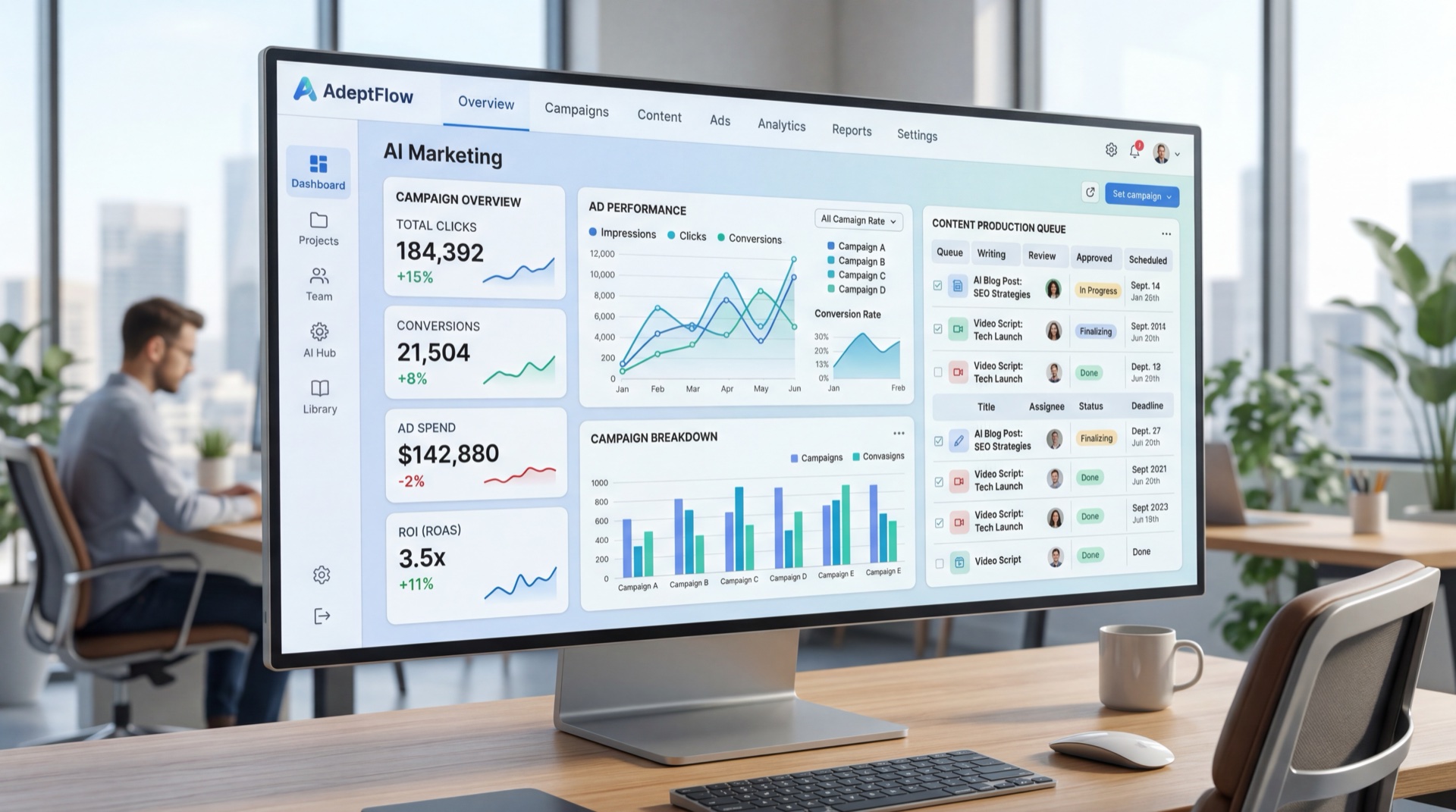
Every AI marketing pitch promises ROI. Most pitches are vague. Here are real numbers from deployments we have shipped or measured in the last 12 months.
Case 1: B2B SaaS, 800 leads per month.
Case 2: Ecommerce, 60K Klaviyo contacts.
Case 3: HVAC service business, 200 inbound leads/month.
The pattern: AI marketing alone delivers 5x to 15x return when data and process are in place. AI marketing plus the call layer delivers 20x to 40x. For the full breakdown by industry and budget, read AI marketing ROI.
We have audited dozens of failed programs in the last 18 months. The pattern is always the same.
1. Buying the platform before fixing the data. Teams turn on HubSpot AI or Klaviyo AI and get garbage results because contact records are 40% incomplete. Fix the data layer first. Always.
2. Personalizing on attributes you do not have. Branching on company size when 70% of records are missing it means 70% of contacts hit the default fallback. The AI looks broken. The data is broken.
3. Ignoring the call layer. Marketing fills the funnel. Sales drops the ball on speed to lead. The lead goes cold in 47 hours. The marketing program looks like a failure when the failure is downstream. Solve call answering in parallel with lead generation.
4. Optimizing for the wrong metric. Open rate is not revenue. Click rate is not revenue. Lead count is not revenue. Set goals that ladder up to actual money. Most platforms let you set revenue as the optimization target. Use it.
5. Setting it and forgetting it. Models drift, audiences change, offers age out. A program that ran great in January is mediocre by July if no one tunes it. Budget for ongoing optimization or hire an AI marketing agency.
The realistic timeline for shipping an AI marketing program from zero, assuming you have a CRM and some contacts.
Week 1: Audit and pick the platform. Inventory data sources, contact count, and channel mix. Score data quality (completeness, freshness, identity resolution). Pick the platform from the comparison table above. Provision access.
Week 2: Data unification. Connect every source (CRM, web events, product, ads, support). Run identity resolution to dedupe and stitch. Validate that the unified record has the fields needed for personalization and scoring. Backfill 6 to 12 months of history.
Week 3: Turn on foundational AI features. Predictive lead scoring. Send time optimization. AI subject lines with editor in the loop. Dynamic content blocks on at least one journey.
Week 4: Ship the first AI driven journey. Pick the highest leverage journey (welcome, abandoned cart, lead nurture, re engagement). Build it with predictive branches. Connect the call layer if you have inbound calls (CallSetter AI handles this). Launch.
Month 2: Multi channel orchestration. Add SMS and push where appropriate. Set up cross channel frequency capping. Turn on predictive segmentation for at least 3 segments. Start AI ad creative on Meta and Google.
Month 3: Optimize and scale. Review the first 60 days. Identify winners. Double down. Kill losers. Set up the optimization cadence (weekly review, monthly creative refresh, quarterly model retraining).
This ships in 12 weeks. Most teams expect 6. Most 6 week attempts ship something that does not work. Plan for 12.
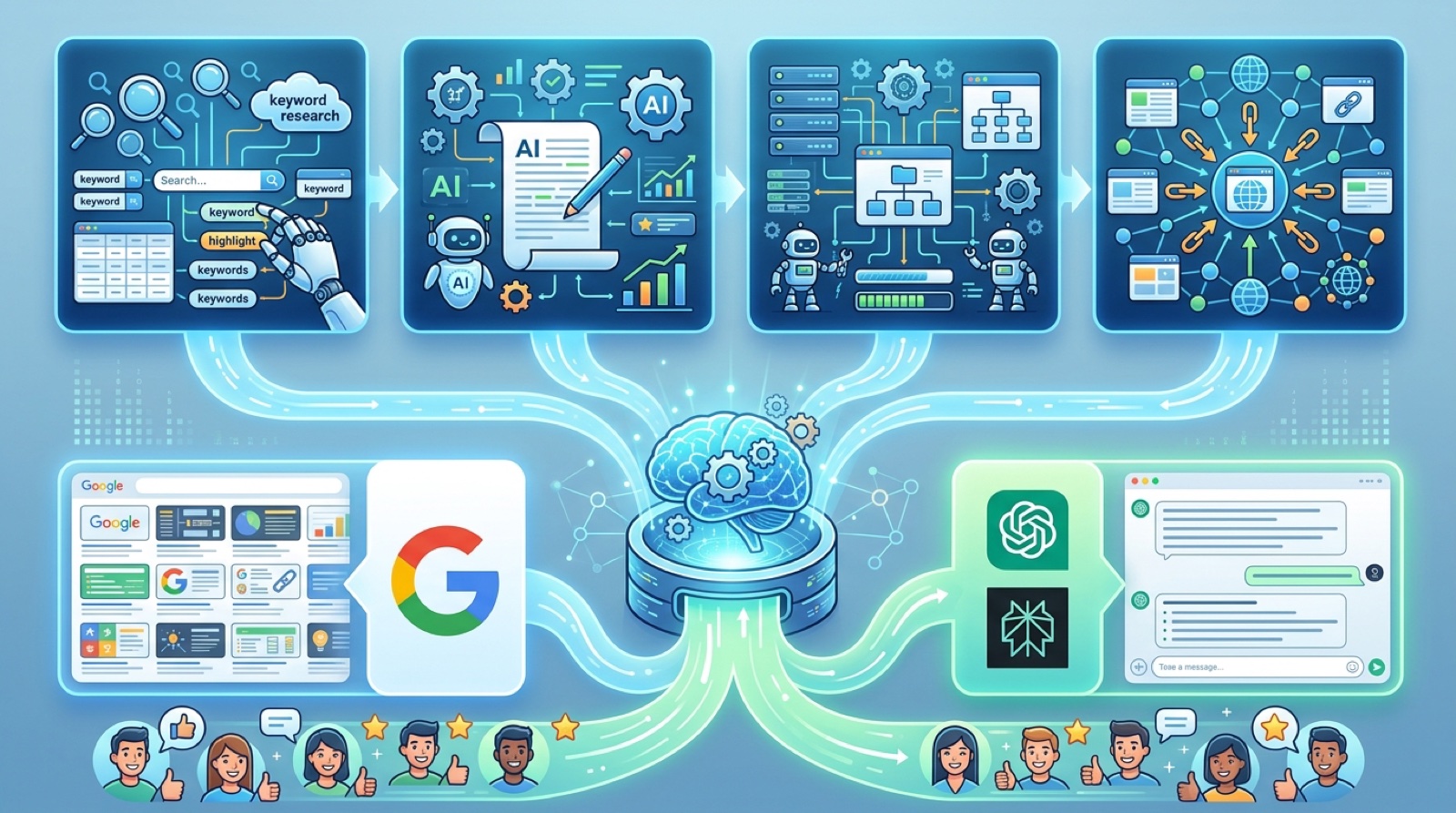
A realistic 12 week rollout of an AI marketing program from data audit to multi channel orchestration. The platforms take days. The data and the iteration take weeks.
What is the difference between AI marketing and marketing automation?
Marketing automation is rules based execution of pre defined workflows. AI marketing uses models to make decisions inside those workflows. In 2026 the line is gone. Every serious platform ships AI features by default.
Do I need a data scientist to run AI marketing?
No. HubSpot AI, Klaviyo AI, Marketo, Salesforce Einstein, and Customer.io ship the predictive models out of the box. You configure them. You do not train them. A marketing ops generalist is the right hire.
What is the cheapest way to get started?
Mailchimp AI ($20/mo) or ConvertKit AI ($29/mo) for the smallest businesses. Klaviyo AI ($45/mo) for ecommerce. HubSpot AI ($90/mo) for B2B. All four ship core AI features at the entry tier.
How long until I see ROI?
With clean data and a focused first journey, expect lift in 30 to 60 days. Without clean data, expect 90 to 120 days because the early work is fixing data. Programs that hit 12 weeks with no lift are usually broken at the data layer or the call layer.
Can AI write all my marketing copy?
It can write drafts and variants at high quality, but you want a human editor in the loop for brand voice. The hybrid model (AI drafts plus human edit plus AI scoring) outperforms pure AI or pure human in every test we have run.
Is AI marketing replacing marketers?
No. It is replacing the lowest leverage parts of the job (manual segmentation, A/B setup, send time tuning, copy variations) and freeing marketers for strategy, brand voice, research, and creative direction.
What is the ROI of AI marketing automation?
The median we measure is 8x to 15x return on platform cost with clean data. The top quartile delivers 30x or more, usually because they also fixed the call answering problem with AI voice agents.
One big platform or stitch tools together?
For most businesses under $10M ARR, one platform wins because integration tax eats the benefit. Larger businesses with specialized needs can stitch best of breed with Zapier AI, Make.com, or n8n. The criterion is whether your team has the bandwidth to maintain integrations.
Browse all 10 guides, reviews, and playbooks in the AI Marketing category. New articles added weekly.
AI marketing uses machine learning to plan, create, target, and measure marketing campaigns. The 2026 stack uses GPT-5.4 and Claude for content, predictive models for targeting, and AI voice agents for inbound conversion.
The 2026 essentials are ChatGPT or Claude for content, Jasper for templated copy, Surfer for SEO, HubSpot for automation, Retell or Vapi for voice agents, and Make.com for connecting them.
Most service businesses cut marketing ops cost by 30 to 70 percent in the first 90 days. Content production drops from $200 per article to $20. Lead qualification shifts from 4 hours to 4 minutes.
No. AI is replacing the boring 80 percent (research, first drafts, manual reporting). The marketers winning in 2026 are the ones who use AI to do 10x the work.
Pick the single highest-ROI move first (voice agent for missed calls or AI content for SEO). Implement in 48 to 72 hours. Measure for 30 days. Then expand.
Talk with one of our SEO specialists today and see how we can supercharge your marketing campaigns!