
TL;DR AI marketing automation in 2026 is the use of machine learning to decide who gets which message, on which channel, at which moment, then letting software deliver it without a human touching every send. The decisioning layer is what separates 2026 from the rules based workflows of 2018. HubSpot AI, Klaviyo AI, Marketo, Customer.io, and Salesforce Einstein ship the modern stack out of the box. AI marketing automation generates leads. CallSetter AI answers the calls those leads make so the funnel does not leak at the bottom.

The decisioning layer is the heart of modern AI marketing automation. It scores, segments, picks channel, picks time, picks copy, and learns from every outcome.
The biggest mental shift in marketing automation between 2020 and 2026 is the move from rules to decisioning. Rules are brittle. Decisioning learns.
A rules based workflow looks like this. If form fired, send email one. Wait 3 days. Send email two. Wait 4 days. Send email three. The marketer wrote every branch by hand. Every contact got the same path regardless of behavior, intent, or context.
A decision based workflow looks like this. If form fired, the model picks the best next message based on predicted intent, channel preference, time of day, and past behavior. The marketer set the goal (book a demo). The model picks the path. Every contact gets a different sequence tuned to their predicted state.
The lift is real. Programs that switch from rules to decisioning report 2 to 4x conversion improvement without changing the offer, the audience, or the budget. The model is making better decisions than a human flowchart could.
This is what AI marketing automation actually means in 2026. Read the broader marketing automation explainer for the historical context.
Modern AI marketing automation platforms ship 6 standard models inside the workflow builder. You do not train them. You configure them. They produce the lift.
1. Predictive lead scoring. The model predicts which contacts are most likely to convert in the next 7, 14, or 30 days. HubSpot AI, Marketo, and Salesforce Einstein ship this natively. Used to prioritize sales handoff.
2. Send time optimization. The model picks the optimal send hour per recipient based on historical open patterns. Lifts open rates 15 to 30 percent without any copy change.
3. Channel selection. The model picks email, SMS, push, or in app based on engagement history and channel cost. The marketer no longer guesses which channel to use. The model decides per individual.
4. Next best action. The model picks the next message in a journey based on what moves the contact forward toward the goal. Every contact gets a different sequence because each one has different behavior.
5. Predictive segmentation. The model groups contacts by predicted behavior (likely churners, likely upgraders, likely repeat buyers) instead of historical attributes. Read AI customer segmentation for the deep dive.
6. Content recommendation. The model picks which product, article, or offer to feature for each individual based on predicted interest and conversion probability.
These 6 models are the difference between AI marketing automation and traditional marketing automation. Every platform that ships fewer than 4 of them is selling a 2020 product wearing 2026 marketing.

The platforms that ship the modern decisioning layer at scale.
The default for B2B SaaS and service businesses. Predictive scoring, send time, content assistant, and AI workflows all ship at the Marketing Hub Pro tier and above. Pricing starts at $90 per month for Starter and climbs to $3,600 per month for Enterprise.
Best fit. B2B teams under 500 employees with data already inside HubSpot CRM.
The undisputed winner in ecommerce. Predictive lifetime value, predictive churn, AI segments, AI subject lines, and AI flows all ship at the standard tier. Pricing starts at $45 per month per 1,500 contacts.
Best fit. Shopify, BigCommerce, and WooCommerce stores doing more than $50K per month in revenue.
The enterprise B2B standard. Adobe rebuilt Marketo on Sensei between 2023 and 2025 and the platform now ships predictive content, account intelligence, dynamic chat, and AI scoring. Pricing starts at $1,250 per month for Select.
Best fit. Mid market and enterprise B2B with a Salesforce backbone and a marketing ops engineer on staff.
The right pick for product led SaaS. Visual workflow AI, AI copy assistant, AI segmentation, and event driven journeys are all native. Pricing starts at $100 per month for Essentials with AI unlocked.
Best fit. SaaS with heavy event data and product led growth motion.
Cross channel B2C orchestration at scale. Iterable AI Brain ships send time optimization, predictive goals, and channel selection across email, SMS, push, and in app. Pricing is custom and typically starts around $1,500 per month.
Best fit. Consumer brands with 5 plus channels and 100K plus contacts.
SMB sales and marketing in one tool. The Plus tier at $79 per month unlocks predictive sending, predictive content, and AI generation. Built in CRM makes it a one stop shop for businesses under 50 employees.
Best fit. Small business that wants both marketing automation and sales CRM in one bundle.
The default if you already run on Salesforce. Einstein Engagement, Einstein Send Time, Einstein Content Selection, and Einstein Lead Scoring all ship inside Marketing Cloud Engagement. Bundled with SFMC starting at $1,250 per month.
Best fit. Enterprises with the Salesforce stack already deployed.
Enterprise omnichannel for the largest brands. Adobe Journey Optimizer plus Marketo plus Sensei is the heavy duty stack for global B2C with multi region requirements. Custom pricing.
Best fit. Marketing budgets above $5M per year and global audiences.
For deeper tool comparisons read AI marketing tools, marketing automation tools, and marketing automation software.
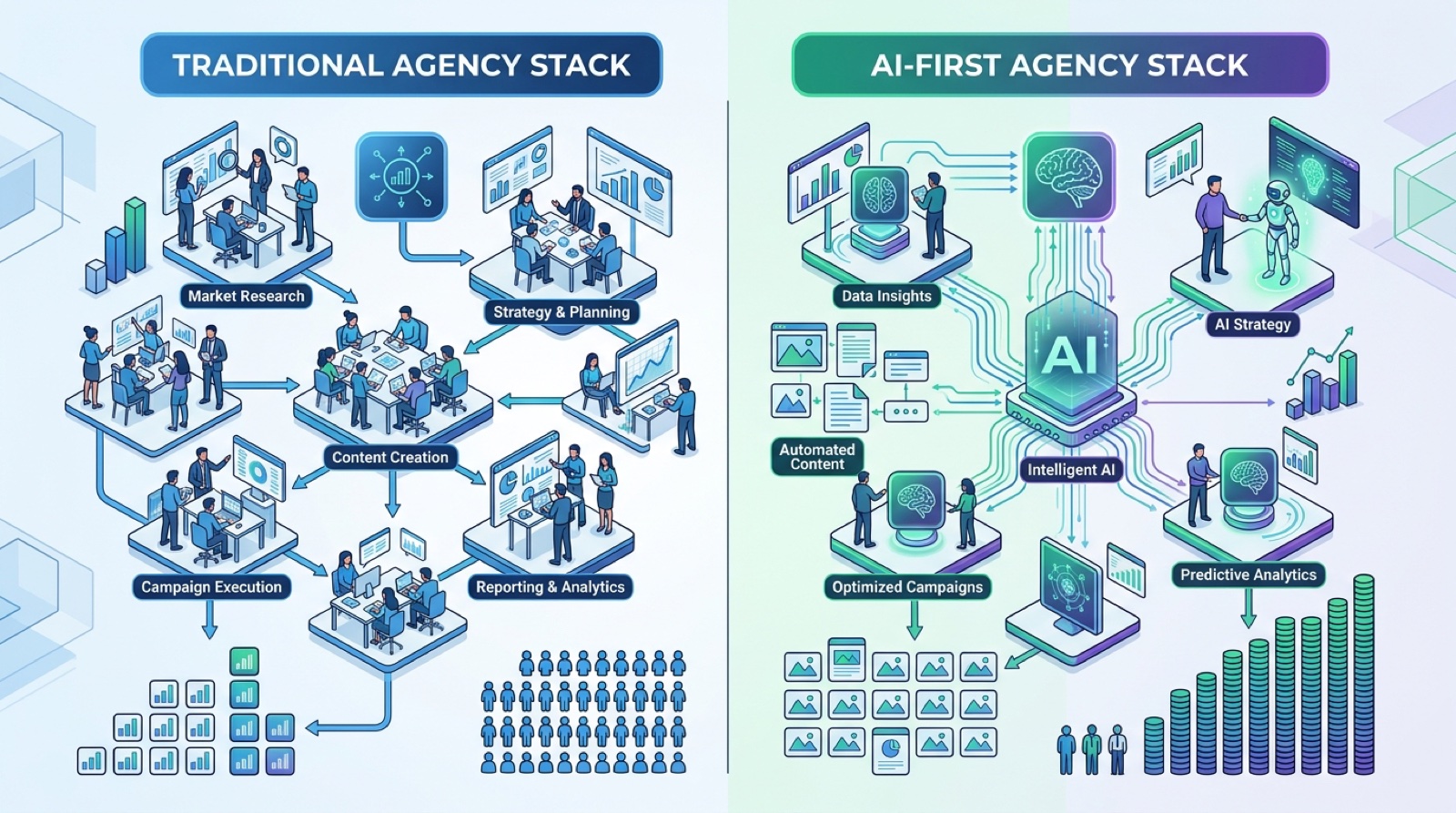
Side by side pricing and decisioning features across the top 8 AI marketing automation platforms. Entry tiers shown.
The realistic timeline from zero to a working program.
Days 1 to 7. Audit and pick the platform. Inventory data sources, contact count, channel mix, and existing tools. Score data quality on completeness, freshness, and identity resolution. Pick the platform from the 8 above. Provision access.
Days 8 to 21. Data unification. Connect every source. Run identity resolution. Validate that the unified record has the fields needed for personalization and scoring. Backfill 6 to 12 months of history.
Days 22 to 35. Turn on foundational AI features. Predictive lead scoring. Send time optimization. AI subject lines with editor in the loop. Dynamic content blocks on at least one journey.
Days 36 to 60. Ship the first AI driven journey. Pick the highest leverage journey (welcome, abandoned cart, lead nurture, re engagement). Build it with predictive branches. Connect the call layer. Launch.
Days 61 to 90. Multi channel orchestration and optimization. Add SMS and push where appropriate. Set up cross channel frequency capping. Turn on predictive segmentation for at least 3 segments. Start AI ad creative on Meta and Google.
This ships in 90 days. Most teams expect 30. Most 30 day attempts ship something that does not work because the data layer was skipped.
AI marketing automation generates leads. The voice layer answers the calls. Most service businesses lose 30 to 50 percent of inbound calls because no one picks up. CallSetter AI is the AI voice agent that picks up every call within one ring, qualifies the lead, books the appointment, and pushes everything to your CRM in under 60 seconds.
Three workflows that ship in every AI marketing automation deployment we run.
Trigger. Form fill on a high intent landing page (demo request, pricing page, contact us).
Decisioning. Lead score calculated in real time. Tier assigned. If hot, immediate alert to sales plus immediate SMS plus immediate email plus AI voice agent backup. If warm, 5 day nurture sequence with model picked next best message at each step. If cold, drop into a long form education sequence and let the model decide when to re engage.
Outcome. Lift of 30 to 50 percent on MQL to SQL conversion versus a static 5 email nurture.
Trigger. Customer adds to cart, does not check out within 30 minutes.
Decisioning. The model predicts price sensitivity from purchase history. The model picks recovery offer (free shipping, percentage off, none) per user. The model picks send time and channel.
Outcome. Recovers 10 to 18 percent of abandoned carts versus 4 to 7 percent for a generic abandoned cart sequence.
Trigger. Monthly run against active customers.
Decisioning. The model predicts churn probability based on usage patterns, support tickets, and engagement. Customers above the threshold drop into a save journey with model picked outreach (email, in app message, CSM call).
Outcome. Reduces churn 15 to 30 percent versus no churn prevention program.
For more strategic patterns read AI marketing strategies.
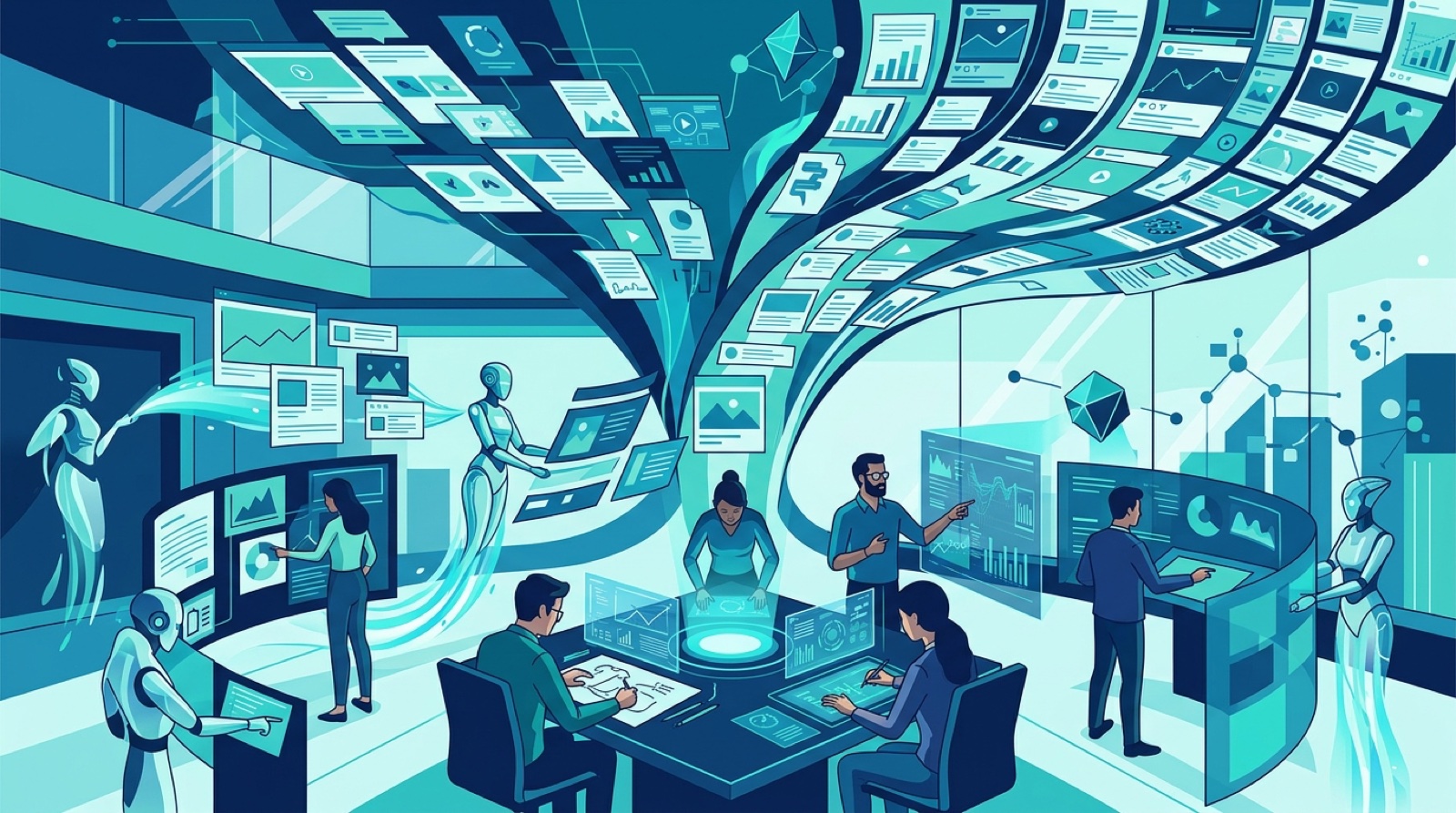
The same patterns appear in every audit of a failing AI marketing automation program.
Skipping data unification. Buying HubSpot or Klaviyo before fixing data means the AI runs on incomplete records and produces garbage. Fix data first.
Personalizing on missing fields. Branching on industry when 70 percent of records are missing it means most contacts hit the default. The AI looks broken when the data is broken.
Ignoring the call layer. Marketing fills the funnel. The phone goes unanswered. The leads cool. The marketing program looks like a failure when the failure is downstream.
Optimizing the wrong metric. Open rate is not revenue. Click rate is not revenue. Set the goal as revenue and let the model optimize toward it.
Setting it and forgetting it. Models drift. Audiences change. Budget for ongoing tuning or expect the program to stagnate within 6 months.
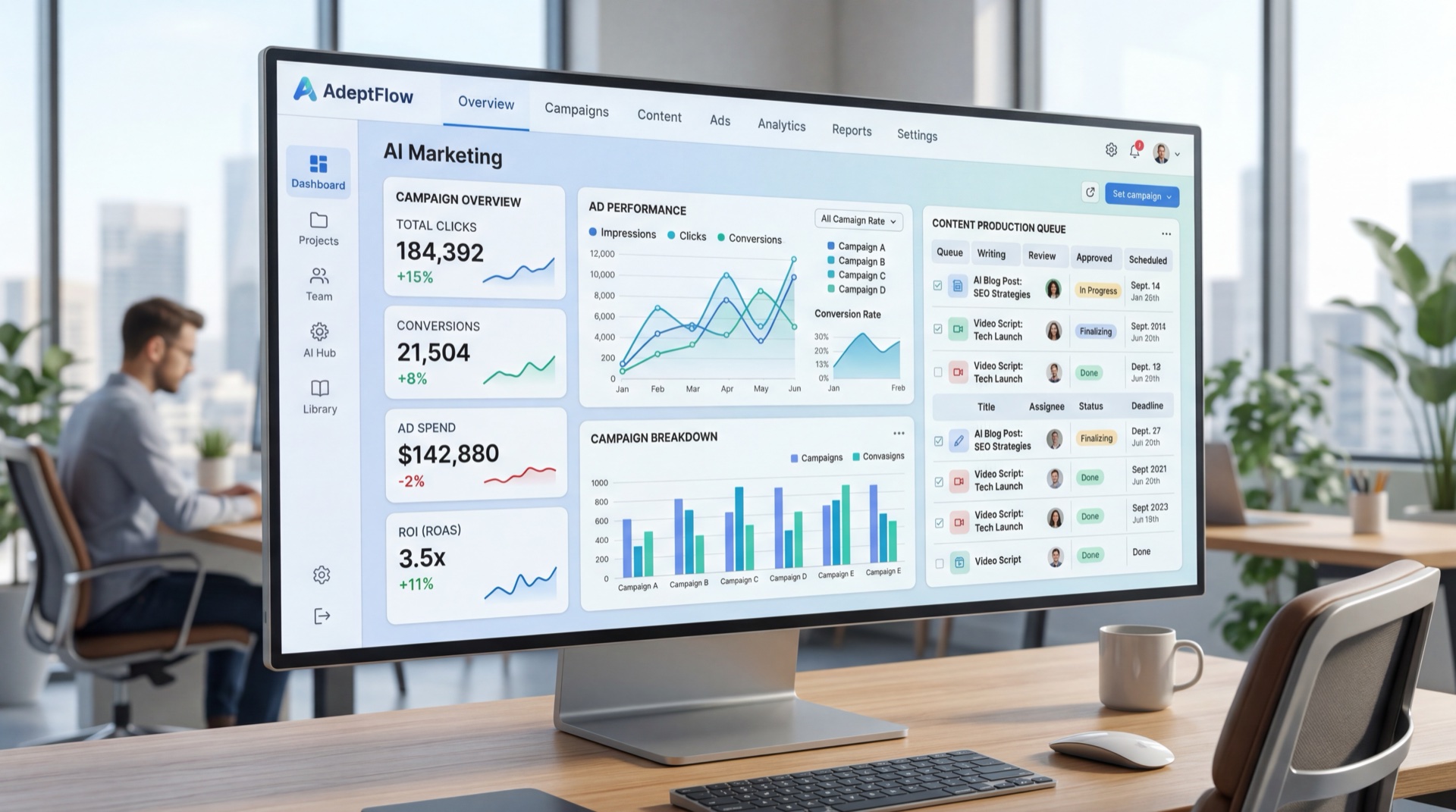
The feedback loop that separates a working AI program from a static one. Outcomes always feed back into the decisioning layer.
What is the difference between AI marketing automation and traditional marketing automation?
Traditional automation is rules based. AI marketing automation is decision based. Modern platforms ship AI by default in 2026 so the line has disappeared in practice.
Do I need a data scientist to run AI marketing automation?
No. HubSpot, Klaviyo, Marketo, Customer.io, and Salesforce Einstein ship the predictive models out of the box. You configure them. You do not train them.
What is the cheapest AI marketing automation platform?
Mailchimp at $20 per month and Brevo at $25 per month for the smallest businesses. Klaviyo at $45 per month for ecommerce. ConvertKit at $29 per month for creators. All ship core AI features at the entry tier.
How long until I see results?
30 to 60 days with clean data. 90 to 120 days if data work is needed first. Programs that hit 12 weeks with no lift are usually broken at the data layer or the call layer.
Can AI write all my marketing copy?
It can draft and vary copy at high quality. You want a human editor in the loop for brand voice. The hybrid pattern (AI draft plus human edit plus AI scoring) outperforms pure AI or pure human.
What about the voice channel?
This is the biggest gap in every AI marketing automation tool. Email, SMS, push, and ads are native. Inbound and outbound voice are not. Wire your automation platform into CallSetter AI for the call layer.
What is the ROI of AI marketing automation?
Median 5 to 15x on platform cost with clean data. Add a voice agent and the multiplier doubles. See AI marketing ROI.
Should I use one platform or stitch best of breed?
For most businesses under $10M ARR, one platform wins. The integration tax of stitching 5 best of breed tools eats the benefit.
Ready to plug in the voice layer? AI marketing automation generates leads. CallSetter AI answers the calls. Live in 48 hours.
Talk with one of our SEO specialists today and see how we can supercharge your marketing campaigns!