
TL;DR Programmatic SEO generates hundreds or thousands of pages from a database and a template. AI accelerates the writing layer so a launch that took 3 months in 2023 takes 3 weeks in 2026. The safe playbook combines a real data source, a strong template with unique content per page, AI for the variable copy, human QA, and aggressive quality monitoring after launch. Done right, programmatic SEO drives 30 to 60% of organic traffic for sites in 2026. Done wrong, you eat a Helpful Content penalty in 60 days. Below is the full playbook. While you scale your content, CallSetter AI handles the inbound calls your traffic generates.

Programmatic SEO scales content from a database and template to thousands of pages in days, not months.
Programmatic SEO is the practice of generating large numbers of similar pages from a database, a template, and a set of variables. The classic examples are Zapier’s “X to Y” integration pages (10,000+ pages, one per integration combo), G2’s category pages (one per software category), TripAdvisor’s “things to do in [city]” pages, and Yelp’s “best [business type] in [city]” pages.
Each page targets a long tail keyword with low competition. Each page is unique enough to rank because the data is real and specific. The user finds exactly what they searched for. The site captures traffic that no manual content team could ever produce.
Two years ago, programmatic SEO required a developer to build the template, an analyst to source the data, and a writer to create the variable copy. Now AI handles the variable copy, an analyst still sources the data, and a developer still builds the template. The result is faster launches and lower production costs. The risks of doing it badly are higher than ever because Google’s Helpful Content System is sharper.
If you want the broader strategy, read AI SEO strategy. This article is the programmatic playbook.
Three conditions must be true for programmatic SEO to win.
You have a real data source. The data must be specific, accurate, and useful. A database of 5,000 cities with population, weather, and cost of living is real data. A list of 5,000 keyword variations with placeholder copy is not real data. Real data is the difference between a programmatic empire and AI slop.
The keyword pattern has search demand. Each generated page should target a keyword with at least 10 monthly searches and clear intent. Run the head terms through Semrush or Ahrefs to verify demand before launching.
Each page is unique. If two pages share more than 30% of their content, they cannibalize each other and Google folds them. Every page must have unique data, unique angle, or unique structure. AI helps but does not solve this automatically.
If any of the three is missing, programmatic SEO does not work. Most failed programmatic launches fail on condition 1 (no real data) or condition 3 (pages too similar).

Look at competitors in your space. Find the patterns they have launched at scale. Common winning patterns:
Tools: Ahrefs Content Gap, Semrush Keyword Gap, SimilarWeb.
Time: 2 to 4 hours.
The data is the moat. Get it from:
The data should be specific enough that each page is materially different. A database with city names is not enough. A database with city name, population, average home price, top employers, weather, and 5 local landmarks is enough.
Time: 1 to 4 weeks depending on source.
The template is the page structure that every variant uses. It includes:
The static parts of the template should make the page useful even before the dynamic data fills in. The dynamic parts should make the page unique to its specific variable.
Tools: Webflow, Next.js with a CMS, Astro, WordPress with a programmatic plugin, custom build.
Time: 1 to 2 weeks.
Use Byword, ChatGPT, Claude, or a custom GPT to generate the unique paragraphs and FAQ answers per page. Each AI generated section should reference the specific data for that variable.
Example prompt: “Write a 200 word paragraph about CRM software for [INDUSTRY]. Reference these specific pain points: [PAIN POINT 1], [PAIN POINT 2], [PAIN POINT 3]. Include 1 specific stat from this data: [DATA].”
Tools: Byword (built for programmatic), OpenAI API, Anthropic API, custom scripts.
Time: 1 to 5 days for 1,000 pages depending on AI throughput.
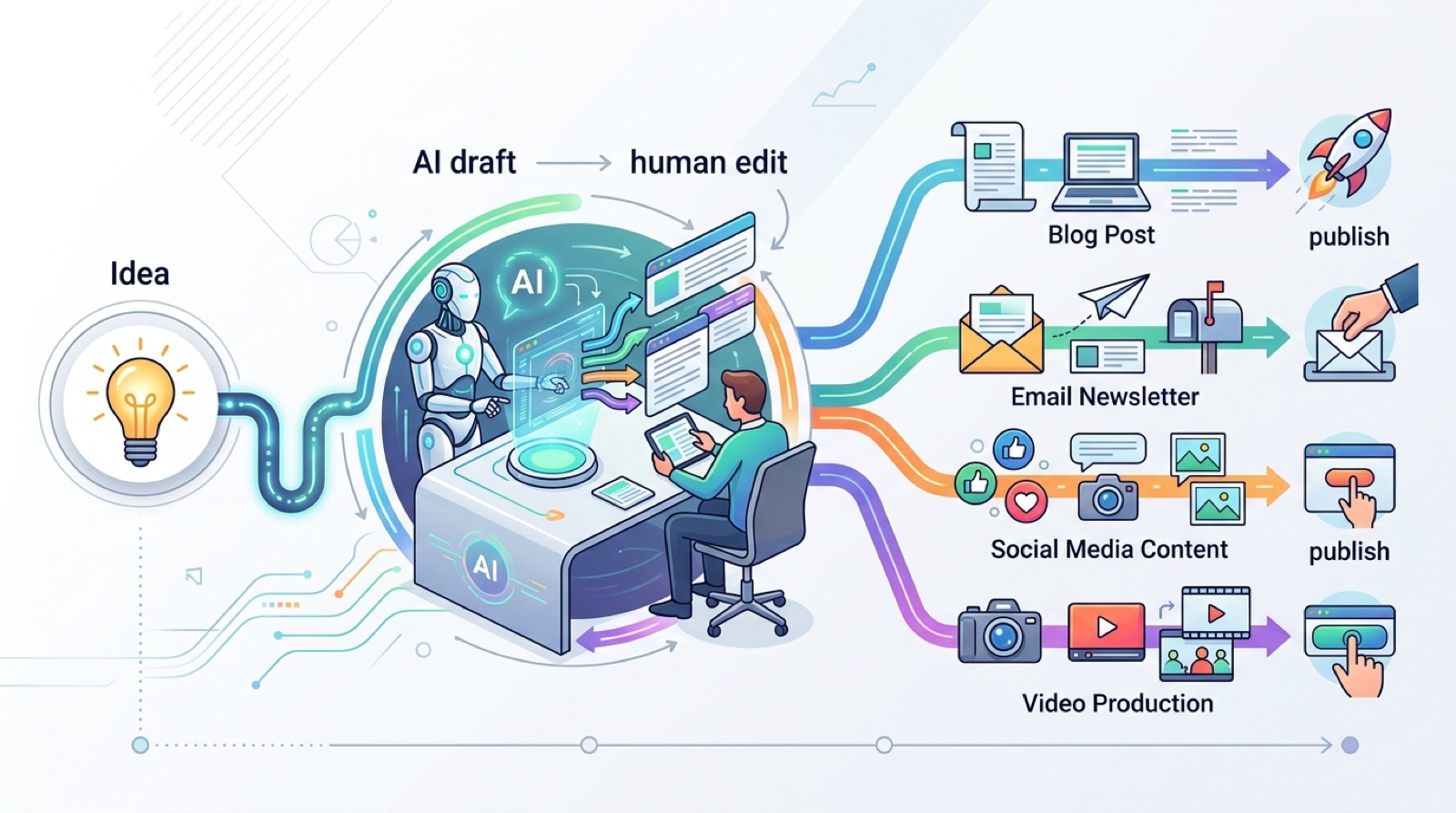
The template structure separates static content, dynamic data, and AI generated copy so each page is unique.
Before publishing 1,000 pages, manually review 20 to 50 random samples. Check for:
If more than 10% of the samples have issues, fix the template or prompt and regenerate. Do not publish until the sample passes QA.
Time: 4 to 8 hours.
Do not publish 10,000 pages on day one. Launch in batches of 100 to 500 pages spread across 2 to 4 weeks. This gives Google time to crawl and evaluate without flagging the site as spam. Batches also let you catch issues before they affect every page.
Submit each batch to Google Search Console for indexing. Monitor crawl budget and indexation rate.
Time: 2 to 4 weeks.
After launch, monitor for:
Pull underperformers (zero traffic after 90 days) and either improve them with more data or noindex them. Underperformers drag down the entire programmatic launch.
Tools: Google Search Console, GA4, SE Ranking, Profound for LLM citation tracking.
Time: Ongoing.
The pages drive traffic. Your phone is ringing. Most service businesses miss 30 to 50% of inbound calls. CallSetter AI deploys an AI voice agent on your line in 48 hours so the leads your SEO produces actually become booked appointments. Read AI marketing and AI content for the broader stack.
Byword is built specifically for programmatic SEO. You feed it a list of keywords or a database, and it generates the full set of articles in batch. Output quality is decent and the speed is unmatched for scale plays.
Pricing: $99 per month for 100 articles. Custom pricing for higher volume.
Best for: Pure programmatic launches at 1,000+ pages.
Webflow’s CMS Collections let you build a template once and populate it with database rows. The visual builder makes template iteration fast. Best for marketing teams without dev resources.
Pricing: $29 per month for Lite. $42 per month for CMS plan.
Best for: Marketing teams launching 100 to 5,000 page programmatic sites.
Custom build using Next.js and a headless CMS like Sanity, Contentful, or Strapi. Maximum flexibility, maximum dev cost. Best for engineering led teams launching 5,000+ pages.
Pricing: Free + hosting + CMS subscription.
Best for: Engineering teams that want full control.
Build the data in Airtable, sync to Webflow or WordPress through Whalesync or Make. Best for teams that want to manage data in a spreadsheet UI.
Pricing: $20 per month for Airtable plus $30 per month for Whalesync.
Best for: Non technical teams managing the data layer.
Generate variable copy in batch through the OpenAI or Anthropic API. Cheapest at scale (under $0.01 per page) but requires a developer to build the pipeline.
Pricing: $0.005 to $0.02 per page generated.
Best for: Engineering led teams with 10,000+ pages to generate.
Mistake 1: Publishing without real data. AI generated copy on top of placeholder data is the fastest way to eat a Helpful Content penalty. Always have real data first.
Mistake 2: Pages that are too similar. If two pages share 70%+ of the content, Google folds them and the launch tanks. Vary the data per page. Vary the angle. Vary the AI generated paragraphs.
Mistake 3: Skipping manual QA. AI hallucinates. AI makes factual errors. AI produces awkward phrasing. Always sample 20 to 50 pages before launching the full batch.
Mistake 4: Launching all pages at once. Batched launches signal “ongoing publication” to Google. Bulk launches signal “spam.” Launch in batches over 2 to 4 weeks.
Mistake 5: Ignoring underperformers. Pages that get zero traffic after 90 days drag down the entire programmatic launch. Pull them, improve them, or noindex them.

Programmatic pages can be cited inside Google AI Overviews if the data is structured well. Three things to do:
Add comprehensive schema. Article schema, FAQPage schema, and any vertical specific schema (LocalBusiness, Product, HowTo). LLMs use schema to decide what to cite.
Write the opening section as a direct answer. The first 200 words should answer the implicit query of the page in clean factual language. Skip the marketing fluff.
Include FAQ sections with structured Q&As. Each question and answer can be cited separately by Google AI Overviews.
Read AI SEO strategy for the full GEO playbook and AI SEO content for the editorial QA process.

A typical programmatic launch ramps traffic over 6 months as Google crawls and indexes each batch.
Zapier integrations pages: 10,000+ pages, one per integration combo. Drives 60%+ of Zapier organic traffic. Each page has real data (the actual integration triggers and actions) plus AI generated descriptions.
G2 software category pages: One page per software category. Real data from user reviews. Drives the majority of G2 organic traffic.
Yelp business pages: Tens of millions of pages, one per business. Real data scraped from public sources plus user reviews. The original programmatic SEO empire.
TripAdvisor location pages: One page per attraction in every city in the world. Real data from user reviews and business listings.
Tested Media’s industry pages: One page per industry vertical (HVAC, plumbing, dental, legal, real estate, etc.). Each page has real client data and pain points. Read AI for business for the full silo.
The pattern is consistent: real data, unique pages, useful for the searcher.
What is programmatic SEO?
Programmatic SEO generates hundreds or thousands of pages from a database and a template. Each page targets a long tail keyword with unique data. Powered by AI in 2026 for the variable copy.
Is programmatic SEO safe in 2026?
Yes, if you do it right. Real data plus unique pages plus manual QA passes Google’s Helpful Content System. Raw AI output on placeholder data does not.
How many pages should a programmatic launch have?
50 to 100 for a pilot. 500 to 5,000 for a typical launch. 10,000+ for sites with proven programmatic success.
What is the best tool for programmatic SEO?
Byword for the writing layer. Webflow CMS Collections or Next.js for the template layer. Airtable for the data management layer. Custom OpenAI API integration for engineering led teams at scale.
How long does a programmatic SEO launch take?
3 to 8 weeks from start to live pages. Compare to 3 to 6 months for a manual content launch of the same size.
Will Google penalize programmatic SEO?
Not for being programmatic. Google penalizes thin spammy content regardless of generation method. Real data plus unique pages plus quality monitoring passes every quality system.
Can ChatGPT do programmatic SEO?
Yes, with the API. Generate variable copy in batch through the OpenAI API. Pair with a real data source and a template. See ChatGPT for SEO for the prompts.
How do I know if my programmatic launch worked?
Indexation rate above 70% within 30 days. Average position climbing month over month. Organic clicks ramping after 60 days. Zero traffic pages under 20% of total.

Ready to ship? Book a CallSetter AI demo and have an AI voice agent answering the calls your SEO traffic is about to generate. Live in 48 hours.
Reviewed April 2026 by Victor Smushkevich, CEO of Tested Media. Victor has been profiled in Forbes, HuffPost, and MarketWatch.
Talk with one of our SEO specialists today and see how we can supercharge your marketing campaigns!