TL;DR. In 2026, AI for small business is no longer a science project. The winners are using a tight stack of 5 to 8 tools (ChatGPT, Claude, Perplexity, Zapier AI, an AI voice agent, and a couple of vertical specific apps) to answer every inbound call, follow up on every lead in 60 seconds, write content in hours instead of weeks, and automate the back office. The fastest payback comes from call answering and lead follow up, which is why most service businesses start there. If you want the highest ROI AI win running in 48 hours without hiring a developer, CallSetter AI builds and operates AI voice agents for service businesses on top of the best in class platforms.
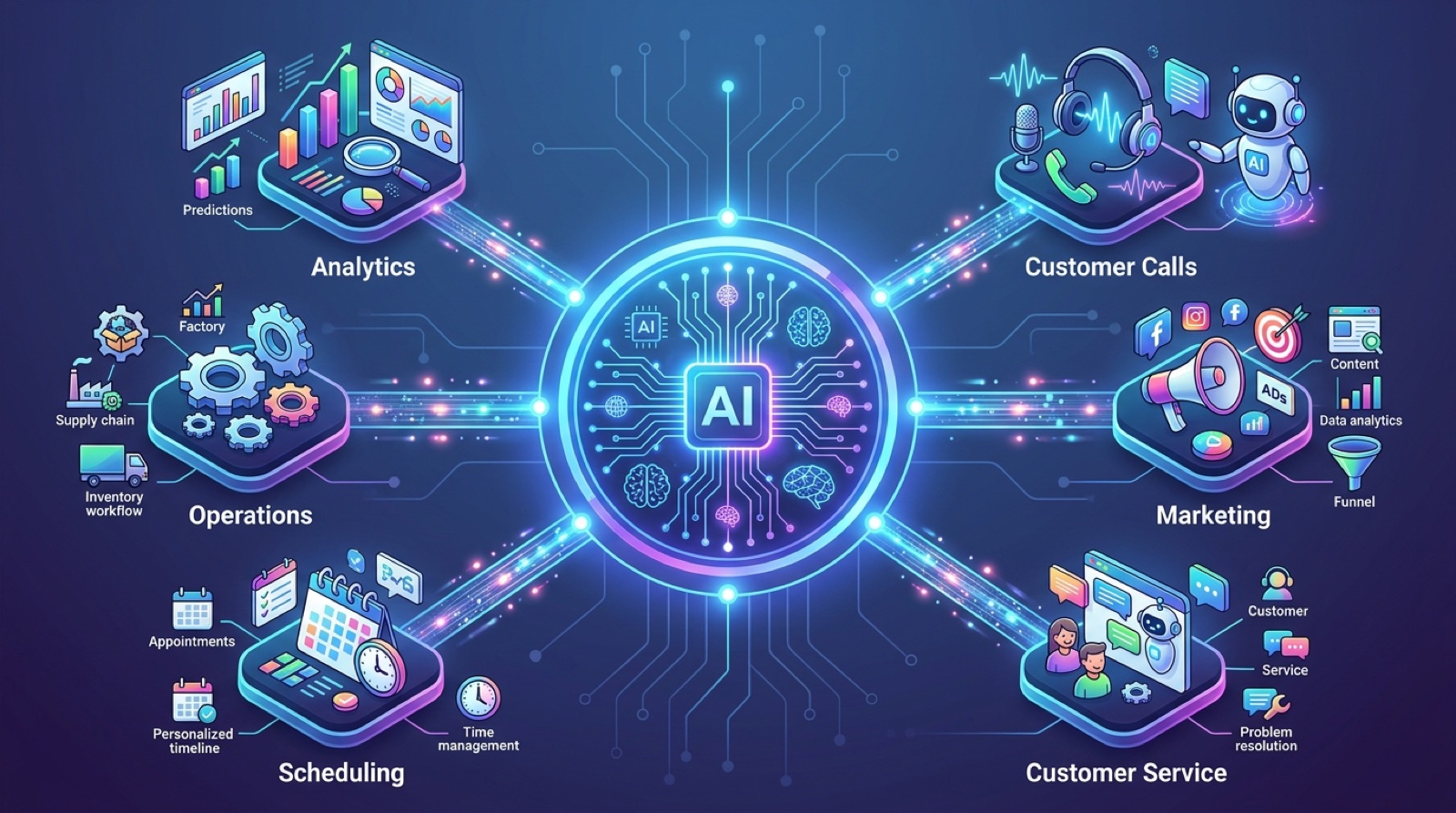
The 2026 small business AI stack runs across calls, content, sales, marketing, ops, and the back office. Most owners only need 5 to 8 tools to capture the full upside.
What “AI for business” actually means in 2026
Most articles on AI for small business are still recycling 2023 talking points about ChatGPT writing blog posts. That is not what is moving revenue in 2026.
AI in a small business is now an always on layer of software that does five categories of work that used to require humans:
- Talking to customers in real time on phone, chat, and SMS
- Producing content and creative at the speed of typing
- Moving data between systems without copy and paste
- Analyzing what is happening and surfacing what to do next
- Drafting the boring stuff like emails, reports, proposals, and invoices
The shift in 2026 is that all five are reliable enough and cheap enough to ship in a small business with no in house engineers. A solo lawyer, a 4 person dental office, or a 12 truck HVAC company can deploy the same caliber of AI that a Fortune 500 company runs, at a fraction of the cost.
The question is not whether to use AI. It is which use cases pay back fastest, which tools to deploy first, and how to avoid the 5 mistakes that turn AI projects into wasted spend. This guide answers all of that, then links out to 27 industry specific playbooks.
The 7 highest leverage AI use cases for small business
After 200+ deployments across 27 verticals, the same 7 use cases top the ROI list. Deploy in this order.
1. Answering inbound calls
The single highest ROI AI use case for any service business, not close. The average service business misses 30 to 50 percent of inbound calls (after hours, during another call, while staff are with customers). Every missed call is a lost lead worth $200 to $5,000.
An AI voice agent answers in one ring, qualifies the caller, books the appointment, and logs to the CRM. Cost is $0.07 to $0.24 per minute on Retell AI, Vapi, Bland AI, and Synthflow. For 200 calls a month: $130 to $300 all in versus $3,500 for a receptionist who only works 40 hours a week. Average payback under 30 days. See the full AI voice agents pillar guide, or let CallSetter AI deploy one in 48 hours.
2. Speed to lead follow up
Following up on web leads in under 60 seconds. The classic Harvard study showed that 5 minute follow up is 100x more likely to qualify than 30 minute. In 2026 the bar is 60 seconds, not 5 minutes, because AI lets every business hit that mark.
A web lead hits the form. A workflow calls or texts within 60 seconds, qualifies, and books a human follow up if real. Zapier AI, Make.com, and n8n handle routing. AI voice agents handle the call. We have measured 2x to 5x more booked appointments from existing lead volume with no new traffic and no new ad spend.
3. Content creation
Blog posts, social, ad copy, email sequences, video scripts, and landing pages used to take weeks. In 2026 it is hours. The stack: ChatGPT or Claude for first drafts, Perplexity for research, Jasper or Copy.ai for templated production, Canva AI and Midjourney for images, ElevenLabs for voiceover, Synthesia or Runway for video, Notion AI to organize.
The trap is using AI to produce slop. Use it as a co writer, not a replacement. Start with your real expertise and have the AI structure, polish, and accelerate.
4. Customer service and support
The 2026 generation built on GPT 5.4 and Claude Opus 4.6 (Intercom Fin, Ada, Zendesk AI) handles 60 to 80 percent of inbound support tickets without escalation. They read your knowledge base and past tickets and answer the question. For service businesses, the same logic applies on the phone, where AI voice agents handle booking, rescheduling, and basic questions so staff can focus on the calls that need humans. The metric to watch is CSAT, not “tickets handled.” See our AI customer service guide.
5. Scheduling and appointment booking
A human spends 4 to 6 minutes per booking. Across 200 bookings a month that is 16 to 20 hours of zero revenue labor. Calendly AI, Motion, Reclaim, and the built in schedulers inside HubSpot or GoHighLevel handle it end to end. AI voice agents do the same thing inside a phone call, which is where most service business bookings still happen.
6. Data analysis and reporting
Every small business sits on data they never look at. Julius AI, ChatGPT Code Interpreter, and the AI features inside Airtable, Notion, and HubSpot let any non technical owner ask questions in plain English (“which job types had the highest margin last quarter?”) and get a chart. No SQL, no pivot tables, no analyst. Start with one question per week.
7. Workflow automation
The connective tissue. Once you use AI in 3 or 4 places, the leverage is wiring them together. New lead triggers a follow up call. Booked appointment triggers a confirmation SMS. Job complete triggers an invoice and a review request. This is what Zapier AI, Make.com, and n8n are built for. Detail in section 6 below.
The fastest first AI win for any service business is answering every inbound call. CallSetter AI builds, deploys, and operates AI voice agents on the platforms that win in 2026. 48 hour deployment, guaranteed answer rate, no engineering required.
AI for service businesses by industry
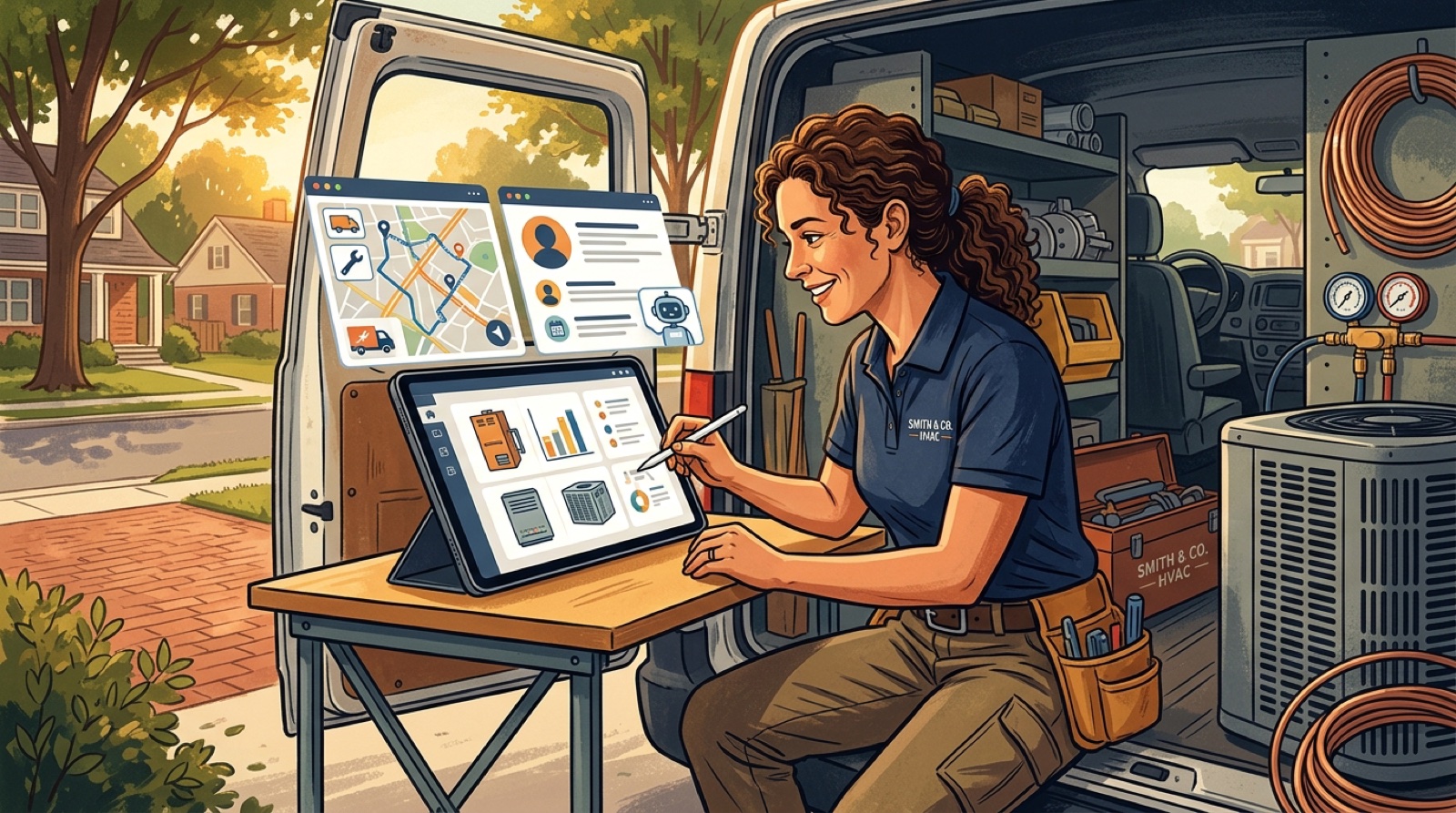
The index to 27 industry specific AI playbooks. Each covers the highest ROI use cases, platform picks, pricing, and roadmap for that vertical.
Legal and professional services
- AI for law firms. Intake automation for personal injury, family, and immigration practices. AI voice agents handle the first 20 minutes of intake before a human attorney touches the case.
- ChatGPT for lawyers. The 10 prompts attorneys use for drafting, contract review, deposition prep, and research that save 5 hours a week.
Real estate
- AI for real estate. The full brokerage stack: lead nurture, listing descriptions, virtual tours, transaction coordination, and CRM automation.
- AI for real estate agents. Cold lead reactivation, instant Zillow follow up, and back office automation that gives one agent the leverage of a 5 person team.
- ChatGPT for real estate. Listing descriptions, buyer emails, neighborhood guides, and the 15 prompts every agent should have saved.
Dental and medical
- AI for dentists. Front desk AI for solo dentists. Appointment booking, recall sequences, insurance verification, and patient intake automation.
- AI for dental practices. The AI stack for 3+ chair practices, including HIPAA compliant call answering and patient intake.
- ChatGPT for dentists. Prompts and workflows for treatment presentations, patient communication, and marketing copy.
- AI for chiropractors. Recall automation, missed appointment recovery, and the intake flow that doubles initial consultation booking rates.
- AI for medspas. Lead reactivation, treatment booking, and the SMS automation that drives repeat visits.
Home services
- AI for HVAC. After hours call answering is the killer use case. HVAC businesses lose 30 to 50 percent of calls between 5 PM and 8 AM. We have measured 8x to 14x ROI here.
- AI for plumbers. Same pattern as HVAC plus emergency call routing. Plumbers who answer at 2 AM get the job.
- AI for electricians. Commercial vs residential routing, estimating workflows, and lead qualification that filters tire kickers.
- AI for roofers. Storm chasing automation, insurance claim assist, and 60 second lead follow up that books inspections from cold web leads.
- AI for contractors. Project intake, estimate generation, and client communication during long jobs.
- AI for pest control. Recurring service automation, route optimization, and call answering that books same day jobs.
- AI for cleaning companies. Quote automation, recurring booking, no show recovery, and the SMS flow that doubles retention.
- AI for landscaping. Seasonal workflow automation, project estimation, and the recall sequences that drive spring and fall bookings.
- AI for solar companies. Long sales cycle nurture, financing pre qualification, and lead routing that gets reps in front of the right homeowners faster.
- AI for auto repair. Service appointment booking, vehicle history lookup, and customer communication that drives 5 star reviews.
- AI for home services. The umbrella playbook for businesses spanning multiple categories.
Financial services
- AI for insurance agents. Quote generation, lead qualification, policy renewal automation, and speed to lead that wins more leads from carriers.
- AI for mortgage brokers. Pre qualification, document collection, rate alerts, and nurture sequences for long underwriting cycles.
- AI for financial advisors. Client communication, meeting prep, portfolio commentary, and compliance friendly content generation.
Auto
- AI for car dealerships. Inbound call answering, internet lead qualification, service department booking, and the BDC automation that turns showroom traffic into revenue.
Most service businesses’ fastest AI win is the same one: answer every inbound call. CallSetter AI handles this for 27 verticals out of the box. We pick the right voice agent platform, write the system prompt, integrate with your CRM, and tune it weekly.
The first 3 AI tools every small business should deploy
If you are starting from zero, install these three this week. Every business gets value regardless of industry.
Tool 1: ChatGPT or Claude. Pick one. ChatGPT (GPT 5.4) and Claude (Opus 4.6) are the two best general purpose assistants in 2026. $20 per month individual, $30 per month business tier with data privacy. Use it for emails, document summaries, first drafts, contract decoding, meeting prep, spreadsheet analysis. The mistake most owners make is installing it and never using it. Rule: any task involving writing or thinking gets a 5 minute AI assist first. Lowest setup cost, highest immediate leverage, builds the AI literacy you need for everything else.
Tool 2: An AI voice agent or AI receptionist. If you get inbound calls and you miss any, this is the highest ROI tool you will ever buy. Three paths: DIY no code on Synthflow or Bland AI ($50 to $200 per month, 1 to 2 weeks to build), DIY with developers on Retell or Vapi ($100 to $300 per month, 4 to 8 weeks), or done for you with CallSetter AI ($300 per month, 48 hours to live). Most businesses see it pay for itself in the first month from recovered missed calls. Full context in our AI voice agents pillar and AI receptionist guide.
Tool 3: Zapier AI or Make.com. Once you have ChatGPT and a voice agent, wire everything together. Zapier AI ($30 to $100 per month) and Make.com ($10 to $50 per month) are the leaders, n8n is the open source alternative. Start with one workflow: new lead in, tag in CRM, send welcome email, add to follow up sequence. Connects everything else. Without it, your AI tools are islands.
AI workflow automation: the connective tissue
Workflow automation is where AI goes from “neat tool” to “running my business.” Three platforms own this category in 2026.
Zapier AI is the easiest. 7,000+ integrations, no code, AI that builds workflows from a plain English prompt. $30 per month for 750 tasks. Best for non technical owners.
Make.com is the power user choice. More flexible, cheaper at scale, visual builder that handles complex branching. Steeper learning curve.
n8n is the open source option. Free to self host, $20 per month for cloud. Most flexible, full code escape hatch. Best for technical teams.
Real examples that pay back fast
- New lead routing. Form submission creates the contact, tags the source, fires an SMS in 60 seconds, books a call back, pings the rep on Slack.
- Missed call recovery. Missed call triggers an SMS in 30 seconds, captures the response, books an appointment. Recovers 20 to 40 percent of missed calls.
- Job complete to invoice and review. Job complete generates the invoice in QuickBooks, sends it, schedules a review request 2 hours later. Lifts review velocity 3x to 5x.
- Lead nurture. Cold leads enter a 90 day sequence personalized per recipient by an AI writing layer.
- Quarterly client check ins. For relationship businesses, a personalized check in fires every 90 days, drafted in the agent’s voice, queued for one click send.
Pattern: identify a 5 to 15 minute repetitive task, automate the data movement, let AI write or talk, and free the human for work only humans can do.
AI for marketing operations
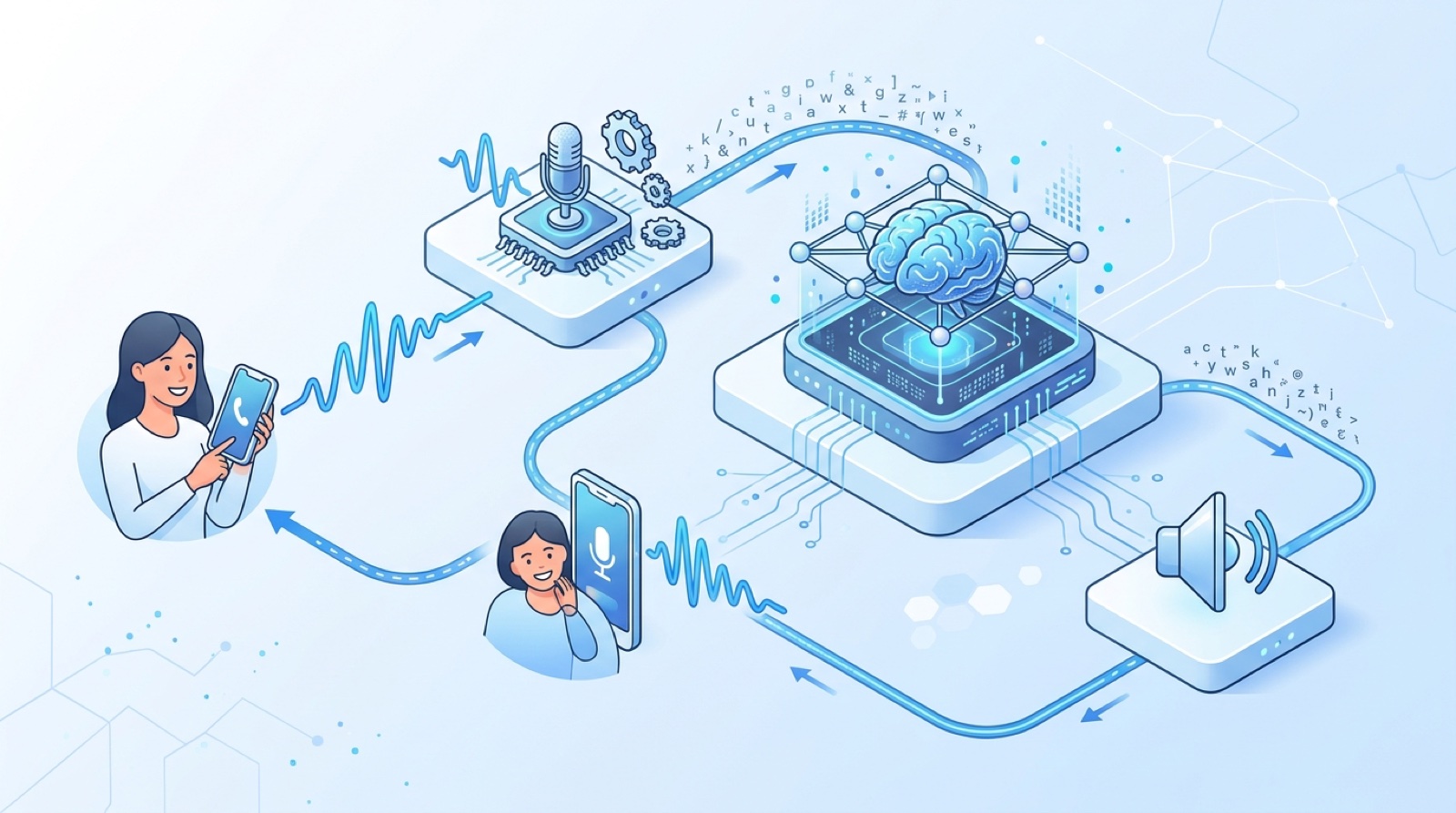
The 2026 marketing stack:
- Strategy and research: Perplexity, Claude, and ChatGPT replace 10 hours of consultant time per month with $20 of subscriptions.
- Content: ChatGPT or Claude for long form, Jasper or Copy.ai for templated copy, Notion AI for the editorial calendar.
- Visual: Canva AI, Midjourney, Runway, and Synthesia. Creative cost collapsed 90 percent in 2024 and 2025.
- SEO: ChatGPT and Claude for keyword research and outlines, Surfer SEO, Frase, and Clearscope for optimization. See our AI SEO guide.
- Email: HubSpot AI, Mailchimp AI, and Kit draft and optimize. Smartlead, Instantly, and Lemlist handle cold email with AI personalization.
- Ads: Meta and Google have native AI ad generation. AdCreative.ai, Pencil, and Creatify produce higher quality ad sets in minutes.
- Analytics: Ask ChatGPT or Claude to analyze your funnel in plain English. Saves an analyst hire for businesses under $5M.
The volume problem is solved. The new bottleneck is taste and strategy. Use AI to produce 10x the volume in half the time, then spend the saved time on positioning and offer. See our AI marketing guide.
AI for sales operations
Sales is the function where AI most directly drives revenue. The 2026 sales stack:
- Speed to lead: AI voice agents and texting follow up in under 60 seconds. Biggest sales lever for any business with web leads. See our AI sales pillar.
- Lead qualification: AI filters tire kickers, qualifies on budget and timeline, routes real prospects only. 2x to 5x more efficient rep time.
- Outbound prospecting: Apollo, Clay, Smartlead, and Instantly research and personalize outreach at scale.
- Meeting prep and notes: Gong, Chorus, Fireflies, and Otter save reps 30 to 60 minutes a day.
- Proposals: ChatGPT and Claude draft from a brief. PandaDoc and Proposify have AI built in. 4 hour proposal becomes 30 minutes.
- CRM and forecasting: HubSpot AI and Salesforce Einstein auto enrich, dedupe, and forecast close probability better than human sales managers.
The highest ROI sales play for service businesses is still answering every inbound call in one ring. Fix call answering first, then layer the rest.
AI for customer operations
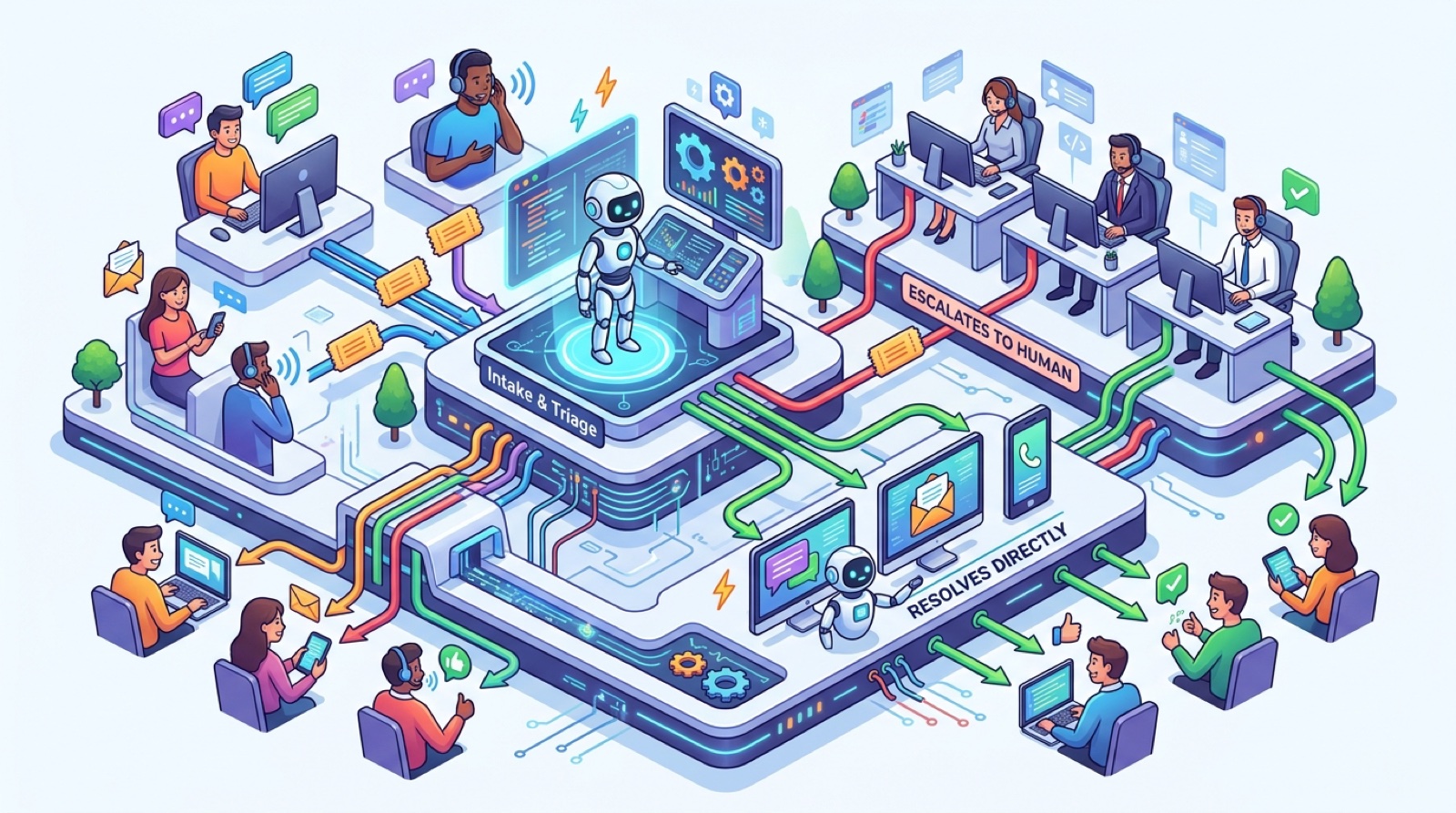
The big platforms (Intercom Fin, Ada, Zendesk AI, Freshworks Freddy) ship AI agents that handle 60 to 80 percent of inbound tickets without escalation. The 2026 stack:
- Tier 1 chat: AI bot trained on your knowledge base handles FAQ and routine questions, escalates to a human when confidence is low.
- Phone support: AI voice agents on Retell, Vapi, Bland, or Synthflow handle order status, returns, and routine calls.
- Email support: AI drafts in the agent’s voice, the human reviews and sends. 3x to 5x faster.
- Knowledge base management: AI auto generates articles from past tickets and surfaces gaps.
- Sentiment monitoring: AI flags frustration, escalation risk, and churn signals to retention reps.
The metric to watch is CSAT, not “tickets handled.” If CSAT drops, the AI is failing. Tune the prompts and fix the escalation path. See our AI customer service guide.
AI for back office (bookkeeping, HR, ops)

The least sexy category and one of the highest ROI. Back office work is repetitive and rule based. AI is built for it.
- Bookkeeping: QuickBooks, Xero, and FreshBooks auto categorize and reconcile. Time drops 60 to 80 percent. Pilot, Bench, and Digits deliver fractional CFO at 10 percent of full time cost.
- Invoice and expense: Bill.com, Ramp, and Brex extract data from PDFs, match to POs, and auto categorize receipts. Eliminates expense reports.
- HR and recruiting: Workable, Lever, and Greenhouse screen resumes, draft JDs, schedule interviews, and onboard.
- Payroll: Gusto, Rippling, and Justworks flag errors and answer employee questions.
- Contracts and legal: Ironclad, LinkSquares, and Spellbook draft, review, and redline. 2 hour reviews become 15 minutes.
- Document management: Notion AI, Coda AI, and ClickUp Brain answer questions across your document store with citations.
Any task where the answer is in the data and the rule is clear is ready to automate.
ROI by use case: which gets paid back fastest
Not all AI use cases have equal ROI. After 200+ deployments, here is the picture.
| Use case | Typical payback | Notes |
|---|---|---|
| AI voice agent for call answering | 7 to 30 days | Highest ROI use case across every service business vertical we serve. |
| Speed to lead follow up automation | 14 to 30 days | 2x to 5x more booked appointments from existing lead volume. |
| Missed call text back | 7 to 14 days | Recovers 20 to 40 percent of otherwise lost calls. |
| AI customer service tier 1 | 30 to 60 days | Cuts cost per ticket by 50 to 80 percent. |
| Workflow automation (Zapier, Make) | 14 to 60 days | Depends on volume. High volume processes pay back in days. |
| AI content production | 60 to 120 days | Pays back through more content and lower agency spend. |
| AI sales prep (Gong, Chorus) | 60 to 90 days | Sales rep productivity gains. |
| AI bookkeeping | 30 to 90 days | Cuts bookkeeping time by 60 to 80 percent. |
| AI ad creative | 30 to 60 days | Lower CAC through faster creative iteration. |
| AI SEO and content optimization | 90 to 180 days | SEO is always slower than direct response use cases. |
The rule is simple. Anything that touches money in real time (a phone call, a lead form, a payment) has the fastest payback. Anything that touches content or process pays back slower but with bigger long term impact. If you do one AI thing this quarter, do call answering. If you do two, add speed to lead follow up. If three, add workflow automation.

Chart: AI use case ROI payback period comparison for small business
Real ROI payback periods across 9 common AI use cases for small business, based on 200+ deployments in 2025 and 2026.
AI consulting vs AI agency vs DIY
You have three paths to deploying AI. Each has tradeoffs.
DIY. $50 to $500 per month in software, plus 40 to 200 hours of your time for the first build. Cheapest in cash, slowest to ship. Best for owners with technical chops, unusual use cases, or more time than money. Most DIY projects stall in month 2 when the first edge cases show up.
AI consulting. $5,000 to $50,000 per engagement, $150 to $500 per hour. Strategic input from someone who has done it before. The catch: consultants deliver a plan, not a working system. You still have to build it. Best for larger small businesses ($1M to $10M) with internal teams. Most “AI consultants” in 2026 are former marketers who learned ChatGPT 6 months ago, so vet hard.
AI agency (done for you). $500 to $3,000 per month for managed services. Working system in days or weeks instead of months. Someone else handles platform updates, prompt tuning, integration changes, and edge cases. Higher monthly cost than DIY but predictable, and you depend on the agency staying alive.
If your use case is call answering, lead follow up, or appointment booking, the agency path is almost always right. These are commoditized enough that a good agency has done your build 100 times and ships faster than you can. Novel or strategic use cases benefit from a consultant for planning plus a freelance developer for build. Pure DIY only makes sense if you have time, technical curiosity, and an unusual use case.
For service businesses, the call answering build is solved. CallSetter AI deploys it in 48 hours on platforms we have validated across 27 verticals. Not a consulting deck. A working agent answering your calls by Friday. See our AI consulting guide for the full breakdown.
The 5 mistakes that waste money on AI
After 200+ deployments, the same 5 mistakes kill projects. Avoid these and you are in the top 10 percent of AI buyers.
- Buying tools before defining the problem. Owners install 8 tools and use none. Pick one specific problem, pick the tool that solves it, deploy, prove ROI, then expand.
- Automating everything at once. A first deployment solves one problem end to end, not 5 halfway. Teams that win ship one workflow, prove it, add the next. Teams that fail try to redesign the whole operation in month 1.
- Ignoring the human handoff. Every AI system needs a clean escalation path. If the AI cannot handle the situation, the customer gets stuck in a loop and churns. Treat AI as tier 1 with a clean handoff to a human tier 2.
- Not measuring outcomes. The metric is not “tasks automated.” It is “appointments booked,” “qualified leads,” “tickets resolved at acceptable CSAT,” or “hours saved.” Set the right KPIs day one.
- Set it and forget it. Prompts drift, edge cases appear, models change, platforms push updates. Plan 1 to 4 hours per month of maintenance per deployed system, or pay an agency.
Teams that win at AI treat it like a hire, not a tool. You would not hire a new employee, hand them a desk, and walk away for 6 months.
Implementation roadmap: the first 90 days
The realistic sequence we follow with new clients.
Month 1: Foundation and call answering.
- Week 1: audit current state (lead sources, response times, missed call rate, cost of a missed lead).
- Week 2: install ChatGPT or Claude and use it daily.
- Week 3: deploy an AI voice agent (or hire an agency). Start with after hours only.
- Week 4: expand the voice agent to all calls. Tune prompts. Measure answer and booking rate.
Month 2: Lead follow up and workflow automation.
- Week 5: set up 60 second speed to lead follow up on every web form.
- Week 6: install Zapier AI or Make.com. Build new lead routing, missed call recovery, and appointment confirmation.
- Week 7: add AI customer service for tier 1 questions with a clean escalation path.
- Week 8: add AI content production for the channel where content is the bottleneck.
Month 3: Scale and optimize.
- Week 9: audit everything. What is working, what is not, where are the leaks.
- Week 10: add AI sales prep and meeting notes (Gong, Fireflies) if you have a sales team.
- Week 11: add back office automation (bookkeeping, invoices, or document management).
- Week 12: build a single dashboard for every key metric. Hold a monthly review forever after this point.
By 90 days you will have 5 to 8 AI systems deployed, every metric measured, and a clear picture of what is working. Teams that follow this sequence consistently see 20 to 40 percent operating cost reduction and 30 to 60 percent revenue lift in the first 6 months.
Roadmap: 90 day AI implementation timeline for small business with weekly milestones
The 90 day implementation roadmap we run with new clients. Call answering goes first because it has the fastest payback, then layer the rest by ROI.
Frequently asked questions
What is the single best AI tool for small business in 2026?
There is no single best tool. Depends on your bottleneck. Miss inbound calls? An AI voice agent. Struggle with content? ChatGPT or Claude. Waste time on data entry? Zapier AI or Make.com. Start with the bottleneck.
How much should a small business spend on AI per month?
Baseline for 5 to 25 employees is $200 to $800 per month. That covers ChatGPT or Claude business tier, an AI voice agent, a workflow automation platform, and one or two specialized tools. Marginal return drops past $1,500 per month.
Can AI really replace a receptionist?
For most service businesses, yes. A modern AI voice agent answers in one ring, qualifies, books, and logs to CRM. 24/7 for $130 to $300 per month versus $3,500 for a human working 40 hours a week. 2026 voice agents pass the “is this a human?” test for 73 percent of callers on calls under 3 minutes.
Do I need a developer to use AI in my business?
No. The 2026 tools are mostly no code. ChatGPT, voice agents on Synthflow or Bland, and Zapier AI all work without one. Deeper integrations benefit from a developer. Hire an agency to skip the learning curve.
Will AI take my employees’ jobs?
Not directly. AI removes the boring 30 to 50 percent of every job and frees humans for work that needs judgment, creativity, and relationships. Businesses that handle this transition well grow faster with the same headcount. Those that try to cut staff first usually destroy CX and lose more than they save.
Difference between AI consulting and an AI agency?
A consultant gives you a plan. An agency builds and operates the working system. For small businesses, the agency path is almost always faster and cheaper because the use cases are commoditized. Consulting makes sense for novel use cases or larger companies with internal teams.
Is AI safe for regulated industries (medical, legal, financial)?
Yes, with the right configuration. Use HIPAA compliant platforms (Bland AI, Retell, Vapi, and Synthflow all offer HIPAA configurations with BAAs). Use SOC 2 compliant tools for financial. Always keep a human review layer for high stakes communications. Get a lawyer involved before shipping in any regulated industry.
Where should I start if I am completely new to AI?
Install ChatGPT or Claude, use it daily for two weeks. Identify your biggest operational bottleneck (probably missed calls or slow lead follow up). Deploy the one tool that solves it. Get one win, then add the next. Doing everything at once is the most common reason AI projects fail.
Related reading
This pillar links to all 27 industry specific AI guides. Pick the one closest to your business for the full breakdown.
Service businesses:
- AI for HVAC
- AI for plumbers
- AI for electricians
- AI for roofers
- AI for contractors
- AI for pest control
- AI for cleaning companies
- AI for landscaping
- AI for solar companies
- AI for auto repair
- AI for home services
Professional services:
- AI for law firms
- ChatGPT for lawyers
- AI for real estate
- AI for real estate agents
- ChatGPT for real estate
- AI for insurance agents
- AI for mortgage brokers
- AI for financial advisors
Medical and dental:
Auto:
Cross silo guides:
- AI voice agents complete guide
- AI receptionist buyer’s guide
- AI customer service guide
- AI sales playbook
- AI marketing guide
- AI consulting guide
Done for you:
- CallSetter AI – Managed AI voice agents in 48 hours
Updated quarterly. Last review: April 2026 by Victor Smushkevich, CEO and Founder of Tested Media. Victor has been profiled in Forbes, HuffPost, and MarketWatch on AI and digital marketing.
Ready to ship your first AI win? Talk to the CallSetter AI team and have an AI voice agent answering your calls by Friday.
Every Article in Our AI for Business Silo
Browse all 28 guides, reviews, and playbooks in the AI for Business category. New articles added weekly.
- AI for Auto Repair 2026: Booking, Estimates, and Voice Agents
- AI for Car Dealerships 2026: Sales BDC, Service, and Voice Agents
- AI for Chiropractors 2026: New Patient Intake and Reactivation
- AI for Cleaning Companies 2026: Booking, Routing, and Voice Agents
- AI for Contractors 2026: Bid Generation, Project Management, Lead Handling
- AI for Dental Practices 2026: Front Desk, Recall, and Voice Agents
- AI for Dentists 2026: Practice Automation and Voice Agents
- AI for Electricians 2026: Missed Call Recovery and Estimate Automation
- AI for Financial Advisors 2026: Lead Intake and Compliance
- AI for HVAC 2026: Missed Call Recovery and Dispatch Automation
- AI for Home Services 2026: The Complete Playbook
- AI for Insurance Agents 2026: Speed to Lead and Quote Automation
- AI for Landscaping 2026: Quoting, Recurring, and Voice Agents
- AI for Law Firms 2026: Intake, Research, and Voice Agents
- AI for Marketers 2026: The Complete Practitioner’s Guide
- AI for Mechanics 2026: Diagnostics, Booking, and Voice Agents
- AI for Medspas 2026: Booking, Consults, and Voice Agents
- AI for Mortgage Brokers 2026: Lead Qualification and Voice Agents
- AI for Personal Injury Firms 2026: Intake, Screening, and Voice Agents
- AI for Pest Control 2026: Booking, Routing, and Voice Agents
- AI for Plumbers 2026: Missed Call Recovery and Emergency Dispatch
- AI for Real Estate 2026: The Complete Industry Playbook
- AI for Real Estate Agents 2026: The Solo Agent Playbook
- AI for Roofers 2026: Storm Lead Capture and Insurance Claim Automation
- AI for Solar Companies 2026: Lead Gen, Setting, and Voice Agents
- ChatGPT for Dentists 2026: Prompts, Use Cases, and Voice Agents
- ChatGPT for Lawyers 2026: Prompts, Use Cases, and Compliance
- ChatGPT for Real Estate 2026: Prompts, Listings, and Voice Agents
Related Reading