
TL;DR The top 7 AI customer service software platforms in 2026 are Intercom Fin, Zendesk AI, Decagon, Sierra AI, Ada, Forethought, and Kustomer IQ. Each is the leader of a specific category. Intercom Fin wins for SaaS and ecommerce on a per resolution model. Decagon wins for max containment at enterprise scale. Sierra wins for unified voice plus chat. The right pick depends on your existing customer service stack, volume, and channel mix. If you also need the voice side handled, CallSetter AI builds AI voice agents that pair with any of these platforms.

The 7 leading AI customer service software platforms in 2026, ranked by category.
These 7 are the ones we deploy and recommend across real client engagements. Each is the leader of its specific category.
| Platform | Category | Starting price | Best for | Containment |
|---|---|---|---|---|
| Intercom Fin | Full agent | $0.99/resolution | SaaS, ecommerce on Intercom | 56% avg, 75% top |
| Zendesk AI | Enterprise suite | $115/agent/mo plus add ons | Mid market and enterprise on Zendesk | 50% avg |
| Decagon | Full agent (high end) | Custom ($30K to $250K/yr) | Enterprise SaaS, ecommerce, fintech | 80 to 90% top |
| Sierra AI | Full agent (voice plus chat) | Custom enterprise | Brands wanting unified channels | 65 to 80% |
| Ada | Full agent (multilingual) | Custom (typically $24K plus/yr) | Brands with 10 plus languages | 60 to 75% |
| Forethought | Specialist (triage) | $39/agent/mo plus usage | Zendesk and Salesforce add on | 40 to 55% on triage |
| Kustomer IQ | Enterprise suite (DTC) | $89/agent/mo and up | Ecommerce on Kustomer/Meta stack | 55 to 70% |
The rest of this guide is the deep dive on each.
For the broader category guide, see the AI customer service playbook.
Pricing. $0.99 per resolved conversation. Per resolution means you only pay when the agent fully resolves a ticket without human escalation. Best alignment with outcome.
Containment. Average 56 percent across 4,500 customers reported in February 2026. Top performers above 75 percent. The single biggest factor in containment is knowledge base quality.
Strengths. The easiest first deployment if you already use Intercom. Point Fin at your help center, give it tool access, and it ships the same day. Strong out of the box integrations with Stripe, Salesforce, HubSpot, Shopify, Slack, and the major SaaS tools. Mature analytics and conversation review tooling.
Weaknesses. Less customizable than Decagon. Per resolution pricing can get expensive at very high volume (10,000 plus conversations per month). English first product though multilingual is supported.
Best for. SaaS companies (50 to 5,000 employees) already on Intercom, ecommerce brands using Intercom Messenger, any team that wants the fastest time to deployment.
Worst for. Teams not on Intercom. Brands with 20 plus language requirements (Ada is better). Enterprise teams that need maximum containment regardless of cost (Decagon is better).
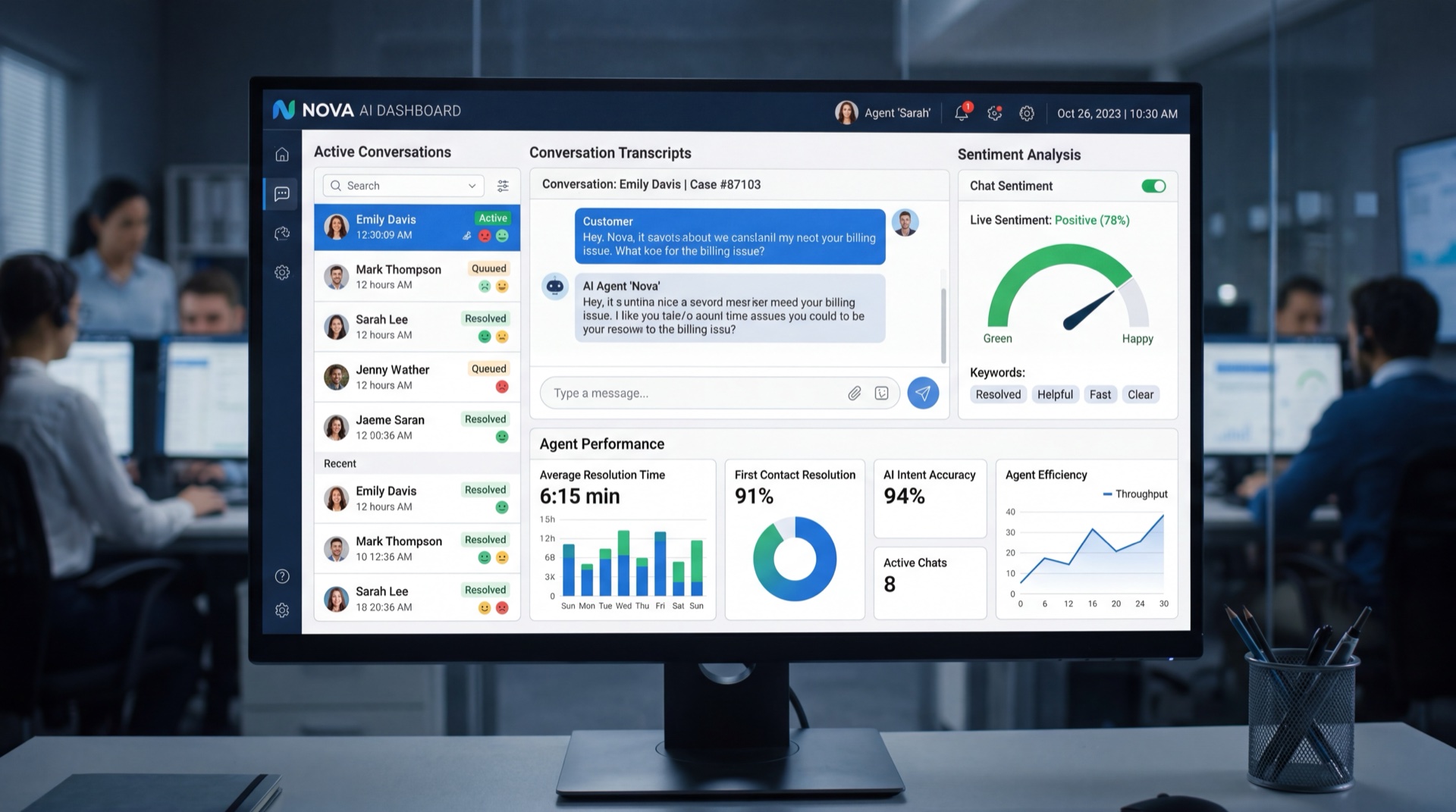
Pricing. $115 per agent per month for the Suite Professional tier plus Advanced AI add ons. The AI add ons run $50 to $150 per agent per month depending on features.
Containment. Average 50 percent on well configured deployments. The Zendesk AI Agents product is solid but less autonomous than Intercom Fin or Decagon.
Strengths. The safe enterprise choice for teams already on Zendesk. Deepest workflow tools, ticket routing, macros, and reporting in the category. The existing investment most enterprises already have makes it the path of least resistance. Strong voice support through the Zendesk Talk integration.
Weaknesses. Less autonomous than category leaders. The AI feels bolted onto an established product rather than designed from scratch. Pricing per agent gets expensive at scale.
Best for. Mid market and enterprise teams already on Zendesk, businesses with complex workflow routing requirements, teams that need voice plus chat plus email plus social all in one platform.
Worst for. Greenfield deployments. Small teams (Help Scout AI is cheaper). Teams that want maximum containment (Decagon or Intercom Fin is better).
Pricing. Custom. Typically $30,000 to $250,000 per year depending on volume and complexity.
Containment. Top performers hit 80 to 90 percent on well configured deployments. The highest in the category. Decagon agents read every past ticket, every help article, every internal doc, and learn your specific tone.
Strengths. Deepest per company customization. Strong learning from past tickets and continuous improvement loop. Used by high growth SaaS, ecommerce, and fintech that demand maximum quality. Strong analytics and human in the loop QA tooling.
Weaknesses. Expensive. Long sales cycle. 4 to 8 week deployment time. Not appropriate for small teams or low volume.
Best for. Enterprise SaaS, high volume ecommerce, fintech, and any business where the cost of poor customer service is very high. Teams with 10,000 plus monthly conversations.
Worst for. Small teams. Tight budgets. Greenfield deployments where speed matters more than depth.
Pricing. Custom enterprise pricing. Typically starts $50,000+ per year.
Containment. 65 to 80 percent on well configured deployments. Strong voice and chat in one agent.
Strengths. Founded by Bret Taylor (former Salesforce co CEO). The most polished agent design tooling in the category. Strong voice support out of the box with native phone integrations. Used by SiriusXM, ADT, Sonos, WeightWatchers. Best for brands that want a single agent personality across voice and chat.
Weaknesses. Expensive. Long sales cycle. Less mature on integrations than Intercom Fin and Zendesk AI. Newer than the other leaders so the customer base is smaller.
Best for. Enterprise brands with both heavy phone and chat volume, businesses where voice quality is a critical part of the brand, teams that want a unified design forward agent platform.
Worst for. Small teams. SaaS only deployments where chat is the only channel. Teams that want a low touch SaaS product.
Pricing. Custom. Typically starts $24,000 per year and scales with volume.
Containment. 60 to 75 percent on well configured deployments. Strong across 50 plus languages.
Strengths. The leader on multilingual. If your customer base spans Europe, LATAM, APAC, and you need 20 plus languages with quality maintained across all of them, Ada is the bet. Strong integrations with major CRMs and customer service platforms.
Weaknesses. Less autonomous than Decagon on English only deployments. Expensive at low volume.
Best for. Global brands with 10 plus language requirements, companies expanding into new geos, businesses serving immigrant or multilingual communities.
Worst for. English only deployments. Small teams. Tight budgets.
Pair your chat platform with voice. CallSetter AI builds AI voice agents that pair with any chat platform on this list. Unified knowledge base, unified tool layer, one customer experience.
Pricing. $39 per agent per month plus usage. The cheapest enterprise grade option.
Containment. 40 to 55 percent on triage and email automation. Lower than full agents but the use case is narrower.
Strengths. The ticket triage and email automation specialist. Bolts onto Zendesk or Salesforce and intercepts inbound tickets to resolve, route, or summarize them before they hit a human queue. Faster deployment than Decagon. Less expensive than Zendesk AI.
Weaknesses. Less ambitious than full agents. Best for triage and intent classification, not full end to end resolution.
Best for. Teams on Zendesk or Salesforce that want to add AI for ticket triage and email automation without rebuilding their entire support stack.
Worst for. Greenfield deployments. Teams that want a full agent that resolves tickets end to end.
Pricing. $89 per agent per month and up. Mid market pricing.
Containment. 55 to 70 percent on ecommerce specific use cases.
Strengths. Built around unified customer profiles. Owned by Meta until early 2025, then spun back out. Excels at high volume DTC brands that want a single view of the customer across order history, conversation history, and product preferences.
Weaknesses. Niche. Best for ecommerce specifically. Less general purpose than Intercom Fin or Zendesk AI.
Best for. High volume DTC ecommerce brands, businesses that want unified customer profiles across channels.
Worst for. SaaS. Service businesses. Greenfield deployments without an existing Kustomer investment.

The full 7 platform comparison matrix. Each platform leads its specific category.

1. What customer service platform are you on today?
2. How much volume do you handle?
3. What channels do you support?
4. Do you need multilingual?
5. What is your budget?
Run through these 5 and the answer usually narrows to 2 or 3 platforms.
For more detail on specific features see AI customer service tools and AI chatbot for business.
Before committing to any platform, verify the integration list against your real stack. The integrations that matter.
CRM. Salesforce, HubSpot, GHL, Pipedrive, Close, ActiveCampaign.
Ecommerce. Shopify, WooCommerce, BigCommerce, Magento.
Billing. Stripe, Chargebee, Recurly, Paddle.
Help center. Zendesk Guide, Intercom Articles, Help Scout, custom hosted.
Productivity. Slack, Microsoft Teams, Notion, Jira, Asana.
Voice. Twilio, RingCentral, Aircall, Dialpad, JustCall.
Identity. Auth0, Okta, custom OAuth.
A platform that does not integrate with your real CRM and billing system is dead weight. The integration cost dwarfs the platform fee in those cases.
The real monthly cost for a typical mid market company with 5,000 monthly conversations.
Intercom Fin. 5,000 conversations x 60 percent containment x $0.99 = $2,970/mo. Plus the Intercom base plan if not already paying. Total: $3,500 to $5,000/mo all in.
Zendesk AI. 10 agents x $115 plus AI add ons at $80 average = $1,950/mo for the base. Plus voice and other channels: $3,000 to $6,000/mo all in.
Decagon. Custom. Typically $5,000 to $20,000/mo at 5,000 conversations.
Sierra AI. Custom. Typically $5,000 to $15,000/mo at 5,000 conversations.
Ada. Custom. Typically $4,000 to $12,000/mo at 5,000 conversations.
Forethought. 10 agents x $39 plus usage at $1,500/mo = $1,890/mo total.
Kustomer IQ. 10 agents x $89 = $890/mo base plus AI usage. Total: $1,500 to $4,000/mo.
For more pricing detail see AI customer service ROI.
Buying on headline price. A $0.99 per resolution platform with 75 percent containment makes more money than a $0.50 per resolution platform with 35 percent containment. Run the real math.
Skipping the integration check. Verify every integration before signup. Platforms that look good on the demo can be unusable if they do not connect to your real stack.
Picking enterprise tools at small volume. Decagon and Sierra are not the right call at 500 monthly conversations. Help Scout AI or Forethought is.
Not running parallel trials. Run 2 platforms in parallel for 14 days. Compare containment, CSAT, and integration depth. Then commit.
Locking into annual on platform 1. Negotiate month to month for the first 6 months. You will likely switch or expand.
Ignoring the voice channel. 35 to 70 percent of inbound support volume is still phone calls in 2026 depending on industry. A chat only deployment misses the other half.
What is the best AI customer service software overall?
There is no single best. Intercom Fin wins for SaaS on Intercom. Decagon wins for max containment at enterprise scale. Zendesk AI wins for teams on Zendesk. Sierra wins for voice plus chat. The right software depends on your stack and volume.
Which has the highest containment rate?
Decagon at 80 to 90 percent on top performers. Intercom Fin top performers above 75 percent. Sierra AI 65 to 80 percent.
Which is the cheapest?
Forethought at $39 per agent per month plus usage. Help Scout AI at $25 per user per month. Tidio has a free tier for tiny businesses.
Which is best for SaaS?
Intercom Fin for most SaaS companies. Decagon for high growth SaaS that wants max containment.
Which is best for ecommerce?
Intercom Fin for most ecommerce. Kustomer IQ for high volume DTC. Decagon for enterprise.
Which is best for enterprise?
Decagon, Sierra AI, or Zendesk AI Suite Enterprise depending on requirements.
Which has the best voice support?
Sierra AI for unified voice plus chat at enterprise. For voice specifically, pair any chat platform with CallSetter AI on managed Retell, Vapi, or Bland builds.
How long does deployment take?
Intercom Fin ships same day. Forethought 1 to 2 weeks. Zendesk AI 2 to 4 weeks. Decagon and Sierra 4 to 8 weeks. Ada 4 to 6 weeks.
Pick the platform that matches your stack, volume, and channels. Run a 14 day parallel trial against your incumbent. Measure containment, CSAT, and integration cost. Then commit.
If you also need voice covered, CallSetter AI builds AI voice agents that pair with any chat platform. 48 hour deployment, guaranteed voice quality.
Related reading:
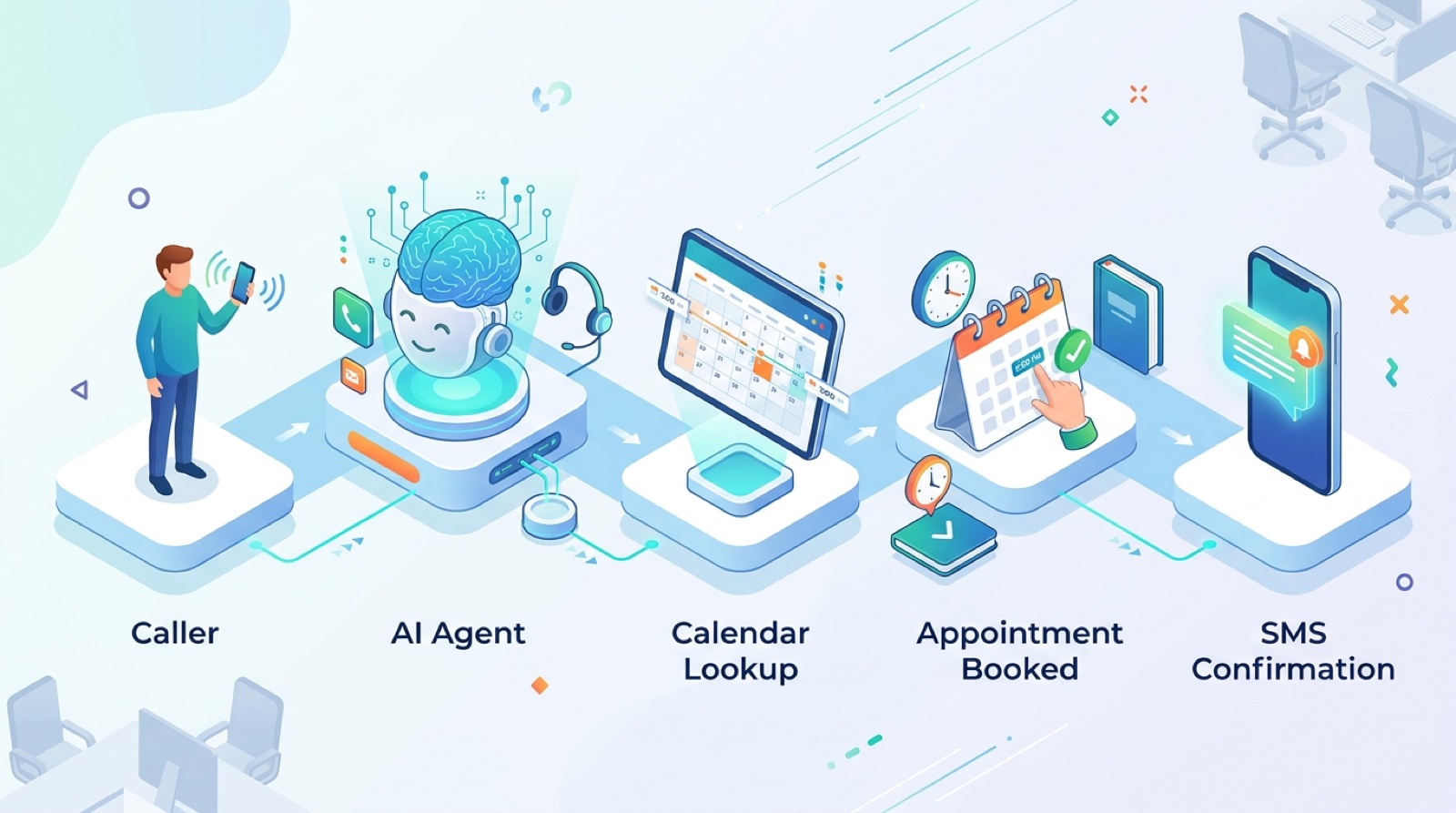
The 5 question framework. Existing platform, volume, channels, languages, and budget narrow the choice to 2 or 3 platforms.
Written by Victor Smushkevich, CEO of Tested Media. Last review: April 2026. Victor has been profiled in Forbes, HuffPost, and MarketWatch on AI and digital marketing.
Talk with one of our SEO specialists today and see how we can supercharge your marketing campaigns!