TL;DR Conversational AI for business in 2026 means LLM agents that handle customer interactions across chat, voice, email, and SMS without scripted decision trees. The market split into 3 distinct categories: customer service agents (Intercom Fin, Decagon, Sierra), voice agents (Retell, Vapi, Bland, Synthflow), and conversational marketing (Drift, Qualified). Average ROI runs 5x to 30x in year one across our deployments. If you want voice covered in 48 hours and integrated with your chat stack, CallSetter AI builds AI voice agents that pair with any conversational AI platform.
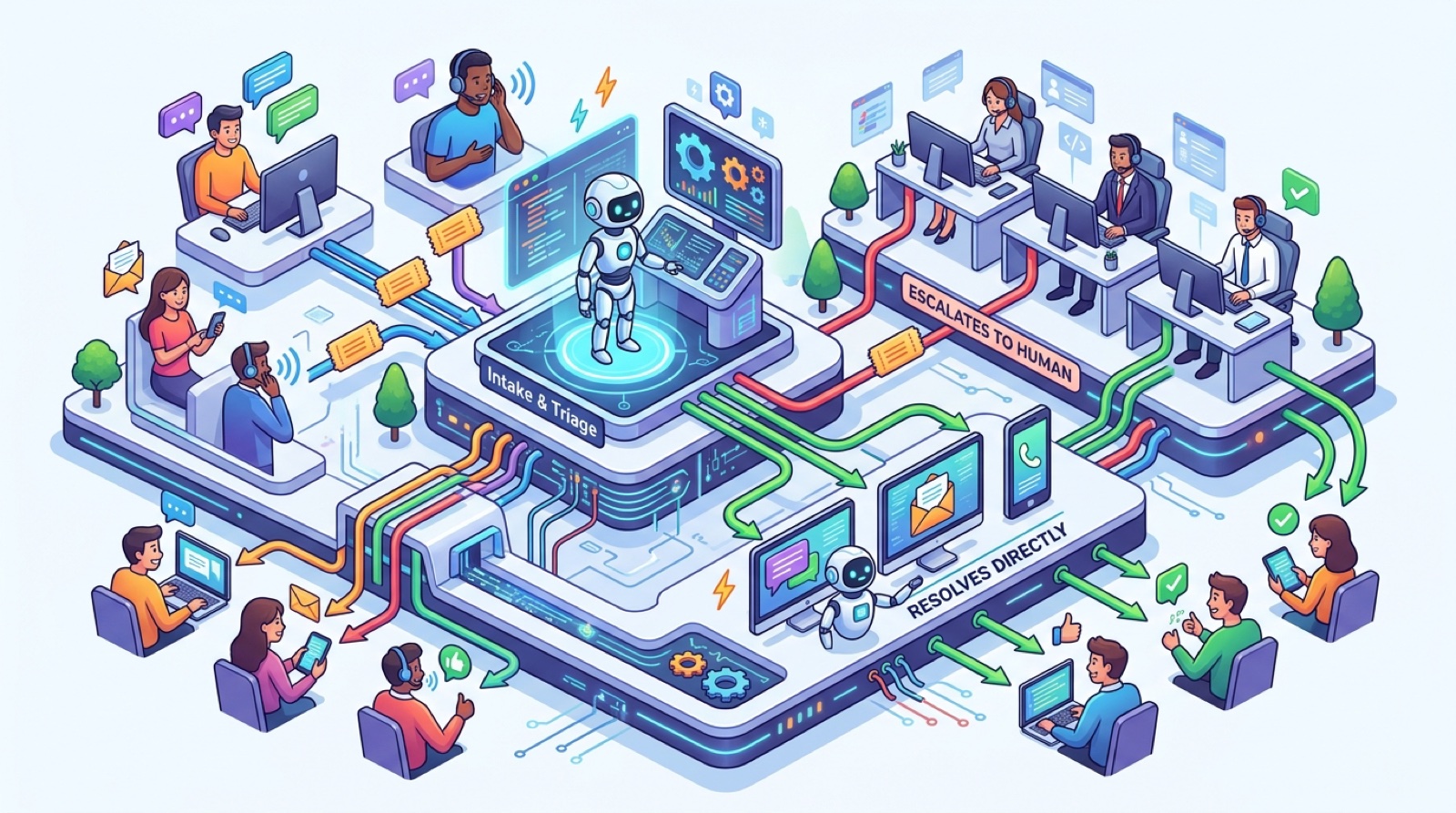
Conversational AI for business in 2026 spans chat, voice, email, and SMS through unified LLM agents.
Conversational AI for business is software that engages in natural language conversations with customers, prospects, or employees through chat, voice, email, SMS, or in app messaging. The 2026 generation is built on large language models (GPT 5.4, Claude Opus 4.6, Gemini 3.1 Pro) instead of intent classifiers and decision trees. The software reads the conversation, retrieves relevant knowledge, calls real tools, and resolves the interaction end to end.
The category split into 3 distinct buckets in 2025 and 2026:
Each bucket has its own leaders, pricing models, and use cases. Mixing them up is the most common buying mistake.
For the broader category guide, see the AI customer service playbook.
Customer service agents. Built for support. Read your help center and product docs. Call APIs to refund charges, change subscriptions, look up orders. Resolve 50 to 85 percent of tickets without a human. Best for: SaaS, ecommerce, fintech, any business with high support volume. Top platforms: Intercom Fin, Decagon, Sierra AI, Ada, Zendesk AI.
Voice agents. Built for the phone channel. Same underlying tech (LLM plus retrieval plus tools) but with speech recognition and voice synthesis layered on. Best for: receptionist work, after hours coverage, outbound sales calling, IVR replacement. Top platforms: Retell, Vapi, Bland, Synthflow, plus the receptionist tools (Goodcall, Rosie, Insight Receptionist). See the AI voice agents guide and the AI receptionist guide.
Conversational marketing. Built for lead capture and sales meeting booking. The agent qualifies website visitors, books meetings, and routes hot leads to sales reps. Best for: B2B SaaS, services with long sales cycles, ABM teams. Top platforms: Drift, Qualified, Conversica. See the AI sales guide for the sales angle.
The right conversational AI deployment for most businesses is one tool from each category. Customer service tool plus voice tool plus conversational marketing tool. The unified experience requires shared knowledge bases and tool layers across all three.
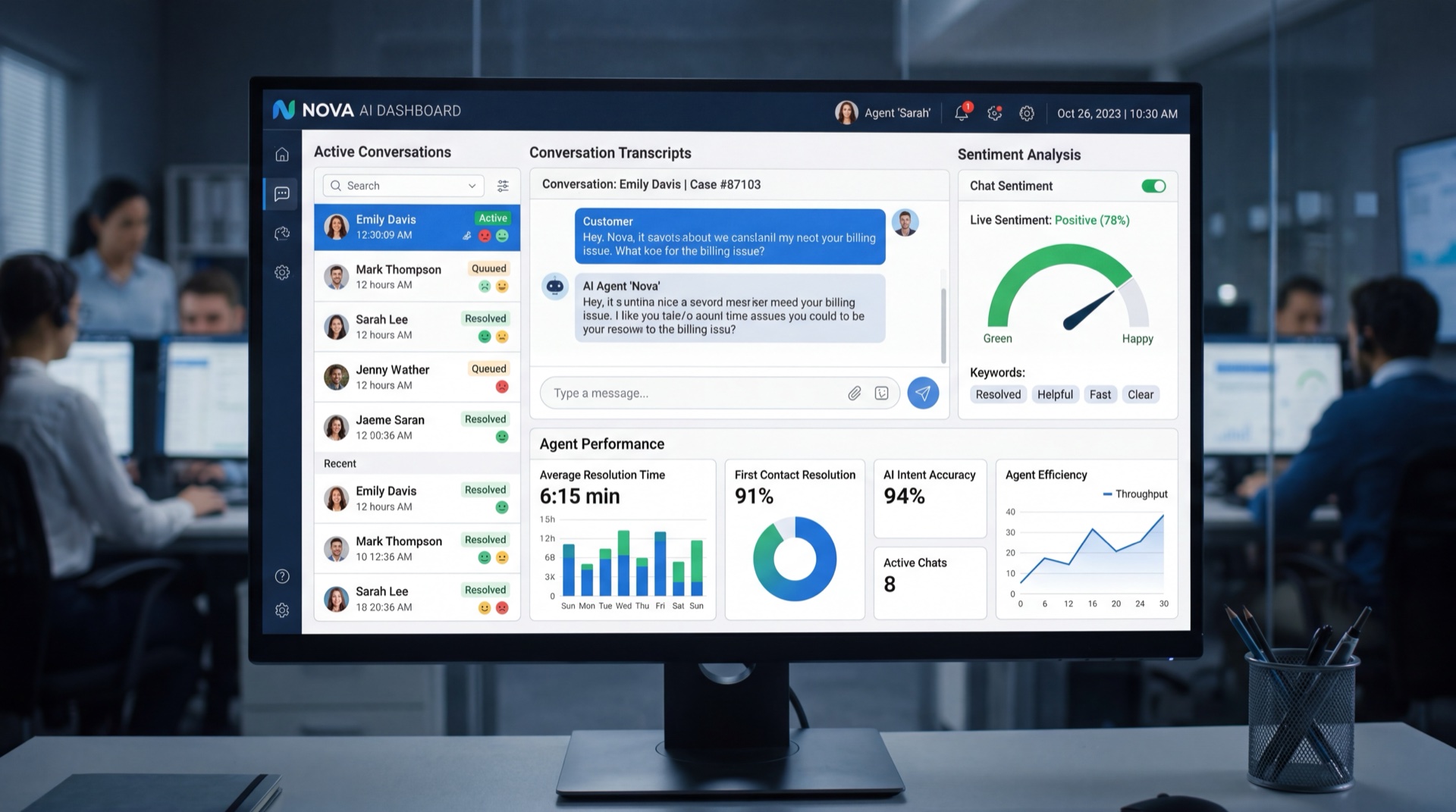
The use cases where conversational AI pays for itself in the first 90 days.
Customer support ticket deflection. Answer FAQ, resolve order status, process simple refunds, handle account changes. The bread and butter use case. Containment rates of 60 to 85 percent are normal. ROI: 5x to 25x in year one.
24/7 phone coverage. AI voice agent answers calls outside business hours and handles routine intake, booking, and message taking. The killer use case for service businesses. ROI: 8x to 100x. See 24/7 AI receptionist.
Lead qualification and meeting booking. Conversational marketing agent qualifies visitors on the website, books sales meetings for SQLs, and routes hot leads instantly. ROI: 3x to 15x for B2B SaaS.
Outbound sales calling. AI voice agent calls cold leads, qualifies them, and books meetings for human sales reps. Best for: high volume B2C and SMB B2B. ROI: 5x to 20x.
Internal employee help desk. IT support, HR FAQ, benefits questions, expense reporting. Conversational AI handles the routine stuff and routes complex issues to humans. ROI: 4x to 12x.
Billing and account changes. Update payment method, change billing cycle, retry failed charges, generate invoices. High volume, rule based, perfect for AI. Containment rates above 70 percent.
Appointment booking and rescheduling. Service businesses, clinics, salons. The agent reads the calendar and books or reschedules directly. ROI: 10x to 50x for service businesses.
Order status and delivery tracking. Highest volume use case for ecommerce. Containment rates above 85 percent. ROI: 8x to 30x.
For more examples see AI customer service examples.
Combining all 3 categories.
Customer service:
Voice:
Conversational marketing:
For deeper compares see AI customer service software and AI customer service tools.
Pair your chat AI with voice AI. CallSetter AI builds AI voice agents that pair with any conversational AI platform on this list. Unified knowledge base, unified tool layer, one customer experience.
Real numbers from real deployments.
Cost per resolution. A live human agent costs $5 to $15 per resolved interaction once you load fully burdened salary, training, QA, attrition, and management. Conversational AI resolutions cost $0.20 to $0.80. A 10x to 30x reduction.
Deflection from queue. A typical SaaS company with 8,000 monthly support interactions saves around 4,800 hours of human agent time per month at 60 percent deflection. At $32/hour loaded that is $153,600 in monthly run rate savings. After subtracting platform fees the net is around $130,000/mo.
Response time. Human teams average 4 to 12 hours first response on email and 2 to 4 minutes on chat. AI agents respond in 800ms to 3 seconds. CSAT lifts even before resolution rates improve, just from speed.
Containment by industry. Real deployment numbers we have measured:
Real client example. A 40 person SaaS company shipped Intercom Fin in November 2025. Support team was 6 humans handling 4,200 monthly conversations. Three months later: 67 percent containment, response time dropped from 3h 14m to 14 seconds, CSAT rose from 4.1 to 4.6, eliminated a planned $78K hire. Platform cost: $2,900/mo. Net annual savings: $67K. ROI: 23x.
For the full ROI calculator and benchmark data see AI customer service ROI.
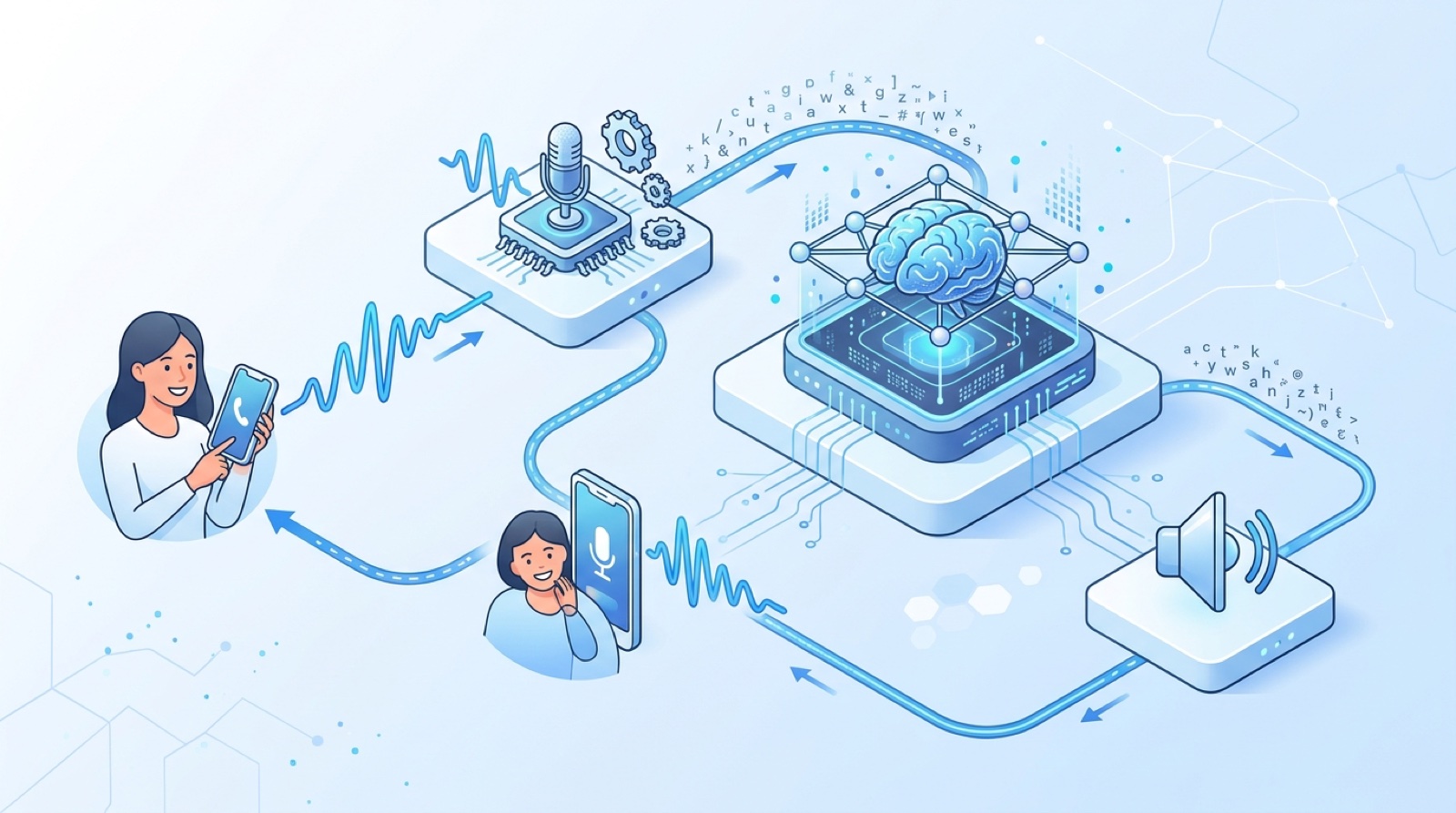
ROI math by category. Customer service agents 5x to 25x. Voice agents 8x to 100x for service businesses. Conversational marketing 3x to 15x.

The 4 week playbook works for all 3 categories.
Week 1: Foundation
Audit your current interactions. For support, audit the last 1,000 tickets. For voice, audit the last 30 days of phone calls. For sales, audit the last 100 inbound web visitors.
Score each top category on resolvability, data sensitivity, and emotional weight. The first deployment targets high resolvability, low to medium sensitivity, neutral emotion.
Pick the platform from the 3 category lists above based on your existing stack and primary use case.
Inventory knowledge sources. Centralize them.
Week 2: Knowledge curation and tool integration
Clean the knowledge base. The single biggest factor in containment is knowledge quality. Delete outdated, fix conflicting, add missing.
Define the tool surface. Every action the agent should be allowed to take. Inputs, outputs, guardrails.
Build the tool integrations. Connect to your real CRM, billing, calendar, and product systems.
Week 3: Testing and tuning
Run synthetic tests. Take 100 real past interactions and replay through the agent in sandbox. Score each.
Tune the system prompt and knowledge base based on misses.
Define escalation paths. Customer asks for human, agent fails twice, sentiment turns negative, sensitive category.
Week 4: Soft launch and iteration
Soft launch to 10 percent of traffic. Monitor every interaction for 48 hours.
Daily tuning sprint. Fix the top 5 issues.
Increase to 50 percent of traffic.
By the end of week 4, most deployments are at 50 to 65 percent containment on the launched categories.
For more detail see the main pillar.
Mixing up the 3 categories. A customer service agent is not the same as a conversational marketing tool. Pick the right one for the use case.
Shipping with a dirty knowledge base. The agent is only as good as the docs you give it. Clean the knowledge base before going live.
No clear escalation path. Every agent needs a clean handoff to a human when it cannot resolve. Without it, frustrated customers loop and rage.
Trying to do everything at once. Pick 3 to 5 use cases that account for 60 percent of volume. Ship those first. Expand later.
Ignoring the voice channel. Half your customer interactions might still be on the phone. A chat only deployment misses half the pie. Pair chat with voice.
Underestimating compliance. GDPR, CCPA, HIPAA, PCI DSS. Pick a platform that signs DPAs and BAAs. Get the paperwork in writing before storing customer data.
Set and forget. Conversational AI deployments need 2+ hours per week of human in the loop QA. Without it, the agent quietly degrades.
Three frameworks matter in 2026.
GDPR (Europe). Lawful basis for processing, clear privacy notice, right to delete, DPA with every vendor. The major conversational AI platforms (Intercom, Zendesk, Decagon, Ada) all sign DPAs and offer EU data residency.
CCPA (California). Similar to GDPR. Right to opt out of sale generally does not apply to support data.
HIPAA (Healthcare). Strictest. BAA required with platform vendors and underlying model providers. Intercom Fin, Zendesk AI, Decagon, Ada all offer HIPAA compliant configurations. OpenAI offers a BAA via the enterprise tier. Anthropic offers a BAA. AWS Bedrock supports HIPAA.
PCI DSS. If you handle payment card data. Most platforms route payment actions to Stripe or another PCI compliant processor rather than touching card numbers directly.
SOC 2 Type II. Required for any platform you ship in production. Every leading platform has this.
The simplest rule: pick a platform with SOC 2 Type II, sign a DPA, sign a BAA if you touch PHI, and document where data goes. If unsure, talk to a privacy lawyer before shipping in regulated industries.

What is conversational AI for business?
Software that engages in natural language conversations with customers through chat, voice, email, SMS, or in app messaging. Built on LLMs in 2026, not decision trees.
How is conversational AI different from a chatbot?
A 2018 to 2023 chatbot used decision trees and intent classifiers. A 2026 conversational AI is an LLM agent that reads the conversation, retrieves knowledge, calls APIs, and resolves the interaction end to end. Containment rates went from 12 to 18 percent for old chatbots to 50 to 85 percent for modern agents.
What is the ROI of conversational AI for business?
5x to 30x in year one across our deployments. Customer service agents typically hit 5x to 25x. Voice agents for service businesses hit 8x to 100x. Conversational marketing hits 3x to 15x.
What are the top conversational AI platforms?
For customer service: Intercom Fin, Decagon, Zendesk AI, Sierra AI, Ada. For voice: Retell, Vapi, Bland, Synthflow. For conversational marketing: Drift, Qualified, Conversica.
Can conversational AI replace my support team?
No. The 2026 model is hybrid. AI handles 70 to 85 percent of routine interactions. Humans handle the hardest 15 to 30 percent. Most teams freeze new hires rather than firing existing staff.
Is conversational AI safe for healthcare?
Yes, with the right platform. Intercom Fin, Zendesk AI, Decagon, Ada all offer HIPAA compliant configurations with BAAs. Always sign a BAA before storing PHI.
How long does deployment take?
1 to 4 weeks for most SaaS platforms. 4 to 8 weeks for Decagon enterprise. 48 hours for managed voice agents from CallSetter AI.
Should I use multiple conversational AI platforms?
Yes. The 2026 standard is to pair a customer service tool with a voice tool. Both share the knowledge base and tool layer for one unified customer experience.
Conversational AI for business is the highest leverage operations upgrade in 2026 for most companies. The math is decisive within 90 days for any team handling 1,000 plus monthly customer interactions.
Pick the right tool for each category (customer service, voice, conversational marketing). Run a 14 day trial. Measure containment, CSAT, and ROI. Then commit.
If you want voice covered in 48 hours, CallSetter AI builds AI voice agents that pair with any conversational AI chat platform.
Related reading:
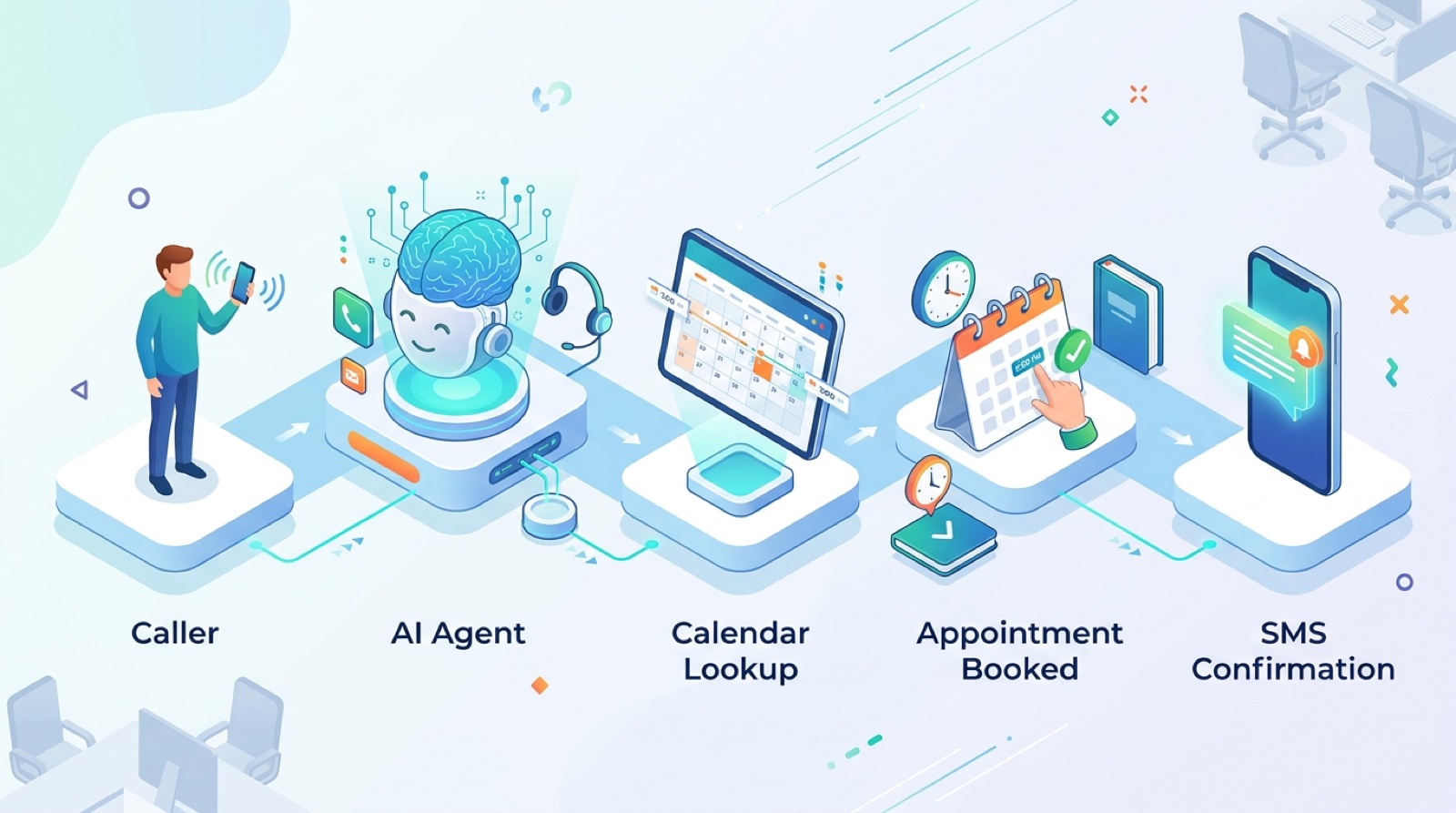
The 3 category map. Most businesses need a tool from at least 2 categories for complete coverage.
Written by Victor Smushkevich, CEO of Tested Media. Last review: April 2026. Victor has been profiled in Forbes, HuffPost, and MarketWatch on AI and digital marketing.
Talk with one of our SEO specialists today and see how we can supercharge your marketing campaigns!