
TL;DR A small business AI answering service runs $50 to $200 per month, ships in a week, and captures 30 to 50 percent of calls that currently go to voicemail. The math is decisive for any service business with even modest after hours volume. Top platforms for small business: Echowin, Goodcall, Rosie, and Insight Receptionist. If you want one running for your business by Friday with no developer required, CallSetter AI deploys managed AI answering services with flat monthly pricing.
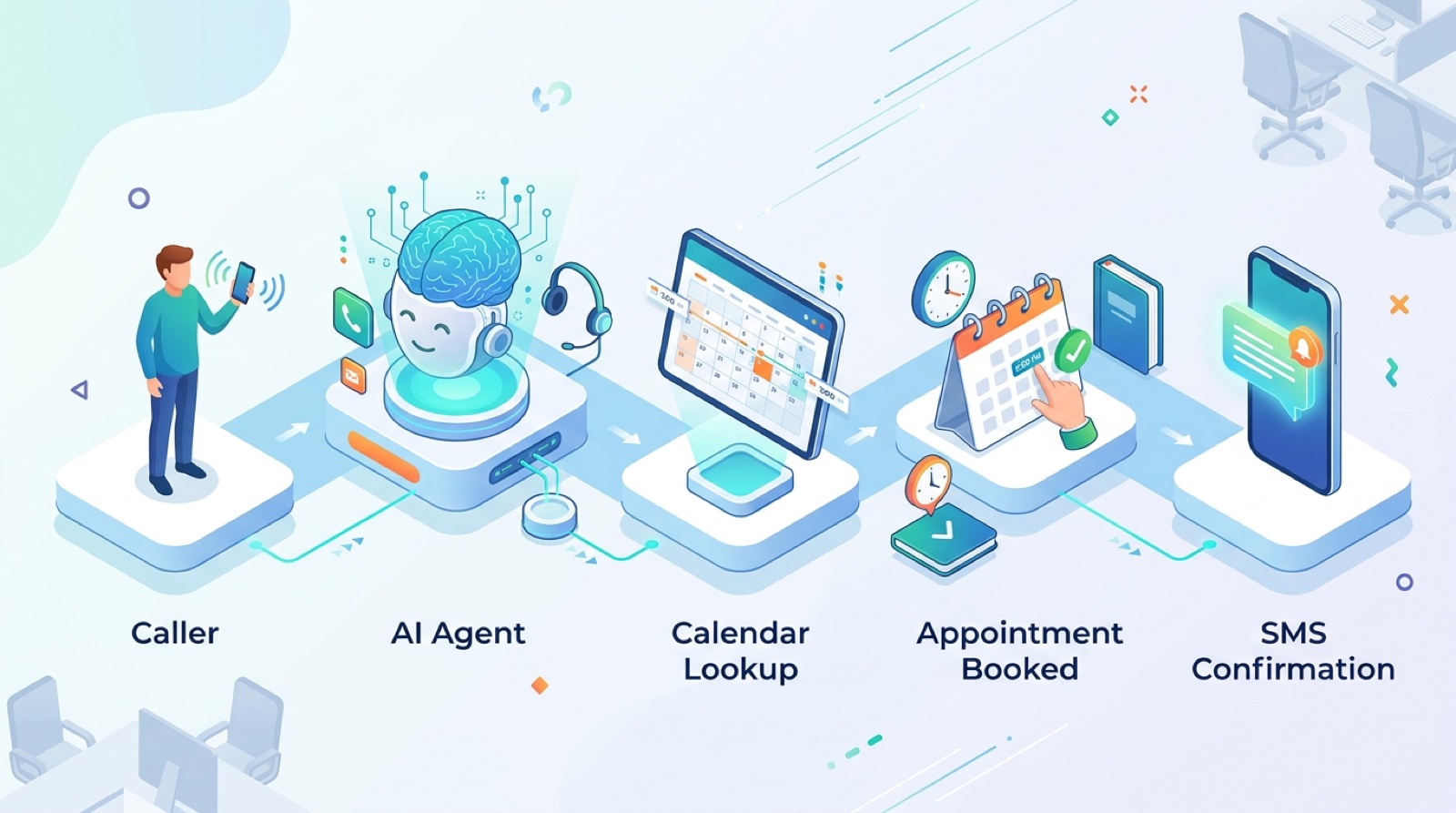
A small business AI answering service runs at $50 to $200 per month and captures every call your front desk misses.
Small business is where AI answering services produce the biggest ROI in 2026. Three reasons.
Small businesses miss the most calls. Solo operators and small teams cannot answer the phone while doing the actual work. A solo dentist in a chair cannot pick up. A 2 truck HVAC contractor on a roof cannot pick up. A solo lawyer in a deposition cannot pick up. The miss rate for small businesses is 40 to 60 percent on average.
Each missed call is high value. A small business serving consumers in trades, dental, legal, real estate, or wellness typically has $200 to $1,500 average ticket sizes. Every missed call is real money. Recover even 10 percent of missed calls and the AI pays for itself for the entire year.
The AI pricing tier is built for them. $49 to $199 per month is small business pricing. It is below the cost of a single hire and well below a traditional human answering service. The math is approachable.
For the broader category guide, see the AI receptionist buyer’s guide.
For the purposes of this guide, small business means.
Solo operators or 1 to 10 person teams. Solo dentists, solo lawyers, 2 to 6 truck contractors, single location salons, individual real estate agents, small accounting firms.
$50,000 to $5 million in annual revenue. Below $50K and the math is fine but the volume is too low for big ROI. Above $5M and you typically have a front desk staff already and need a different conversation.
10 to 500 inbound calls per month. This is the sweet spot for small business AI answering services. Below 10 calls the platform pays for itself slowly. Above 500 calls you should be on a higher tier.
One physical location or small multi location. Multi state enterprise needs different infrastructure. Single location or 2 to 5 location small chains fit perfectly.
If your business matches three of these, this guide is for you. The $50 to $200 monthly tier of AI answering services is built specifically for your size.

The picker. All four below are no code, ship in 2 to 4 hours, and run on the small business pricing tier.
Echowin. $49/mo with 100 minutes. Cheapest fully featured option. Best for general SMBs that want fast setup with the basics. Native Zapier, Google Calendar, webhook integrations.
Goodcall. $59/mo with 100 minutes. Best for solo operators and small services. Native HubSpot, Google Calendar, Zapier. The most polished entry tier.
Rosie. $79/mo with 150 minutes. Built specifically for the trades. Native Jobber and ServiceTitan. Best for HVAC, plumbing, electrical, roofing contractors with 1 to 6 trucks.
Insight Receptionist. $89/mo with 200 minutes. Best for dental, medical, mental health, chiropractic, and wellness. Native Calendly, Acuity, GHL. Signs BAA on the business tier for HIPAA workflows.
For a deeper compare see best AI answering service 2026.
Want the right platform picked for you? CallSetter AI deploys AI answering services for small businesses on the right platform for your industry and call volume. Setup in 48 hours, no developer required.
The capabilities to expect at the small business pricing tier.
24/7 inbound call answering. Every call to your business number gets answered in under 2 seconds, day or night, weekends and holidays included.
Greeting in your brand voice. The agent answers with your business name and your configured voice.
Qualifying questions. The agent asks the right intake questions for your call types.
Calendar booking. The agent reads your real calendar and books appointments directly.
Message taking. When a call cannot be resolved, the agent captures a structured message and saves it to your CRM.
Call transfers. Transfer rules trigger on configurable conditions: customer asks for human, sentiment turns negative, specific call type.
SMS confirmations. The agent texts a confirmation, follow up, or reminder.
CRM integration. Every call logs to your real CRM with transcript, audio, and structured data.
24/7 coverage. Included on every modern platform at no extra charge.
Bilingual support. Spanish at minimum, often 20 plus languages.
Recording disclosure compliance. For two party consent states, the agent discloses recording at the start of the call.
What you do not get at this tier: HIPAA BAA on most platforms (need Insight Receptionist business tier or Synthflow enterprise), custom workflows beyond the no code builder, white label branding, and dedicated support staff. For those, you need a higher tier or a managed agency.
The exact playbook we use for small business deployments.
Day 1: Audit and planning. Pull your phone log for the last 30 days. Count total calls. Identify the top 5 call types (booking, rescheduling, FAQ, intake, status). Calculate your current miss rate.
Day 2: Platform selection. Pick the platform from the picker above. For trades, Rosie. For medical or dental, Insight Receptionist. For general SMB or solo, Goodcall or Echowin. Sign up for the free trial.
Day 3: System prompt. Write a 400 to 600 word system prompt covering: business name, agent name, greeting, top 5 call types, qualifying questions for each, calendar booking flow, escalation rules, human handoff criteria. Keep it tight.
Day 4: Integrations. Wire up calendar, CRM, and SMS. Test that bookings flow into your real systems. Test that CRM records get created with the right data.
Day 5: Test calls. Run 20 internal test calls from different team members. Try edge cases (drunk dial, sales pitch, kids, weird accents, complaint). Note every awkward response.
Day 6: Tuning. Fix the prompt issues that surfaced in test calls. Tighten language. Add explicit handling for edge cases. Adjust the escalation rules.
Day 7: Soft launch. Set up call forwarding from your existing business number to the platform number. Forward 30 to 50 percent of calls first. Monitor outcomes daily. Increase to 100 percent in week 2 if metrics look good.
By the end of week 2, most small business deployments are at 100 percent of inbound calls handled by the AI.
For the deeper version of this playbook see the main pillar.

The 7 day deployment timeline. From phone log audit to 100 percent live in two weeks.

Real example. A solo dentist gets 140 inbound calls per month, $310 average ticket size, 60 percent close rate when answered.
Status quo (front desk handles business hours, voicemail after hours):
With AI answering service ($89 Insight Receptionist):
The delta:
The math is brutal in your favor for any small business that misses even 30 percent of calls. Most small businesses miss 40 to 60 percent. The cost of doing nothing is far greater than the cost of the platform.
Treating AI as a replacement for the front desk. AI works best as a complement. The front desk handles in office patients and complex tasks. AI handles inbound calls, after hours coverage, and routine bookings. Both have their place.
Picking the wrong platform for the industry. Goodcall and Echowin are great for general SMBs but they are not the right call for HIPAA workflows. Insight Receptionist is. Match the platform to the industry.
Skipping the test calls. Every team that ships without 20 internal test calls regrets it. The first 20 calls reveal 80 percent of the prompt issues.
No human escalation path. Even AI focused deployments need a way to transfer to a real human (you, your front desk, or an answering service overflow). Define this on day one.
5,000 word system prompts. Tight 400 to 600 word prompts outperform sprawling ones. Resist the urge to anticipate every edge case in the prompt. Add edge cases later as they surface.
Set and forget. Plan to spend 1 to 2 hours per month tuning the prompt and reviewing transcripts. The deployment quietly degrades without this.
Underestimating bilingual demand. If 20 percent of your customers are Spanish speaking, configure the agent to handle Spanish on first detection.
Your call volume is under 20 calls per month. The math still works but the ROI is small. Stick with voicemail and call returns until volume grows.
Your industry requires licensed humans on intake. Some specialties (psychiatry, legal in certain practice areas) require licensed humans. Use AI for triage and message taking only.
You have a dedicated front desk who is rarely busy. If your front desk handles all calls during hours and you have minimal after hours volume, the math is weak.
Your customers are extremely high touch. Boutique luxury services where every customer pays $50,000+ per year may need a human voice on every call.
For everything else (which is 95 percent of small businesses), AI primary or AI plus human escalation is the right answer.
Solo dentist or small dental practice. Use Insight Receptionist on the business tier for HIPAA. New patient intake and same day cancellation rebooking are the killer use cases. ROI: 50x to 150x in the first month. See the AI for dentists guide.
Solo lawyer or small law firm. Use Insight Receptionist or Smith.ai (AI mode) for legal. Initial intake, qualification, and conflict checking are the killer use cases. ROI: 30x to 80x. See the AI for law firms playbook.
1 to 6 truck HVAC, plumbing, or electrical contractor. Use Rosie. After hours emergency capture and morning appointment booking are the killer use cases. ROI: 100x to 200x. See the AI for HVAC playbook.
Solo or small real estate team. Use Goodcall or Synthflow with outbound enabled. Cold lead callback within 60 seconds is the killer use case.
Single location salon, med spa, or wellness. Use Insight Receptionist or Goodcall. Booking, rescheduling, and package upsells are the killer use cases.
Solo accountant or bookkeeper. Use Goodcall or Echowin. Tax season call surge handling is the killer use case.
How much does an AI answering service cost for a small business?
$49 to $199 per month for the no code platforms. Total real cost including overage: $89 to $249 per month for most small businesses. With a managed agency like CallSetter AI: $250 to $399 per month.
How long does it take to set up?
DIY on a no code platform: 7 days from audit to full launch. With a managed agency: 48 hours.
Do I need a developer?
No. The no code platforms (Goodcall, Rosie, Echowin, Insight Receptionist) are built for non technical buyers. Setup is 2 to 4 hours total.
Will my customers know they are talking to AI?
Most do not on calls under 4 minutes. Surveys we have run show 73 percent of callers cannot reliably tell whether they spoke to a human or AI.
Can I use my existing phone number?
Yes. Set up call forwarding from your existing business number to the platform number. Setup takes 15 minutes through your carrier portal. See AI phone receptionist for the integration details.
What if the AI cannot handle a call?
The agent transfers to a human or takes a structured message based on your configured rules. You define when to transfer.
Is it HIPAA compliant?
Some platforms are. Insight Receptionist (business tier) and Synthflow (enterprise) sign BAAs. Goodcall, Rosie, Echowin, and Numa do not. Pick HIPAA compliant if you store PHI.
Will it really pay for itself?
For most small businesses, yes. The ROI math is decisive when after hours capture is included. Solo dentists, contractors, lawyers, and salons typically see 30x to 150x ROI on the platform cost.
A working AI answering service for a small business is 7 days of work and $89 to $199 per month. The math is decisive within the first month for any business that misses even 30 percent of calls.
Pick the platform that fits your industry, follow the 7 day playbook, and measure bookings weekly. Or hire CallSetter AI to handle the full deployment in 48 hours.
Related reading:
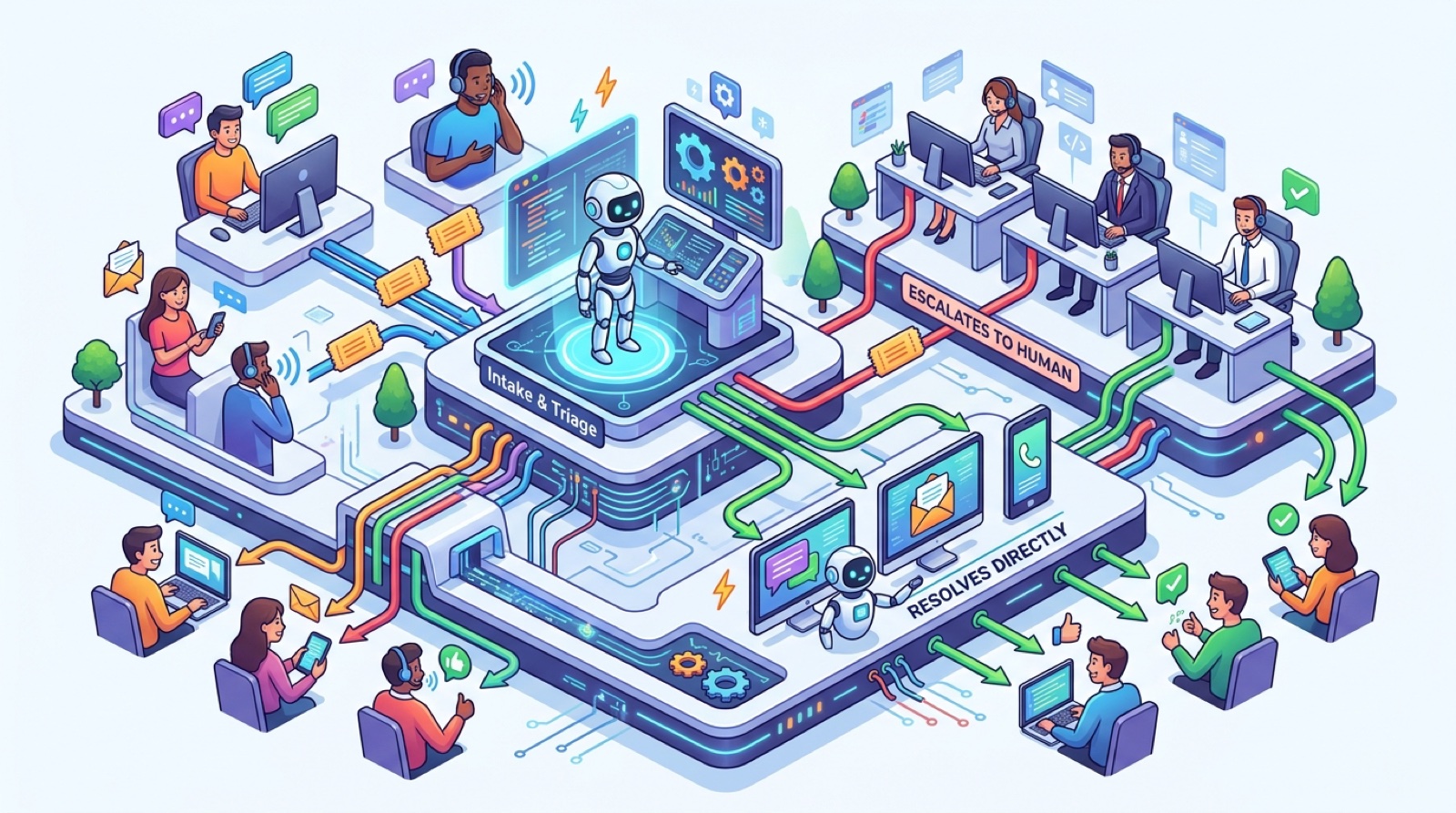
The solo dentist math. $89 per month captures 42 additional appointments and adds $13,020 in monthly revenue.
Written by Victor Smushkevich, CEO of Tested Media. Last review: April 2026. Victor has been profiled in Forbes, HuffPost, and MarketWatch on AI and digital marketing.
Talk with one of our SEO specialists today and see how we can supercharge your marketing campaigns!