TL;DR An AI virtual receptionist is a software phone agent that does the front desk job for a fraction of what Smith.ai or Ruby Receptionists charge for human virtual receptionist services. In 2026, AI wins on cost, response speed, and 24/7 coverage. Human virtual receptionists still win on warmth and complex empathy. For most service businesses with predictable inbound volume, the AI version is the right call. If you want it deployed for your business this week, CallSetter AI builds and operates AI virtual receptionists with guaranteed answer rates.
Running a smaller shop? Start with an AI receptionist for small business.
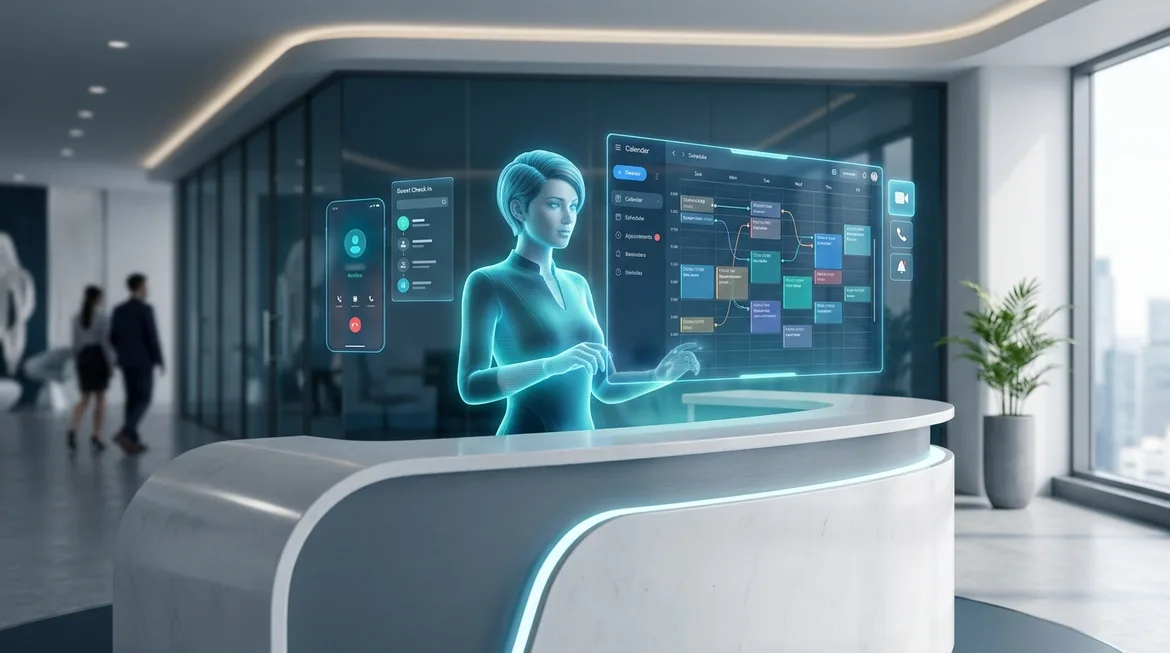
An AI virtual receptionist runs the front desk job in software. No physical desk, no payroll, no hold queue.
What is an AI virtual receptionist
An AI virtual receptionist is a software based phone agent that handles the inbound calls of a business without a physical front desk. It picks up the call, greets the caller in the brand voice, captures their need, books appointments, takes messages, and routes urgent calls. The “virtual” part means there is no person sitting somewhere answering. The “AI” part means the software is running on a large language model and a voice synthesis stack, not a human at a remote desk.
The category exists because two older categories merged in 2026. Traditional virtual receptionist services like Smith.ai, Ruby Receptionists, and Davinci Virtual hire humans in call centers to answer your business calls remotely. They charge $200 to $1,500 per month based on call volume and minutes. AI virtual receptionists do the same job in software for $50 to $300 per month and never sleep.
For an overview of the broader category, see the AI receptionist buyer’s guide.
AI virtual receptionist vs human virtual receptionist services
The honest comparison most blogs skip. Both options have a real place in 2026.
| Factor | AI virtual receptionist | Smith.ai (human plus AI) | Ruby Receptionists (human) |
|---|---|---|---|
| Monthly cost | $50 to $300 | $255 to $900 | $325 to $1,800 |
| Per call cost | $0.05 to $0.40 | $7 to $15 | $10 to $25 |
| Answer time | Under 2 seconds | 8 to 20 seconds | 15 to 45 seconds |
| Coverage | 24/7/365 | Business hours plus on call | Business hours plus on call |
| Warmth on complex calls | Good | Excellent | Excellent |
| Same script every time | Yes | Mostly | Mostly |
| Scales to call spikes | Infinitely | Limited by staffing | Limited by staffing |
| Bilingual support | 50 plus languages | English plus a few | English plus a few |
| Calendar booking | Yes, native | Yes | Yes |
| CRM logging | Yes, structured | Yes | Yes |
The simple framing. AI is cheaper, faster, and always available. Humans are warmer on complex emotional calls. For most service businesses with predictable inbound patterns, the AI version produces better business outcomes because it captures the calls the human services miss after hours and on weekends.
Where AI virtual receptionists win in 2026
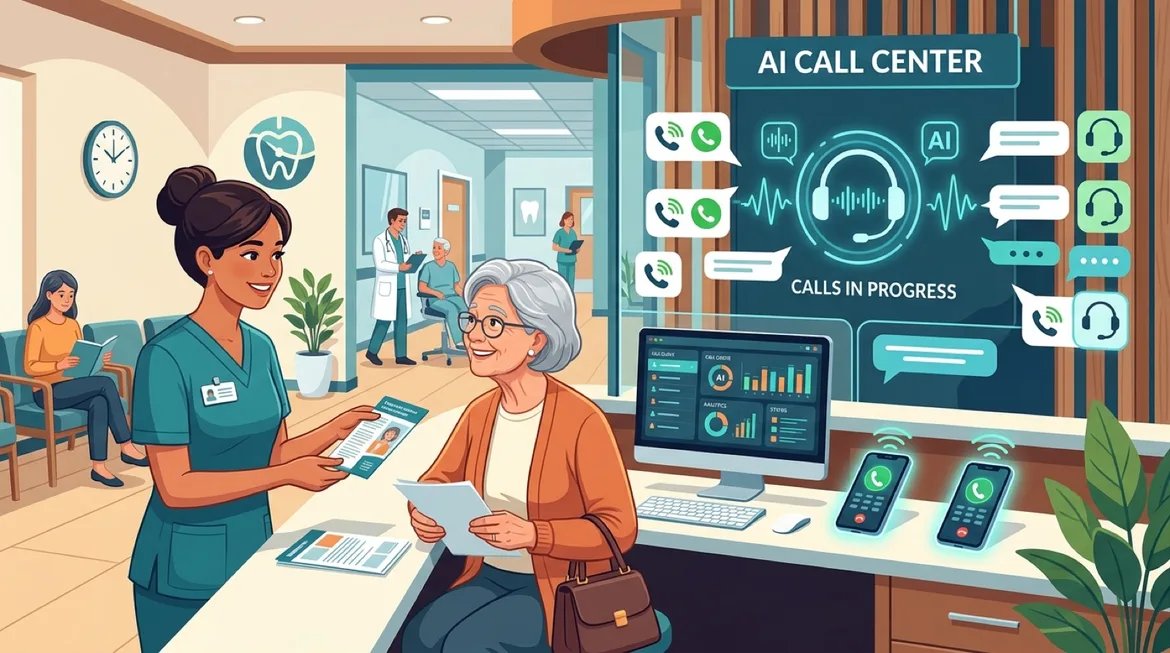
Cost. The math is one sided. A small dental practice that pays Ruby $750 per month for business hours coverage can replace it with a Goodcall or Insight Receptionist deployment at $129 per month and add 24/7 coverage. The savings alone fund a new piece of equipment every quarter.
Speed. Human virtual receptionists pick up in 8 to 45 seconds depending on staffing. AI picks up in under 2 seconds, every time. Customer satisfaction scores tied to first ring response are dramatically better with AI.
Consistency. Every human receptionist has good days and bad days. The script drifts. The energy varies. AI delivers the same script with the same energy on call 1 and call 1,000. For brands obsessed with consistency, this is a feature.
Volume scaling. A human virtual receptionist service can handle X calls per minute based on how many staff are on shift. An AI receptionist scales horizontally. Whether you have 3 calls or 300 calls in the same hour, every caller is answered immediately. There is no hold music.
24/7 by default. This is the killer one. Most human services charge a premium for after hours coverage and many do not offer it at all. AI virtual receptionists ship with 24/7 coverage at the base tier.
Languages. Modern AI handles 50 plus languages out of the box. Ada, Synthflow, and Retell all support multilingual deployments. Human services typically support English and Spanish, sometimes French.
Where human virtual receptionists still win
Genuine emotional empathy on complex calls. When a client is in distress (death in family, medical scare, accident report), a human voice still beats AI. The 2026 LLMs are good at empathy but not perfect. For sensitive industries, a hybrid like Smith.ai is often the right call.
Brand voice that requires character. Some luxury brands and white glove practices want a specific personality on the phone that is hard to capture in a system prompt. Ruby and Smith.ai both train their human staff on brand voice. For boutique brands where every caller is high value, this matters.
Edge case handling. Humans can improvise. A truly weird call (the customer says something the prompt did not anticipate) is handled gracefully by a human and sometimes awkwardly by AI. This gap is closing fast but it is still real for the longest tail of calls.
Outbound regulated calls. Some industries (debt collection, certain medical) require licensed humans on outbound calls. AI is not a fit there.
For most of these cases the right answer is a hybrid. AI handles 80 percent of the volume and humans handle the 20 percent that needs warmth. Smith.ai and Ruby both offer this model now.
When AI virtual receptionist is the obvious right choice
The decision tree we use with clients in 2026.
You have 24/7 inbound demand. Service businesses, emergencies, B2C, anything with weekend or evening calls. AI wins. The after hours capture alone pays for the platform.
You are spending $400+ per month on a virtual receptionist service. AI replaces it at one third the cost with better speed and 24/7 coverage. Pure savings play.
You have predictable call types. If 70 percent of your calls are 5 categories (booking, rescheduling, FAQ, intake, status), AI handles them cleanly. The system prompt knows the patterns.
You want consistency. AI delivers the same script every time. Brands that care about exact wording on every call prefer AI to a human staff that drifts.
You have a small team. Solo operators and 1 to 5 person businesses cannot afford to staff a full time front desk. AI gives them enterprise grade phone coverage at small business prices.
You operate in multiple languages. AI handles 50 plus languages. Human virtual receptionist services typically do English and Spanish only.
If three of these are true, you should be running an AI virtual receptionist by Friday. If four are true, you are leaving real money on the table by waiting.
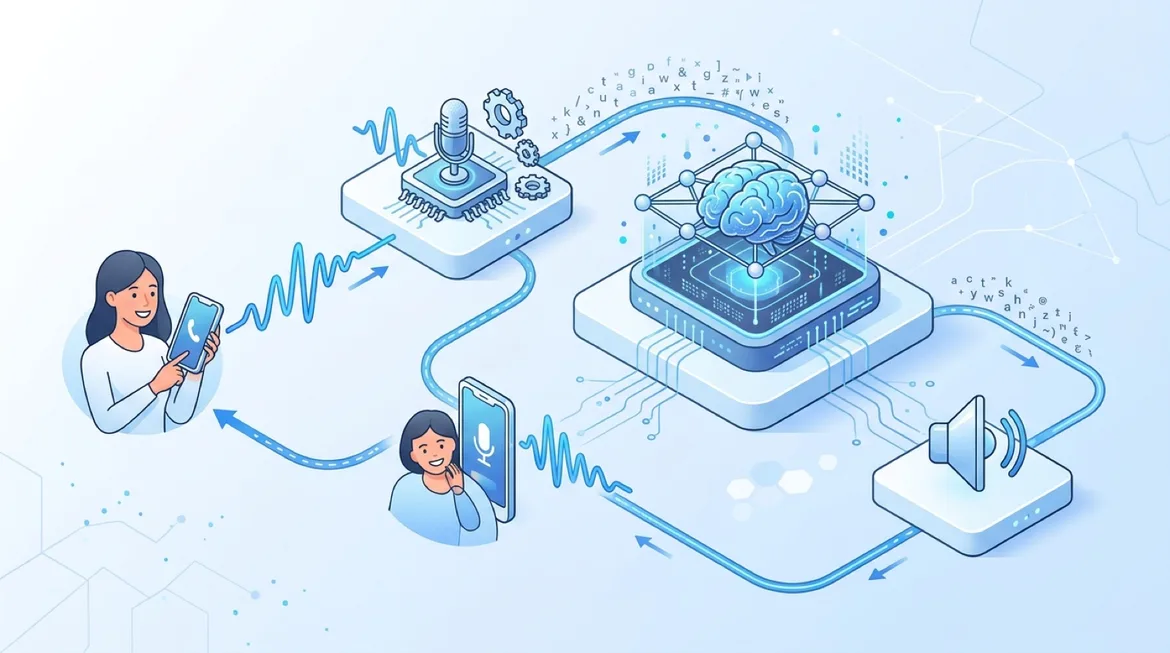
Diagram: Decision tree for picking AI virtual receptionist vs human virtual receptionist service
The decision tree we use. If you check three or more, AI is the right call.
Top AI virtual receptionist platforms in 2026

The platforms below are the ones we deploy on real client engagements. All ship with 24/7 coverage and modern voice quality.
Goodcall. $59 per month. Best for solo operators and small services. No code setup in 2 hours. Native HubSpot, Zapier, and Google Calendar integrations.
Echowin. $49 per month. Cheapest fully featured option. Best for general SMBs that want fast setup.
Rosie. $79 per month. Built for the trades. Best for HVAC, plumbing, and electrical contractors with Jobber or ServiceTitan.
Insight Receptionist. $89 per month. Best for medical, dental, and wellness practices. Native Calendly, Acuity, and GHL. Signs BAA for HIPAA on the business tier.
Numa. $199 per month. Best for auto dealers, retail, and multi location with heavy SMS use.
Smith.ai (AI mode). $255 per month. The AI tier of the well known human service. Best if you want a fallback to humans for sensitive calls.
Synthflow. $29 per month plus per minute. Best for HIPAA needs and custom flows. Requires more setup time.
Vapi, Bland, Retell. Per minute pricing from $0.05 to $0.09. Best for developers building fully custom virtual receptionists.
For a deeper compare of the top 8 platforms, read best AI answering service 2026 and the AI answering service pricing breakdown.
Want the right platform picked for you? CallSetter AI deploys virtual AI receptionists on the right platform for your call volume in 48 hours. We pick the stack, write the prompt, wire the integrations, and tune the agent.
How an AI virtual receptionist actually works
The technical loop is the same as any AI voice agent. It runs in software end to end.
Step 1. Call routes to the platform via SIP forward or call forwarding from your existing business number.
Step 2. Agent answers in under 2 seconds with the configured greeting in your chosen voice.
Step 3. Speech recognition converts caller audio to text. Modern systems use Deepgram, Whisper, or Google Speech.
Step 4. A turn detector decides when the caller is finished speaking. The 2026 generation gets this right almost every time.
Step 5. The text plus the system prompt is sent to a language model (GPT 5.4, Claude Opus 4.6, or Gemini 3.1 Pro). The model decides what to say next or which tool to call.
Step 6. Tool calls do real work. Check the calendar. Create an appointment. Look up a customer. Send a confirmation text.
Step 7. Voice synthesis (ElevenLabs, Cartesia, or PlayHT) converts the model response to audio. The caller hears it within 800 milliseconds.
Step 8. When the call ends, the platform saves the audio, the full transcript, the structured data, and the outcome to your CRM.
A typical 4 minute call has 15 to 25 turns. The agent never gets tired and never has a bad day.
Setup playbook for an AI virtual receptionist
The fast version.
Day 1. Pick the goal. New patient booking. Lead intake. Service scheduling. Pick one to ship first.
Day 2. Choose the platform from the picker above. Pick based on industry, integrations, and budget.
Day 3. Write a 400 to 600 word system prompt. Business name, voice, top 5 call types, qualifying questions, escalation rules.
Day 4. Wire integrations. Calendar. CRM. Phone forwarding.
Day 5. Run 20 internal test calls. Try edge cases. Note issues.
Day 6. Tune the prompt and add edge case handling.
Day 7. Soft launch. Forward 30 percent of calls. Monitor outcomes daily.
For the deeper version see the main pillar.
ROI math for switching from a human service
Real example. A solo law firm pays Ruby Receptionists $850 per month for business hours coverage. They get about 180 calls per month. About 60 of those calls land outside business hours and either go to voicemail or get lost.
Status quo (Ruby business hours):
- 180 calls per month, 120 answered (business hours), 60 missed (after hours)
- Conversion rate on answered calls: 22 percent = 26 booked consults
- Average consult value: $450
- Revenue: $11,700
- Service cost: $850
- Net: $10,850
With AI virtual receptionist (24/7):
- 180 calls per month, 180 answered (24/7)
- Conversion rate on answered calls: 22 percent = 40 booked consults
- Average consult value: $450
- Revenue: $18,000
- AI receptionist cost: $129 (Insight Receptionist)
- Net: $17,871
The delta:
- $7,021 more in monthly net
- $721 saved on the service swap
- 14 additional booked consults from after hours capture
- ROI on the platform: 138x
The math is unforgiving. Most practices that audit it switch within 30 days.
Common mistakes when switching to AI virtual receptionist
Cancelling the human service before testing the AI. Run them in parallel for 2 weeks. Forward 30 to 50 percent of calls to the AI. Compare booking rates and customer feedback. Then switch.
Picking the wrong platform for the industry. Goodcall and Rosie are great for trades and small services. They are not the right call for HIPAA workflows. Insight Receptionist or Synthflow are. Match the platform to the industry.
Skipping the prompt iteration. First draft prompts are always weak. Plan to spend 4 to 8 hours tuning across the first 100 calls.
No human escalation path. Even AI virtual receptionists need a way to transfer. If a caller asks for a human or the agent gets confused twice, the call should route somewhere. Define this on day one.
Underestimating bilingual demand. If 20 percent of your customer base is Spanish speaking and your old service was English only, AI virtual receptionists capture that previously lost segment immediately.
The switching checklist: moving off Smith.ai or Ruby
Added July 2026. The most common reader question on this page is not "which platform", it is "how do I switch without dropping calls". This is the sequence we use when we migrate a client from a human virtual receptionist service to software.
- Week 1: run both in parallel. Point after hours and overflow calls at the AI first while the human service keeps daytime. You get real transcripts to tune against with zero risk to core hours.
- Audit the transcripts, not the demo. Read every AI handled call from the parallel week. The failure points are always the same: unusual caller intents, transfer rules, and edge case bookings. Fix those before expanding coverage.
- Move daytime only after booking works end to end. The switch is safe when the AI books into your real calendar, logs to your real CRM, and transfers to a human who actually picks up. Until then it is not a receptionist, it is a message taker.
- Cancel the human service last. Overlap costs one extra month of fees and removes the failure mode where you cancel first and discover gaps second. The cost delta in the AI receptionist ROI tables absorbs one overlap month easily.
Still weighing whether to switch at all? AI voice agent vs human receptionist compares the two models on cost and quality, and the AI receptionist guide covers platform selection from scratch.
Frequently asked questions
Is an AI virtual receptionist the same as an AI answering service?
Functionally yes in 2026. Five years ago answering services only took messages. Modern AI virtual receptionists and AI answering services both handle full intake, booking, transfers, and CRM logging. Same category, different keywords. See AI answering service for more.
Can I switch from Smith.ai or Ruby without disrupting my business?
Yes. Run both in parallel for 2 weeks. Forward 30 to 50 percent of calls to the AI. Compare metrics. Then cut over fully. Most practices do this in 14 days.
Do AI virtual receptionists work for law firms?
Yes. They handle initial intake, conflict checks, qualification, and routing. For sensitive cases involving distress, build a clear escalation path to a human attorney. See the AI for law firms playbook.
Are AI virtual receptionists HIPAA compliant?
Some are. Insight Receptionist, Synthflow, Smith.ai, Bland, Retell, and Vapi all sign BAAs for healthcare deployments. Goodcall, Rosie, Echowin, and Numa do not currently. Check before deploying in healthcare.
How long does it take to deploy an AI virtual receptionist?
DIY on a no code platform like Goodcall, Rosie, or Echowin is 2 to 4 hours. DIY on a developer platform like Synthflow or Vapi is 1 to 4 weeks. With a managed agency like CallSetter AI, 48 hours.
Will my customers prefer talking to a human?
Most do not have a preference if the AI is fast and helpful. Surveys we have run show roughly 73 percent of callers cannot reliably tell whether they spoke to a human or AI on calls under 4 minutes. For empathy heavy calls, human still wins.
What if the AI cannot handle a specific call type?
Set up a transfer rule. If the call type matches the rule, the agent transfers immediately to a human. This is how you get the best of both worlds without paying for full human coverage.
Can I use my existing phone number?
Yes. All major platforms support call forwarding from your existing business number using SIP trunking or simple call forwarding. Your customers dial the same number.
Next steps
If you are paying $400+ per month for a human virtual receptionist service, you are leaving money on the table. The AI version is cheaper, faster, and runs 24/7. For most service businesses the math is decisive within the first month.
CallSetter AI deploys AI virtual receptionists in 48 hours on the right platform for your industry. We handle platform selection, prompt engineering, integrations, and ongoing tuning so you get the upside without the trial and error.
Related reading:
- AI receptionist buyer’s guide (the pillar)
- 24/7 AI receptionist
- AI phone receptionist
- AI answering service
- Best AI answering service 2026
- AI answering service vs human
- AI voice agents complete guide
- AI for dentists
- AI for law firms
Diagram: Cost comparison of AI virtual receptionist vs Smith.ai vs Ruby across 12 months
Twelve month total cost. AI virtual receptionists run 60 to 80 percent cheaper than human services and add 24/7 coverage on top.
Written by Victor Smushkevich, CEO of Tested Media. Last review: April 2026. Victor has been profiled in Forbes, HuffPost, and MarketWatch on AI and digital marketing.
Related Reading