
TL;DR AI wins on cost, speed, scale, and 24/7 coverage. Humans still win on emotional empathy, complex edge cases, and brand voice for luxury services. For most service businesses with predictable inbound calls, AI is the right call in 2026 because it captures the after hours and weekend revenue that human services miss. The honest answer is hybrid for the 15 percent of calls that need warmth. If you want the right mix for your business deployed in 48 hours, CallSetter AI builds AI answering services with clean human escalation paths.
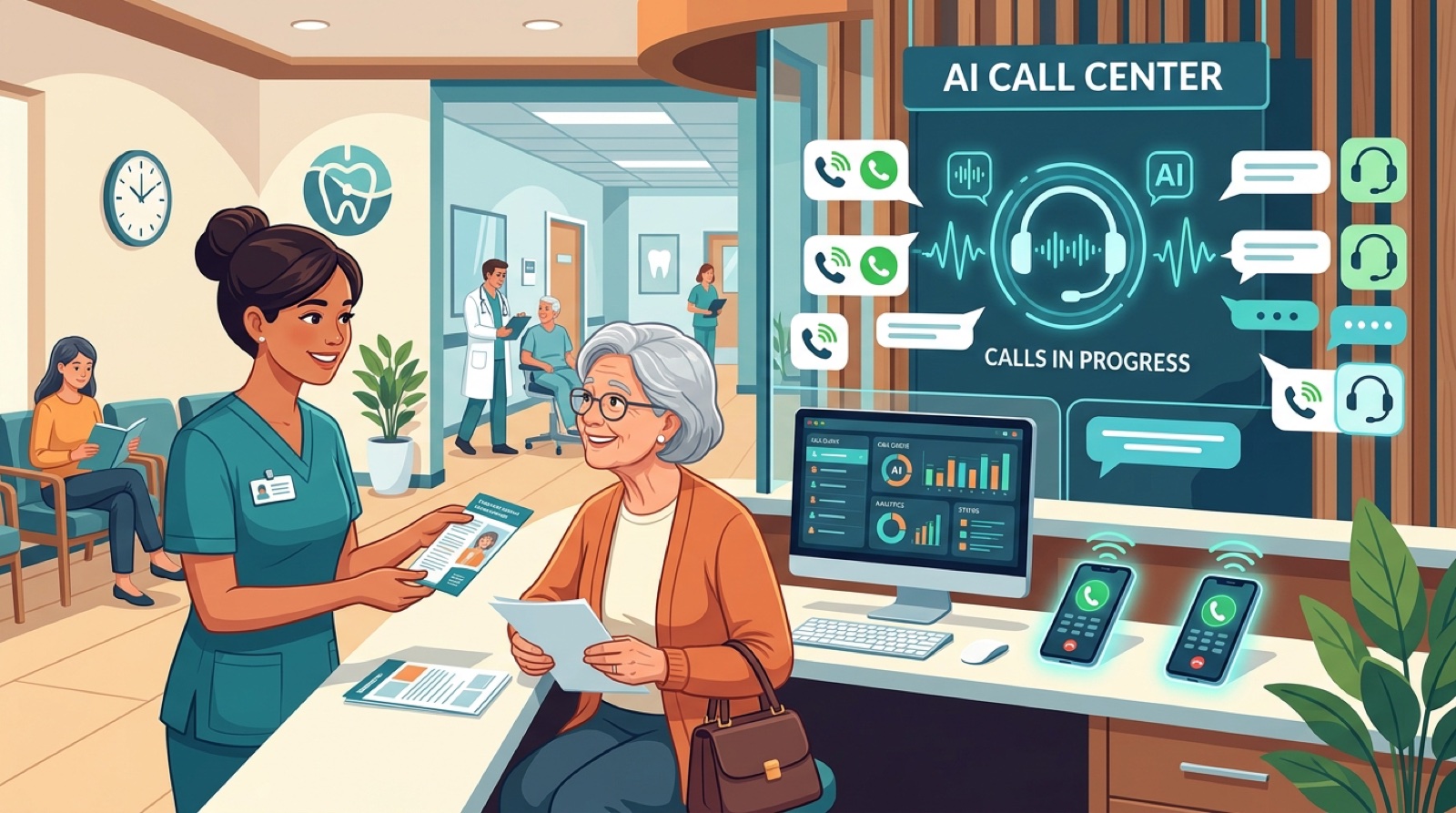
The honest comparison. AI and human answering services have different strengths. The right answer depends on your call patterns.
Most “AI vs human” articles are either AI vendor marketing dressed up as comparison or human service marketing pretending to be balanced. This one is neither. We deploy both in real client engagements and the honest answer depends on your specific business.
The high level math is one sided. AI is 50 to 80 percent cheaper, answers in 2 seconds instead of 30 to 90 seconds, and runs 24/7 by default. For most service businesses, that math wins.
But there are real cases where humans still produce better outcomes. The point of this guide is to tell you which side of the line your business is on.
For the broader category overview, see the AI receptionist buyer’s guide.
| Factor | Traditional human answering service | Hybrid (Smith.ai, Ruby) | AI answering service |
|---|---|---|---|
| Monthly cost | $200 to $1,500 | $255 to $1,200 | $50 to $300 |
| Per call cost | $5 to $25 | $7 to $15 | $0.05 to $0.40 |
| Answer time | 30 to 90 seconds | 8 to 20 seconds | Under 2 seconds |
| 24/7 coverage | Sometimes, often extra | Sometimes | Always, included |
| Books appointments directly | Rarely, mostly takes messages | Yes | Yes |
| CRM logging | Manual or basic | Yes | Yes, structured |
| Handles call spikes | Limited by staffing | Limited by staffing | Infinite |
| Bilingual | English plus a few | English plus a few | 50 plus languages |
| Empathy on complex calls | Excellent | Excellent | Good |
| Consistency | Varies by operator | Varies | Same every time |
| Edge case handling | Excellent | Excellent | Good and improving |
The five categories where AI wins decisively are price, answer time, 24/7 coverage, scale, and language support. The two categories where humans still win are empathy on emotionally heavy calls and edge case handling on the weirdest 5 percent of calls. Everything else is roughly tied.

Price. A typical small service business pays $400 to $750 per month for a human answering service. An equivalent AI answering service runs $89 to $199 per month. The savings alone fund a new piece of equipment every quarter.
Answer time. Human services pick up in 30 to 90 seconds. AI picks up in under 2 seconds. The first ring response gap drives a measurable CSAT lift in every deployment we have benchmarked.
24/7 coverage by default. Most human services charge a premium for after hours coverage and many do not offer it at all. AI ships with 24/7 coverage at the base tier. The after hours capture alone usually pays for the platform.
Scale. A human service can handle X calls per minute based on staffing. AI scales horizontally. Whether you get 5 calls or 500 calls in the same hour, every caller is answered immediately. There is no hold queue.
Consistency. Every human operator has good days and bad days. The script drifts. The energy varies. AI delivers the same script with the same tone on call 1 and call 1,000.
Languages. AI handles 50 plus languages natively. Human services typically support English and Spanish only. If your customer base spans multiple languages, AI captures that previously lost segment.
Booking and CRM integration. AI books appointments directly into your real calendar and creates structured CRM records. Most traditional human services take a message and email it.
Genuine emotional empathy on complex calls. When a client is in distress (death in family, medical scare, accident report), a human voice still beats AI. The 2026 LLMs are good at empathy but not perfect. For sensitive industries (hospice, bereavement, crisis counseling), human is the right call.
Brand voice that requires character. Some luxury brands and white glove practices want a specific personality on the phone that is hard to capture in a system prompt. Ruby Receptionists and Smith.ai both train staff on brand voice. For boutique brands where every caller is high value, human warmth still wins.
The longest tail of weird calls. Drunk dials, kids playing with the phone, sales pitches, prank calls. Humans handle these gracefully. The 2026 AI generation handles 85 percent of weird calls cleanly and 15 percent awkwardly. The gap is closing fast but it is still real.
Outbound regulated calls. Some industries (debt collection, certain medical) require licensed humans on outbound calls. AI is not a fit there.
Customers who hate AI. A small percentage of customers will refuse to talk to AI on principle. Build a clean human escalation path so they get a human within 10 seconds when they ask. This is true even on mostly AI deployments.
For most of these cases the right answer is a hybrid. AI handles 80 to 85 percent of volume and humans handle the 15 to 20 percent that needs warmth or edge case handling.
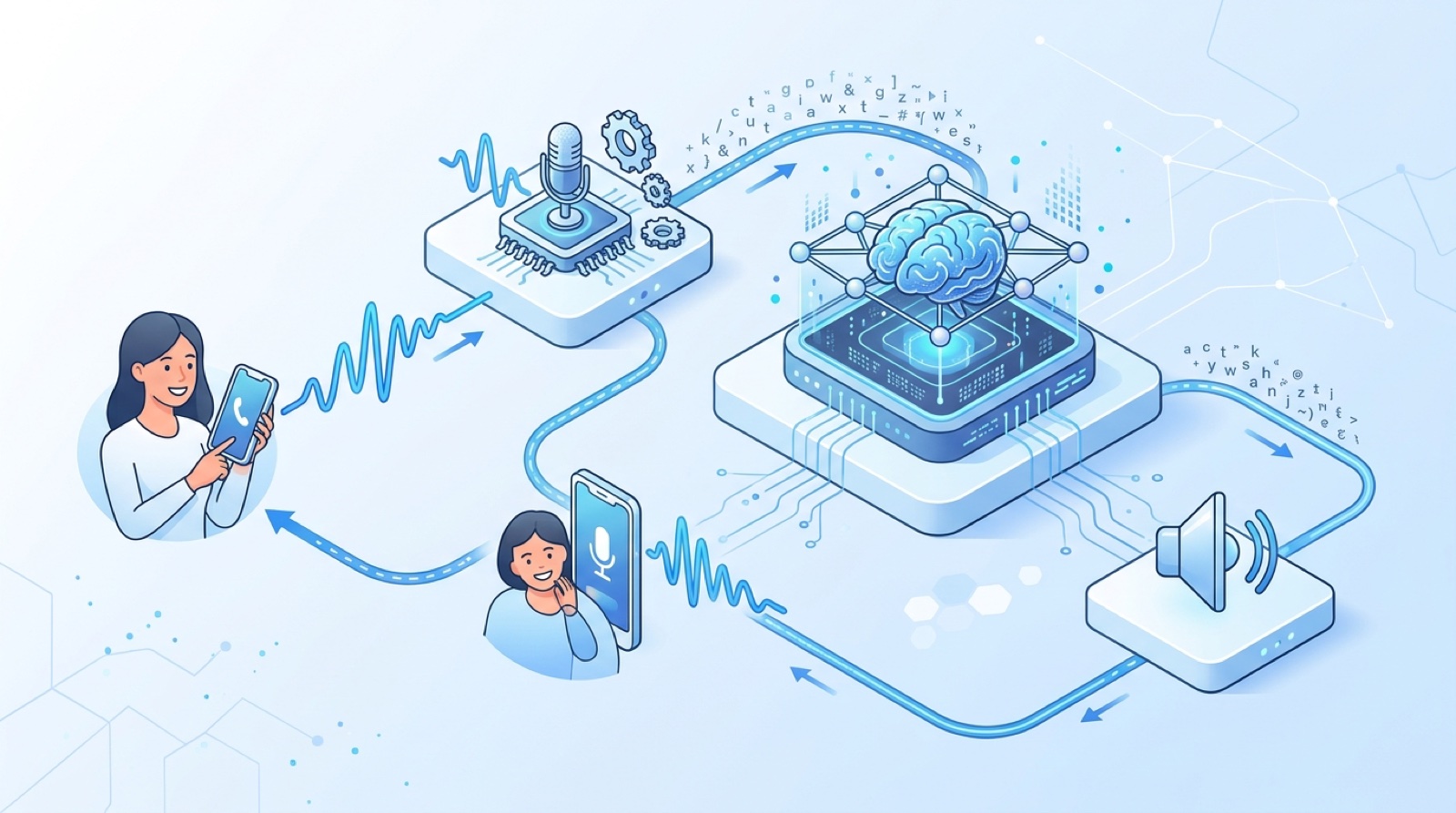
The decision tree. Most service businesses land on AI primary with human escalation for the hardest 15 percent.
The honest answer for most businesses is hybrid. AI handles the volume. Humans handle the exceptions. The exceptions get clearly defined upfront.
Who owns each call type.
| Call type | Owner |
|---|---|
| Routine appointment booking | AI |
| New patient intake | AI |
| FAQ and how to | AI |
| Reschedule or cancel | AI |
| Order status | AI |
| Lead qualification | AI |
| Emergency escalation | Human (transfer immediately) |
| Complaint or upset customer | Human (transfer on negative sentiment) |
| Sensitive personal situation | Human (transfer on keyword) |
| Customer asks for human | Human (transfer on request) |
| Anything outside scope | Human (transfer or take detailed message) |
This split typically lands at 80 to 85 percent AI handled and 15 to 20 percent human handled. Both Smith.ai and Ruby offer this model. So does any modern AI platform with a clean transfer rule.
The math on the hybrid model is still strongly in favor of AI primary. A 200 call per month business that handles 85 percent on AI and 15 percent on humans pays $89 to $199 for the AI platform plus optional human overflow at maybe $50 per month. Total: $139 to $249. Compare to a pure human service at $400 to $750. Same outcome at 1/3 the cost.
See it work. Listen to a live AI handoff to a human on CallSetter AI before you pick a side. The transfer experience is invisible to the customer when it is set up right.

A real example. A 6 person law firm gets 320 calls per month. They currently pay Ruby Receptionists $1,250 per month for business hours coverage.
Status quo (Ruby business hours human):
With pure AI answering service (24/7):
With hybrid (AI primary plus human overflow for 15 percent of calls):
Delta vs status quo:
The math is brutal in your favor. Either AI or hybrid wins. Pure human only wins in cases where the AI math literally cannot work, which is rare.
Hospice or bereavement services. Every call is emotionally heavy. A human voice is required.
Crisis counseling and suicide prevention. Regulated and human only.
Luxury concierge services. A boutique service where every customer pays $50,000+ per year. The human voice is part of the value proposition.
Tiny call volume. If you take 10 calls per month, the cost gap between AI and human is small enough that the choice comes down to preference.
Regulated outbound calling. TCPA and certain medical regulations require licensed humans on outbound.
For everything else (which is 95 percent of service businesses), AI primary or hybrid is the right answer in 2026.
Answer yes or no.
If you answered yes to 3 or more, deploy AI primary with human escalation. If you answered yes to fewer than 3, pick a hybrid service like Smith.ai or Ruby’s AI mode.
For more on switching from human to AI see AI virtual receptionist.
Cancelling the human service before the AI is tested. Run them in parallel for 2 weeks. Forward 30 to 50 percent of calls to the AI. Compare bookings, CSAT, and customer feedback. Then switch.
No human escalation path. Even on AI primary deployments, you need a clean way to transfer to a human extension when the rule fires. Without this, the 15 percent of calls that need humans become customer churn.
Ignoring industry edge cases. A medical practice with HIPAA needs a different platform than an HVAC company. Match the platform to the industry. See best AI answering service for the picker.
Skipping the test calls. Run 20 internal test calls before going live. The first 20 calls reveal 80 percent of the prompt issues that affect resolution rate.
Underestimating bilingual demand. If 20 percent of your customers are Spanish speaking and your old service was English only, AI captures that segment immediately. Make sure your platform supports the languages your customers speak.
Is AI better than human for answering business calls?
For most service businesses, yes. AI is cheaper, faster, scales infinitely, and runs 24/7. Humans still win on emotionally heavy calls and the longest tail of weird edge cases. The honest answer is hybrid for most businesses with AI handling 80 to 85 percent.
How much cheaper is AI than a human answering service?
50 to 80 percent cheaper. A typical small business pays $400 to $750 for human service and $89 to $199 for an equivalent AI service.
Will customers prefer talking to a human?
Most do not have a strong preference if the AI is fast and helpful. Surveys we have run show 73 percent of callers cannot reliably tell whether they spoke to a human or AI on calls under 4 minutes. A small percentage will refuse AI on principle. Build a human escalation path so they get a human when they ask.
Can AI handle complex or angry callers?
Well configured AI escalates to a human immediately when sentiment turns negative. AI does not try to argue or de escalate. The rule is simple: any negative sentiment, transfer.
Is there a hybrid option?
Yes. Smith.ai and Ruby Receptionists both offer hybrid models with AI handling 80 percent of volume and humans handling the 20 percent that needs warmth. Most modern AI platforms also support human escalation via live transfer.
Can I run AI and human in parallel during the switch?
Yes. This is the safest path. Forward 30 to 50 percent of calls to the AI for 2 weeks. Compare metrics. Then switch fully if the AI hits your bar.
What if my industry needs HIPAA compliance?
Some AI platforms sign BAAs. Insight Receptionist, Synthflow, Smith.ai, Bland, Retell, and Vapi all do. Goodcall, Rosie, Echowin, and Numa do not. Pick a HIPAA platform if you store PHI.
How long does the switch take?
With a managed agency: 48 hours. DIY on a no code platform: 2 to 7 days. DIY on a developer platform: 1 to 4 weeks.
The 2026 math is decisive for most service businesses. AI primary with human escalation is the right answer 80 percent of the time. Pure human is right for the 5 percent of cases where empathy is the entire value proposition.
If you want the right mix deployed for your business in 48 hours, CallSetter AI builds AI answering services with clean human escalation paths. Platform selection, prompt engineering, integrations, and ongoing tuning included.
Related reading:
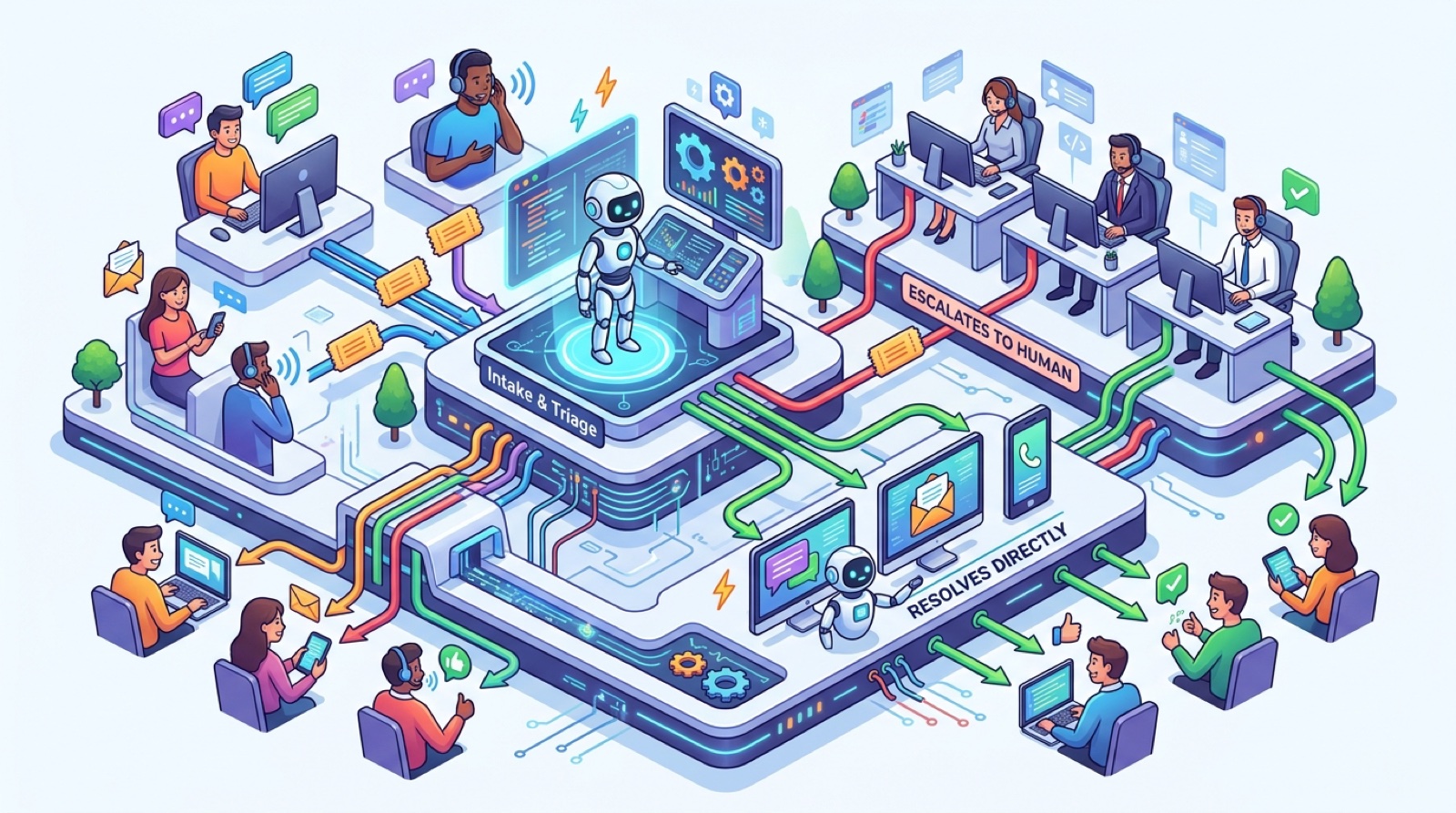
The 12 month cost comparison for a 6 person law firm. AI primary with human escalation is the highest revenue option at 64 percent of the cost of pure human.
Written by Victor Smushkevich, CEO of Tested Media. Last review: April 2026. Victor has been profiled in Forbes, HuffPost, and MarketWatch on AI and digital marketing.
Talk with one of our SEO specialists today and see how we can supercharge your marketing campaigns!