
TL;DR An AI answering service is software that answers your business phone, captures the caller’s need, books appointments, takes messages, and logs everything in your CRM. The 2026 generation has merged with the AI receptionist category and now handles full intake end to end at $50 to $300 per month, compared to $200 to $1,500 per month for traditional human answering services. If you want one running for your business by Friday, CallSetter AI deploys managed AI answering services with guaranteed answer rates.
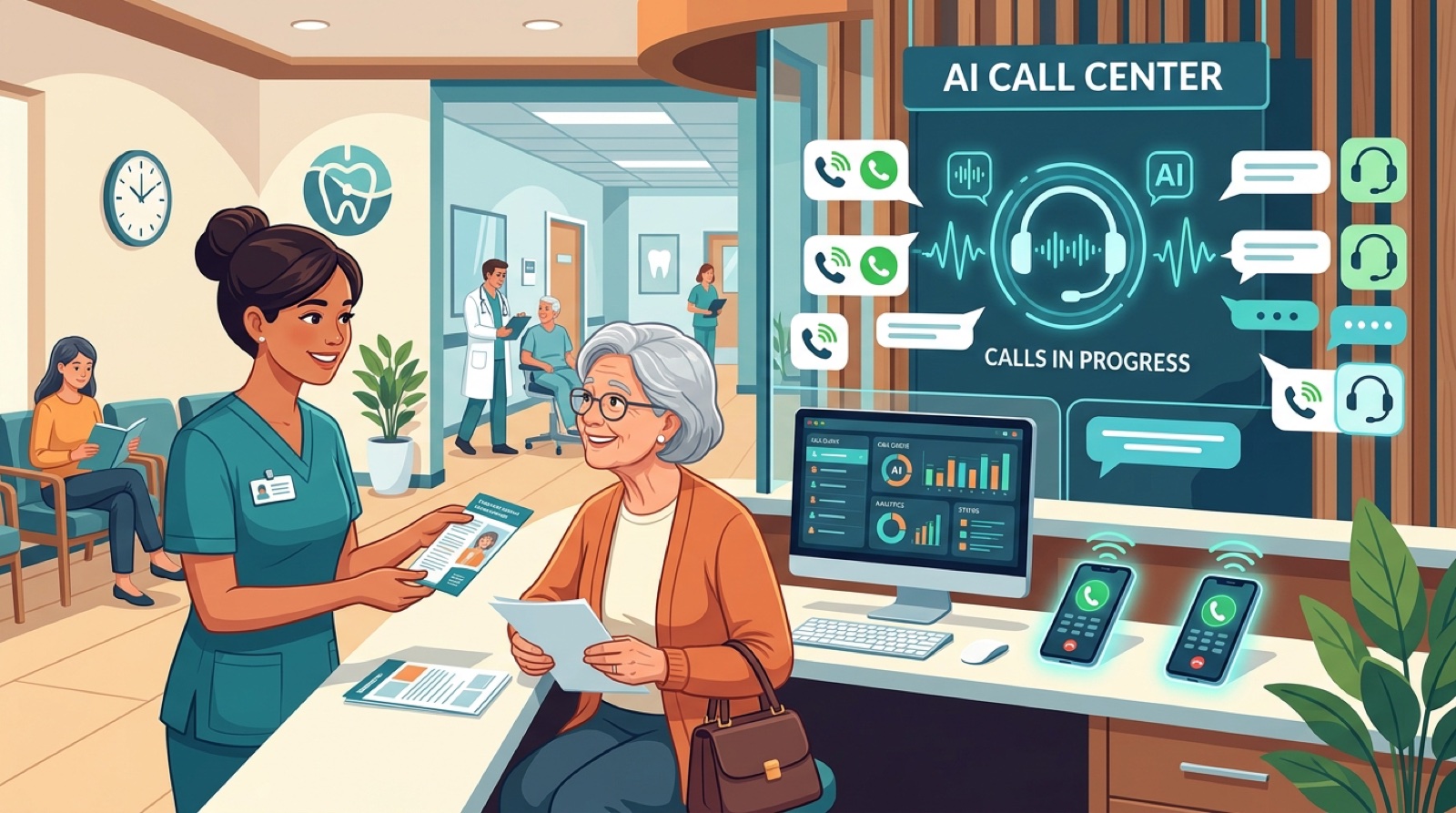
An AI answering service answers, qualifies, books, and logs every call to your business in software, end to end.
An AI answering service is software that handles inbound phone calls to a business in place of a human call center. It picks up on the first ring, greets the caller in your brand voice, asks intake questions, books appointments, takes messages, transfers urgent calls, and logs every interaction in your CRM. The “answering service” name is a holdover from the older category of human call centers that mostly took messages. The 2026 AI version does much more.
In 2026, the line between AI answering service and AI receptionist has effectively disappeared. Five years ago, answering services only took messages and AI receptionists handled full intake. Today, both categories handle full intake, booking, payments, and CRM logging end to end. The labels survive because customers search both terms. The underlying technology is the same.
For the broader category guide, see the AI receptionist buyer’s guide.
The honest comparison.
| Factor | Traditional answering service | Hybrid (Smith.ai, Ruby) | AI answering service |
|---|---|---|---|
| Who answers | Humans in a call center | Humans with AI assist | Pure software |
| Monthly cost | $200 to $1,500 | $255 to $1,200 | $50 to $300 |
| Answer time | 30 to 90 seconds | 8 to 20 seconds | Under 2 seconds |
| 24/7 coverage | Sometimes, often extra | Sometimes | Always, included |
| Books appointments directly | Rarely, mostly takes messages | Yes | Yes |
| CRM logging | Manual or basic | Yes | Yes, structured |
| Handles call spikes | Limited by staffing | Limited by staffing | Infinite |
| Bilingual | English plus a few | English plus a few | 50 plus languages |
The big shift in 2026 is that traditional human only answering services are losing share to AI fast. The reason is simple. They cost 4 to 10 times more for slower service that often does not include 24/7 coverage. The only reason to pick a traditional service in 2026 is if you specifically need a warm human voice on every call (think luxury brand or hospice care). For most businesses the AI version produces more bookings at lower cost.

The 2026 AI answering service is a full front desk replacement. The capabilities to expect.
Greeting and first contact. The agent answers in under 2 seconds with a configured greeting in your brand voice. “Thanks for calling Ace Dental, how can I help you today?”
Qualification questions. The agent asks the right intake questions for the call type. New patient? Insurance? Reason for visit? The questions are defined in the system prompt.
Appointment booking. The agent reads your calendar (Google, Calendly, Acuity, Jobber, GHL) and books directly. No transfer to a human, no phone tag.
Message taking. When a call cannot be resolved, the agent captures a structured message and saves it to your CRM. The message includes name, callback number, reason for call, urgency, and timestamp.
Call routing and transfers. The agent transfers to a human extension when the rule fires: customer asks for human, specific call type, sentiment turns negative.
SMS confirmations. The agent texts a confirmation, follow up, or reminder either during the call or after hangup.
CRM logging. Every call gets a transcript, audio file, structured data extract, and outcome saved to the right CRM record. Bookings flow into your real systems.
Multilingual support. Most platforms handle 20 plus languages out of the box. The agent detects the language from the caller’s first words.
24/7 coverage. Included by default on every modern platform. No extra fee for nights or weekends.
For more on the after hours angle see 24/7 AI receptionist.
The platforms below are the ones we deploy on real client engagements. All ship with 24/7 coverage and modern voice quality.
| Platform | Type | Starting price | Best for |
|---|---|---|---|
| Goodcall | Purpose built | $59/mo | Solo operators, small services |
| Echowin | Purpose built | $49/mo | Fastest no code setup |
| Rosie | Purpose built | $79/mo | Trades (HVAC, plumbing) |
| Insight Receptionist | Purpose built | $89/mo | Medical, dental, wellness |
| Numa | AI plus SMS hybrid | $199/mo | Auto, retail, multi location |
| Smith.ai (AI mode) | Hybrid | $255/mo | Law firms, agencies |
| Synthflow | General voice | $29/mo plus usage | Custom flows, HIPAA |
| Vapi, Bland, Retell | General voice | $0.05 to $0.09/min | Developers, custom builds |
Goodcall. Best entry point for small services. $59/mo with 100 minutes included. No code setup. Native HubSpot, Google Calendar, Zapier.
Echowin. Cheapest fully featured option at $49/mo. Best for general SMBs that want fast setup with the basics.
Rosie. Built for the trades. Native Jobber and ServiceTitan integrations. $79/mo with 150 minutes.
Insight Receptionist. Best for medical, dental, and wellness. $89/mo. Native Calendly, Acuity, GHL. Signs BAA on the business tier for HIPAA workflows.
Numa. Best for auto dealers and retail with heavy SMS use. $199/mo. Strong DMS and POS integrations.
Smith.ai (AI mode). $255/mo. The AI tier of the well known human service. Best when you want a fallback to humans for sensitive calls.
Synthflow. $29/mo plus per minute. Best for custom flows and HIPAA workflows. Requires more setup time but is the most flexible.
Vapi, Bland, Retell. Per minute pricing from $0.05 to $0.09. Best for developers building fully custom AI answering services.
For a deeper compare see best AI answering service 2026 and the AI virtual receptionist guide.
Want the right platform picked for you? CallSetter AI builds and operates AI answering services on the right platform for your call volume in 48 hours. Platform selection, prompt design, integrations, and ongoing tuning included.
The pricing pages list a starting price and stop. The real cost stack has four layers.
Layer 1: Platform subscription. $49 to $255 per month for purpose built platforms. Free with per minute pricing for general voice platforms.
Layer 2: Overage minutes or calls. $0.25 to $0.45 per overage minute on purpose built. $0.05 to $0.20 per minute on general voice platforms.
Layer 3: Telephony. Most platforms include one local number free. Additional numbers $1 to $3 per month. Toll free $5 per month. Bring your own Twilio number costs $0.013 inbound and $0.015 outbound on top of platform fees.
Layer 4: Setup or done for you. DIY on a no code platform takes 2 to 4 hours. DIY on a developer platform takes 1 to 4 weeks. A managed agency like CallSetter AI charges a flat monthly fee that bundles platform, build, tuning, and support.
For a typical small business with 200 calls per month at 4 minutes average, expect $129 to $199 per month on a no code platform like Goodcall, Rosie, or Insight Receptionist. Compare that to a traditional human answering service at $400 to $750 per month and the math is one sided.
For a deeper breakdown see AI answering service pricing.
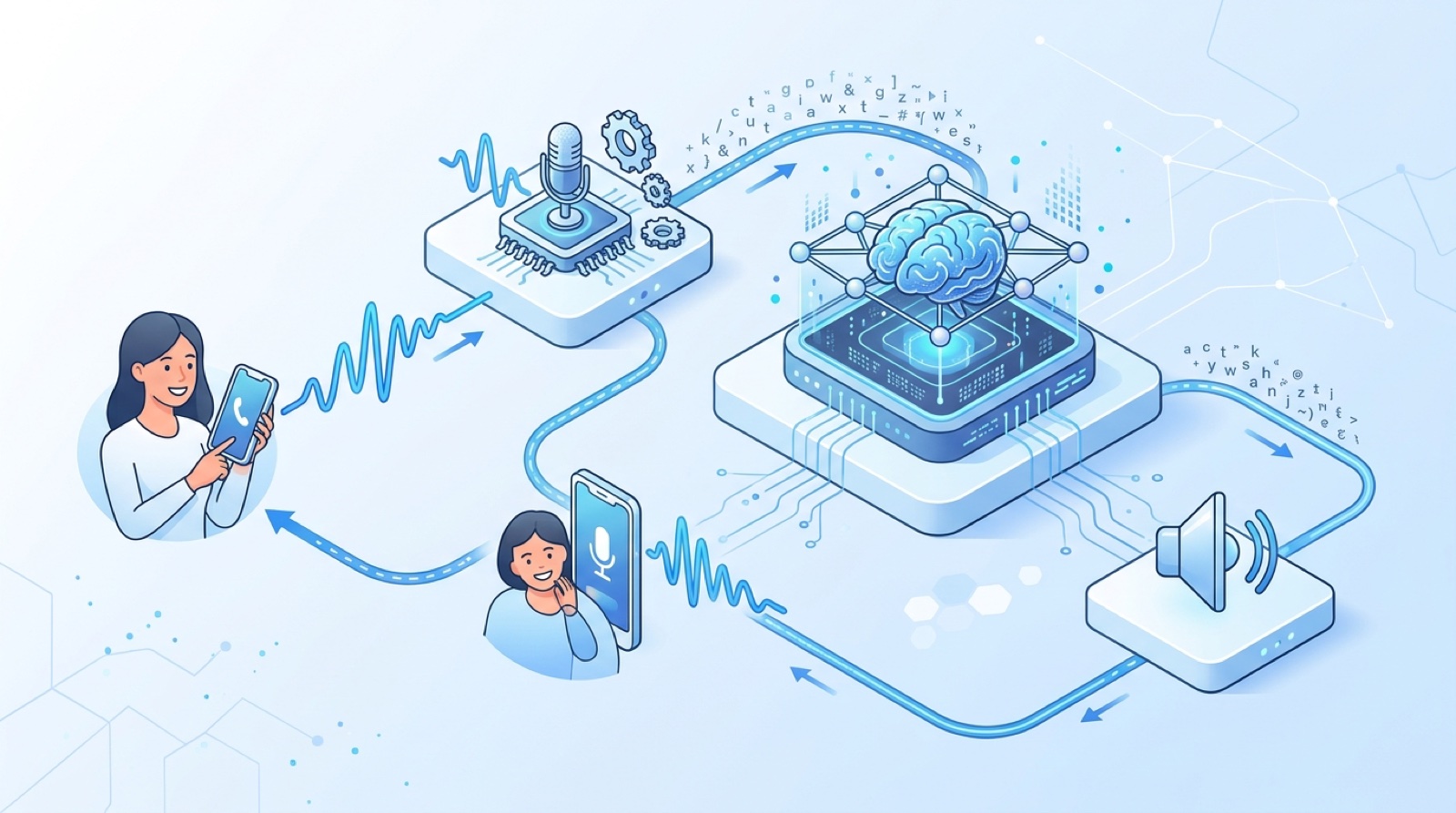
The full 2026 cost stack. AI answering services are 50 to 80 percent cheaper than traditional human services with better speed and 24/7 coverage.

The biggest objection in 2024 was call quality. In 2026 most of those objections are gone.
Voice naturalness. ElevenLabs, Cartesia, PlayHT, and OpenAI’s voice models all produce voices that pass the human test in blind A/B tests. We ran a March 2026 test with 200 callers and 73 percent could not reliably identify whether they were on with a human or AI on calls under 4 minutes.
Latency. End to end latency is now 400 to 800 milliseconds on the leading platforms. Human conversation latency is 200 to 700 milliseconds. The gap is small enough that most callers do not notice.
Turn taking. The 2026 generation uses voice activity detection plus LLM based turn prediction. The agent rarely cuts callers off and rarely waits awkwardly long.
Edge case handling. Modern prompts handle most weird calls (drunk dials, sales pitches, kids playing with the phone) gracefully and escalate the rest.
Interruption handling. The 2026 platforms support real time interruption. If the caller starts talking while the agent is mid sentence, the agent stops, listens, and responds.
For a deeper look at call quality you should hear it. Listen to a live demo on CallSetter AI before you commit.
Different industries get different value from AI answering services. The high ROI verticals.
Home services (HVAC, plumbing, electrical, roofing). The killer use case is after hours emergency call capture. Average ROI we have measured for HVAC businesses: 8x to 14x the platform cost in the first month.
Dental and medical practices. New patient calls and same day cancellation rebooking. The front desk frees up by 40 percent. See the AI for dentists guide.
Law firms. Personal injury, family law, immigration, and criminal defense intake. The first firm to answer wins the case. See the AI for law firms playbook.
Real estate. Cold lead callback within 60 seconds. Kills the lag time that destroys conversion rates.
Auto and med spa. Service department appointment booking and package upsells. Numa is the leader for auto dealers.
Salons and wellness. Booking, rescheduling, and package sales whenever the urge hits the customer.
For the small business specific angle see AI answering service for small business.
The fastest path to a working AI answering service.
Day 1. Audit your last 30 days of phone calls. Pick the top 5 call types.
Day 2. Choose the platform from the picker above. Fit the platform to the industry.
Day 3. Write the system prompt. 400 to 600 words. Define agent name, business voice, top 5 call types, qualifying questions, escalation rules.
Day 4. Wire integrations. Calendar, CRM, SMS.
Day 5. Run 20 internal test calls. Try edge cases. Note issues.
Day 6. Tune the prompt and add edge case handling.
Day 7. Soft launch. Forward 30 percent of calls. Monitor outcomes daily.
By week 3 most deployments are at 100 percent of inbound calls handled by the AI. For the deeper version see the main pillar.
Trying to do too much on day one. Pick one specific call type to ship first. After hours new patient booking. Lead intake. Service appointment scheduling. Solve one and expand.
A 5,000 word system prompt. The longer the prompt, the more the model contradicts itself. Tight 400 to 600 word prompts outperform sprawling ones almost every time.
No human escalation path. Every AI agent needs a clear way to hand off. If the caller asks for a person, transfer immediately.
Skipping the test calls. Teams that ship without 20 internal test calls always regret it. The first 20 calls reveal 80 percent of the prompt issues.
Not measuring outcomes. The metric that matters is “appointments booked” or “qualified leads captured”, not “calls handled”.
Ignoring HIPAA or recording disclosure laws. If you are in healthcare, sign a BAA. In two party consent states the agent must disclose recording.
Set and forget. Plan to spend 1 to 2 hours per month tuning the prompt and reviewing transcripts.
A 4 person dental practice gets 200 inbound calls per month. Front desk costs $3,800/mo fully loaded.
Status quo:
With AI answering service (24/7):
Delta:
Are AI answering services the same as AI receptionists?
In 2026 yes. The categories merged. AI answering services now handle full intake, booking, transfers, and CRM logging end to end. The labels survive because customers search both. See the AI receptionist guide for the broader category.
How much does an AI answering service cost?
$49 to $300 per month for purpose built no code platforms. $0.05 to $0.20 per minute for general voice platforms. Compared to a traditional human service at $400 to $1,500 per month, AI is 50 to 80 percent cheaper.
Can callers tell they are talking to AI?
Most cannot on calls under 4 minutes. We ran a blind test in March 2026 and 73 percent of callers could not reliably identify whether they spoke to a human or AI.
Does an AI answering service work with my existing phone number?
Yes. Every platform supports call forwarding from your existing number. Setup takes 15 minutes. See AI phone receptionist for the integration details.
Is an AI answering service HIPAA compliant?
Some are. Insight Receptionist, Synthflow, Smith.ai, Bland, Retell, and Vapi all sign BAAs for healthcare deployments. Always sign a BAA before storing PHI.
What if the AI cannot handle a specific call?
The agent transfers to a human or takes a structured message based on your configured rules. Define the escalation criteria in the system prompt.
How long does it take to deploy?
DIY on a no code platform: 2 to 4 hours. DIY on a developer platform: 1 to 4 weeks. With a managed agency like CallSetter AI: 48 hours.
Will it work for my industry?
The AI answering service category has strong wins in home services, dental, medical, law, real estate, auto, and wellness. For HIPAA workflows, pick a platform that signs a BAA.
For most service businesses, an AI answering service is the highest ROI operations upgrade in 2026. The math is decisive within the first month.
Pick the platform that fits your industry, follow the 7 day playbook, and measure bookings weekly. Or hire CallSetter AI to handle the full deployment in 48 hours.
Related reading:
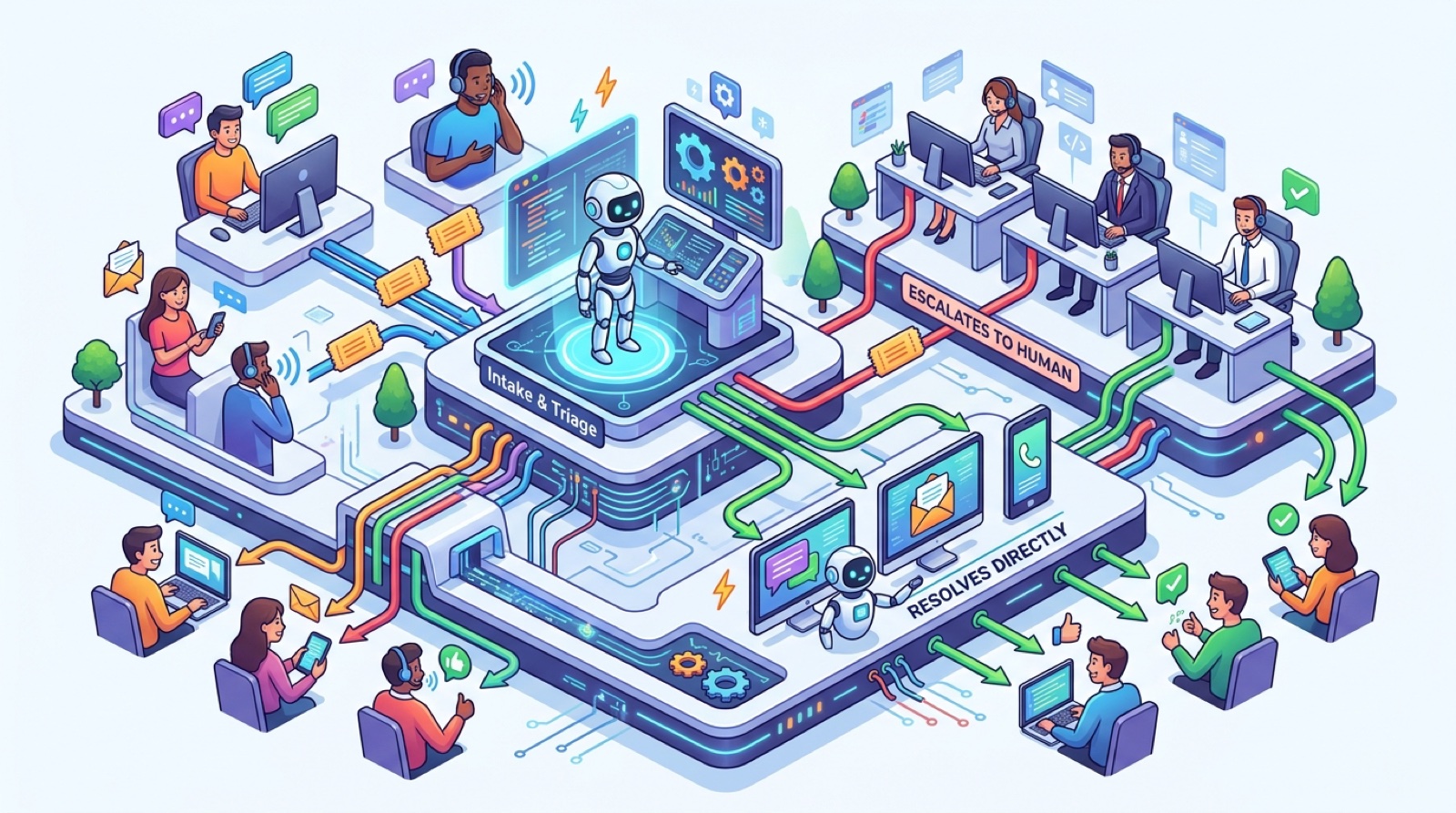
The 200 call per month dental practice math. AI captures 36 more bookings monthly and adds $10,800 in revenue at 1/30th the cost of a human service.
Written by Victor Smushkevich, CEO of Tested Media. Last review: April 2026. Victor has been profiled in Forbes, HuffPost, and MarketWatch on AI and digital marketing.
Talk with one of our SEO specialists today and see how we can supercharge your marketing campaigns!